

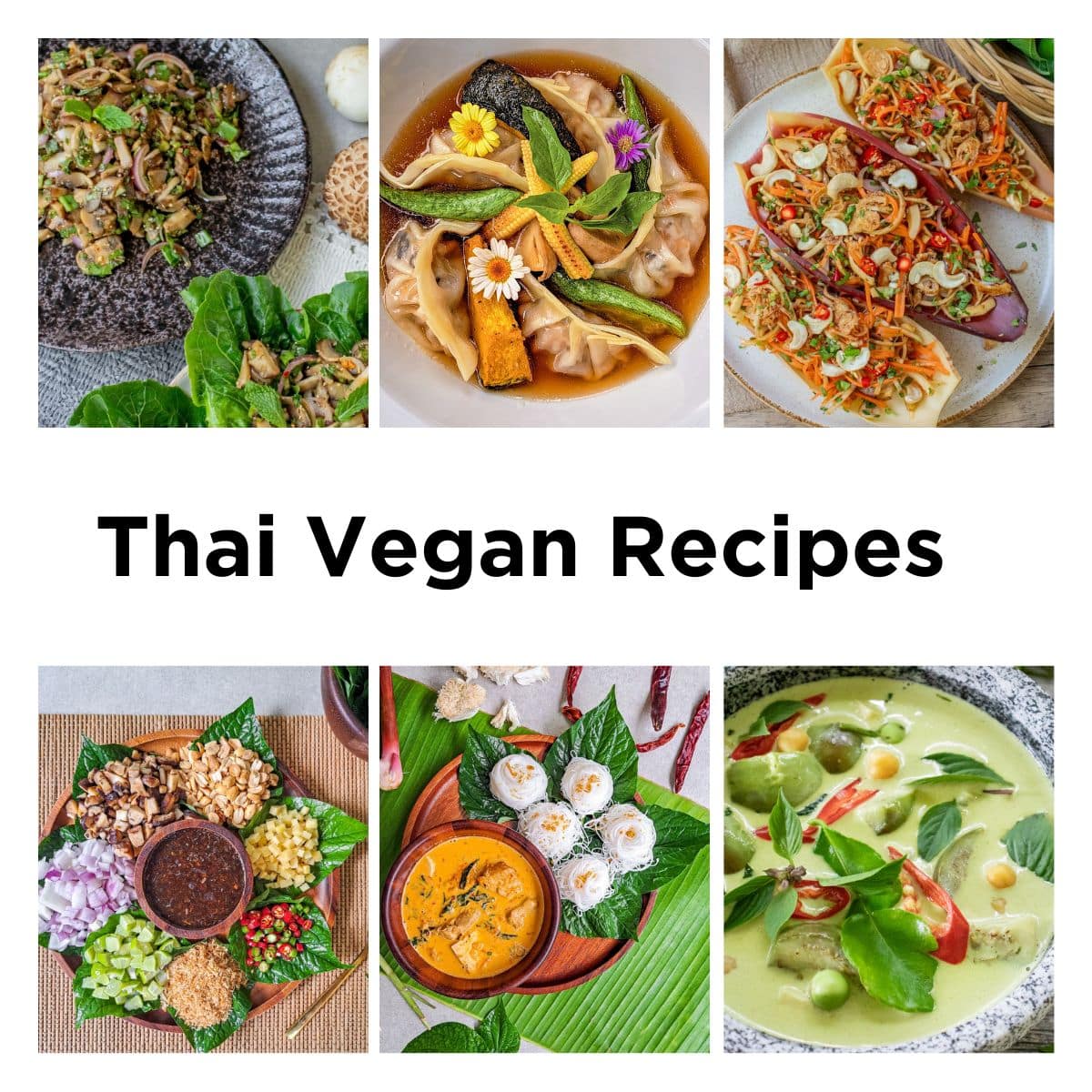
Thai food has been one of the great flavour teachers on my culinary journey: bold, fresh, aromatic and beautifully balanced with sweet, sour, salty, spicy and umami flavours in every bite. This collection of Thai vegan recipes from our Thai'rish Kitchen brings together vibrant plant-based curries, noodles, salads, soups and traditional Thai-inspired dishes for home cooks, retreat chefs, wellness kitchens and anyone who wants Thai food that tastes alive.
Index
Jump to:
- Thai Vegan Recipes From Our Thai'rish Kitchen
- Authentic Thai Vegan Recipes
- Our Thai'rish Kitchen Story
- Why Thai Vegan Food Works So Well
- Vegan Alternatives for Traditional Thai Ingredients
- Thai Vegan Recipes To Make At Home
- Thai Superfood Ingredients We Love
- What To Serve With Thai Vegan Recipes
- Essential Tools For Thai Vegan Cooking
- Tips For Making Thai Recipes Plant-Based
- More Plant-Based Recipe Collections
- FAQ About Thai Vegan Recipes
- Save & Share This Thai Vegan Recipe Collection
Thai Vegan Recipes From Our Thai'rish Kitchen
After many years living, travelling, cooking and teaching in Thailand, Thai cuisine has naturally become part of the Holistic Chef Academy kitchen. Together with Thara, who is from Maha Sarakham in Northeast Thailand, we have spent years adapting traditional Thai recipes into vibrant plant-based versions while keeping the heart and soul of each dish intact.
This collection began as a short roundup of my top Thai vegan recipes. As our recipe library has grown, we have updated it into a fuller guide to Thai vegan recipes from our Thai'rish Kitchen - a place where Thai flavour wisdom, Irish roots, chef technique and wholefood wellness cooking come together.
Authentic Thai Vegan Recipes
Thai cooking works beautifully in plant-based cuisine because so much of the flavour comes from herbs, spices, aromatics, texture and balance.
Think lemongrass, galangal, kaffir lime leaves, garlic, chilli, coriander root, Thai basil, tamarind, coconut milk, lime juice, mushrooms, rice noodles, fresh vegetables and fermented ingredients.
Traditional Thai recipes often use fish sauce, shrimp paste, eggs, meat or seafood, but with the right swaps, these dishes can be reimagined into nourishing plant-based meals without losing their depth.
The goal is not to water Thai food down. The goal is to respect the flavour, understand the technique, and make it lighter, cleaner and more aligned with modern wellness cooking.

Our Thai'rish Kitchen Story
My culinary adventure in Thailand has been unique because I have been living and cooking plant-based for many years while surrounded by one of the world's most exciting food cultures.
Alongside Thara, we have explored local markets, street food, regional dishes, temple food, family cooking and traditional recipes from across Thailand. From the morning markets of Phuket to the herb-rich cooking of Isaan, Thai food continues to inspire how we teach, cook and create at Holistic Chef Academy.
What I love most about Thai cuisine is the intelligence and skill behind it. The balance of herbs, spice, acidity, texture and freshness is incredible. Many dishes are naturally light, colourful and full of medicinal ingredients.
Of course, like everywhere, modern shortcuts have crept in - refined oils, processed sauces, excessive sugar and MSG-heavy seasoning. Our work is about going back to real ingredients, traditional flavour foundations and wholefood cooking.
That is the spirit of our Thai'rish Kitchen: Thai flavour, Irish roots, global chef experience and food that educates, inspires and empowers.
Why Thai Vegan Food Works So Well
Thai cuisine is naturally rich in plant-based possibilities.
Many classic Thai dishes are built around vegetables, herbs, curry pastes, coconut milk, rice, noodles, mushrooms, tofu, fruit, roots and spices. Dairy is rarely used in traditional Thai cooking, which already makes many recipes easier to adapt.
The main ingredients to replace are usually fish sauce, shrimp paste, oyster sauce, eggs, meat and seafood. Once you understand how to recreate umami using plant-based ingredients, the door opens wide.
Thai vegan food can be:
- Fresh and vibrant
- Naturally dairy-free
- Full of herbs and spices
- Rich in vegetables
- Easy to adapt for gluten-free diets
- Great for meal prep, retreats and family cooking
- Packed with flavour without needing heavy ingredients
This is why Thai plant-based cooking is such a strong part of the Holistic Chef Academy recipe collection.
Vegan Alternatives for Traditional Thai Ingredients
Making Thai recipes plant-based is easier when you understand what each traditional ingredient brings to the dish.
Here are some of our favourite swaps:
- Fish sauce: tamari, soy sauce, coconut aminos, seaweed-soy infusion, vegan fish sauce
- Shrimp paste: fermented soybean paste, miso, mushroom paste or seaweed
- Oyster sauce: mushroom sauce or thick soy-based mushroom sauce
- Dried shrimp: seaweed, dried mushrooms or toasted nuts
- Eggs: chickpea flour batter, silken tofu, red lentil batter or mung bean batter
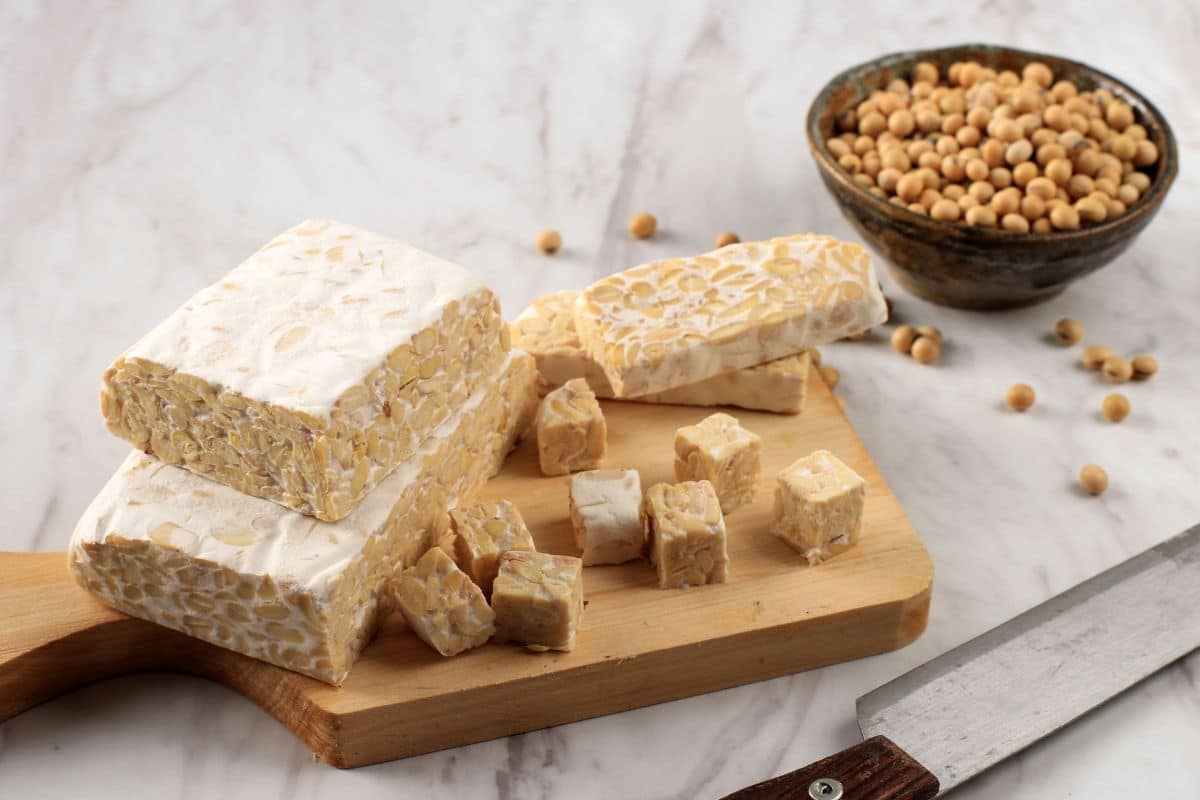
- Chicken, pork or beef: tofu, tempeh, mushrooms, jackfruit or seasonal vegetables
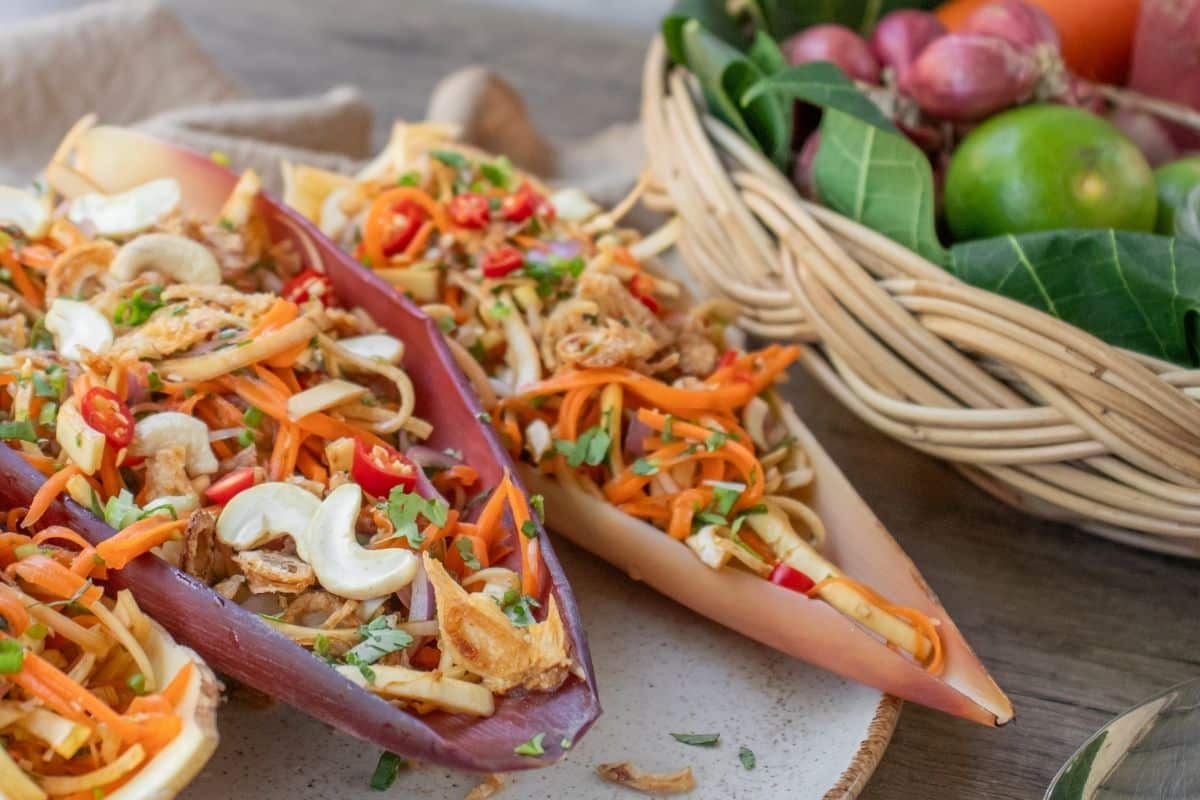
- Fish or seafood: king oyster mushrooms, lion's mane mushrooms, banana blossom or tofu
- Chicken stock: vegetable stock with lemongrass, galangal, lime leaves and mushroom stems
The trick is to layer flavour. One ingredient rarely replaces fish sauce or shrimp paste perfectly on its own. A small combination of salty, fermented, earthy and ocean-like ingredients usually works best.
Thai Vegan Recipes To Make At Home
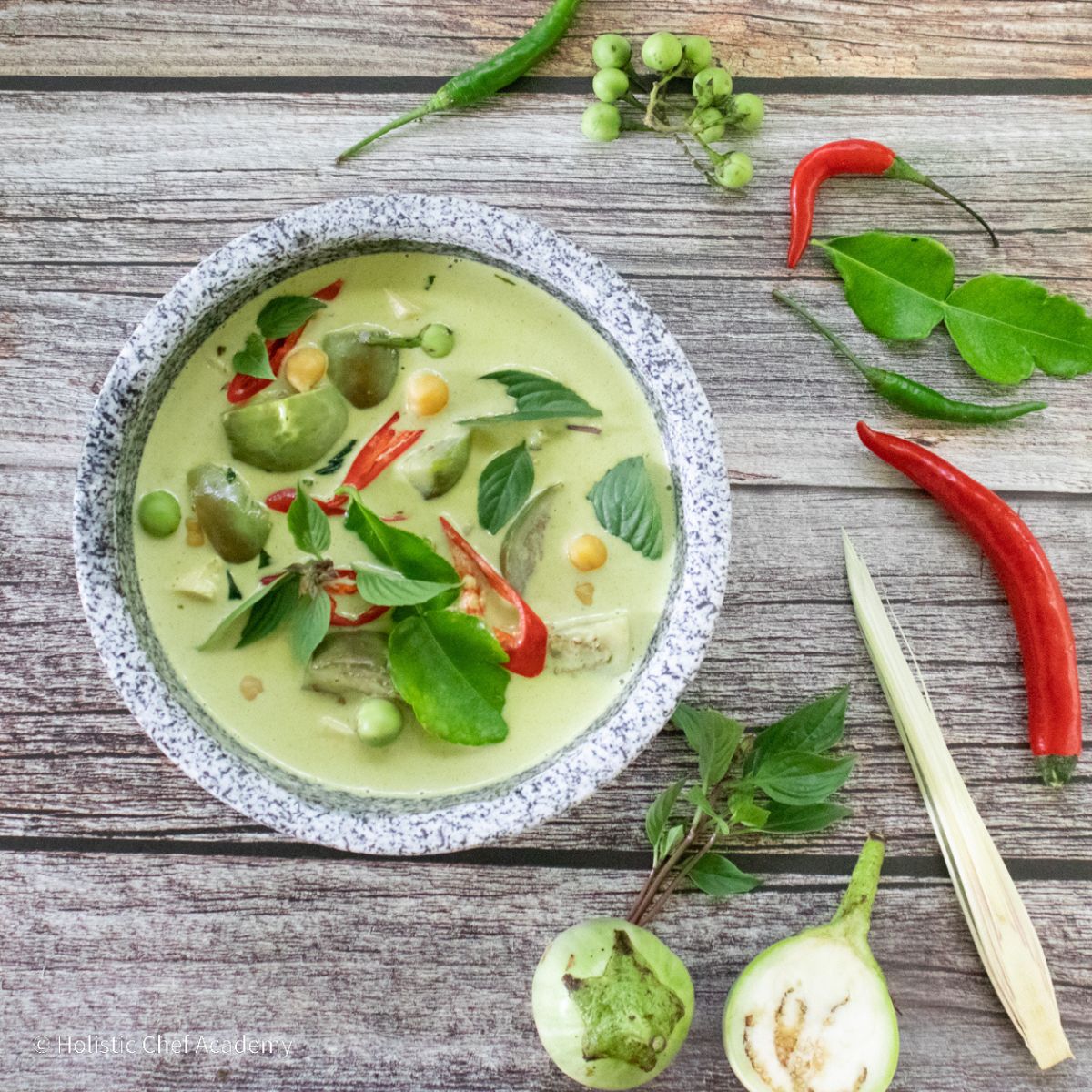
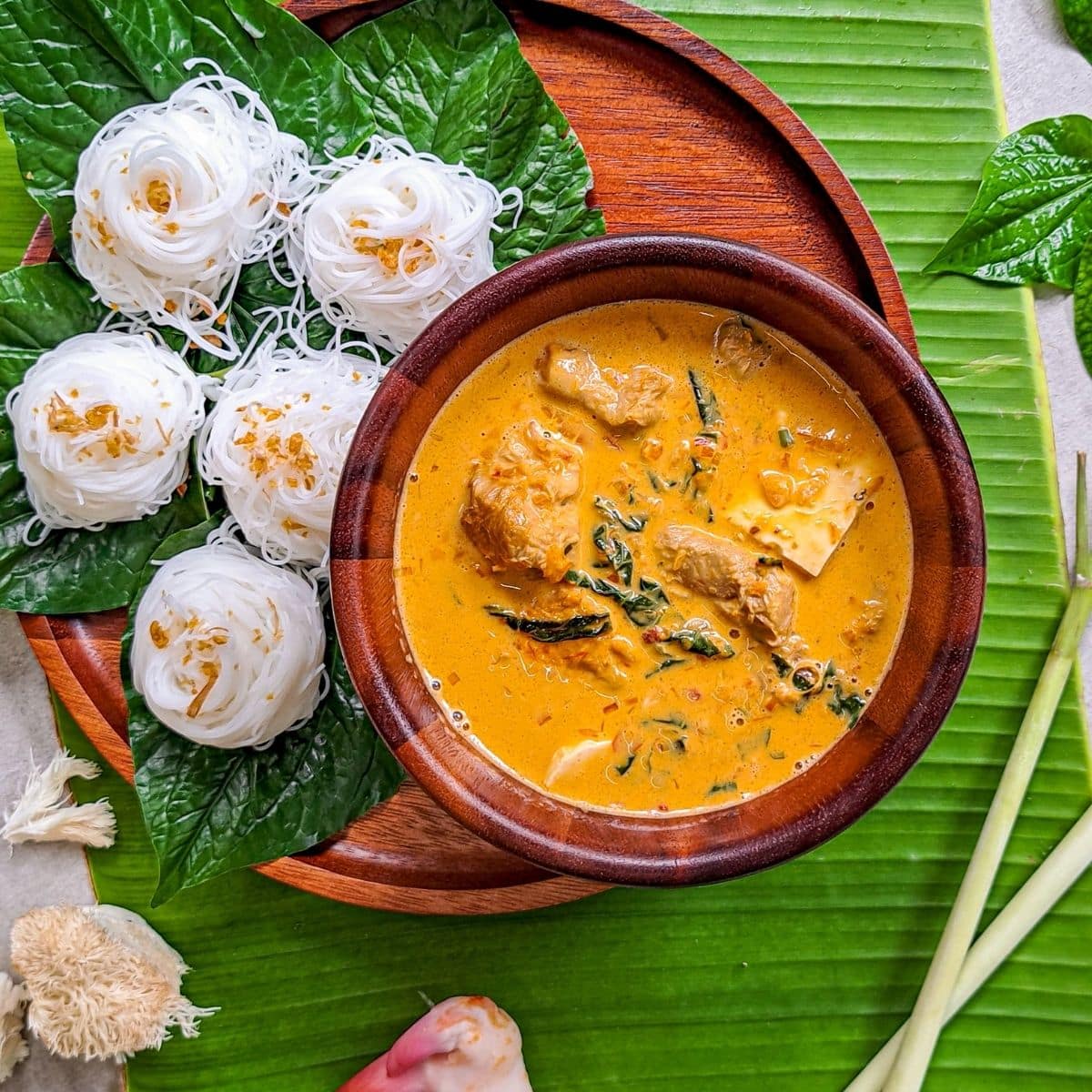
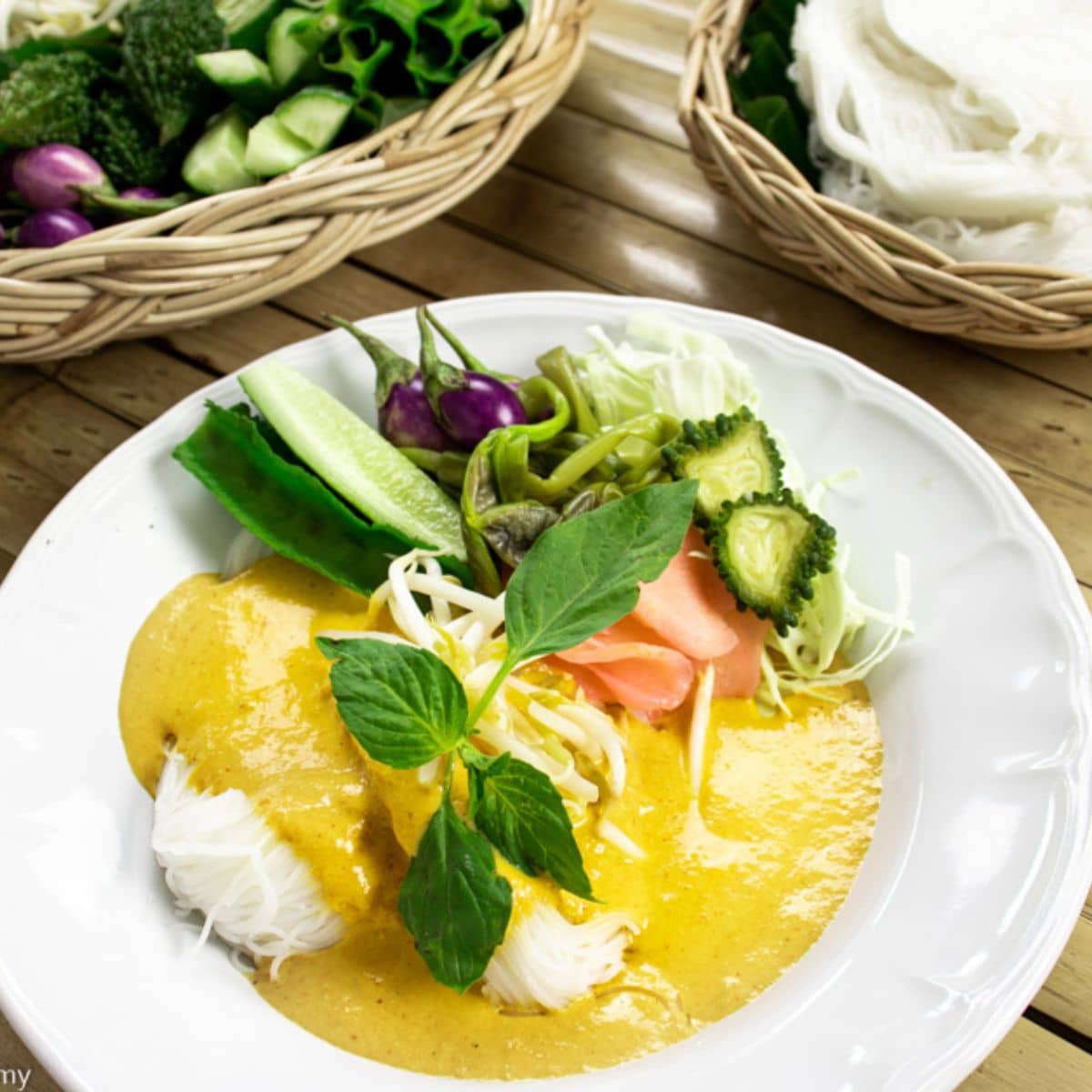
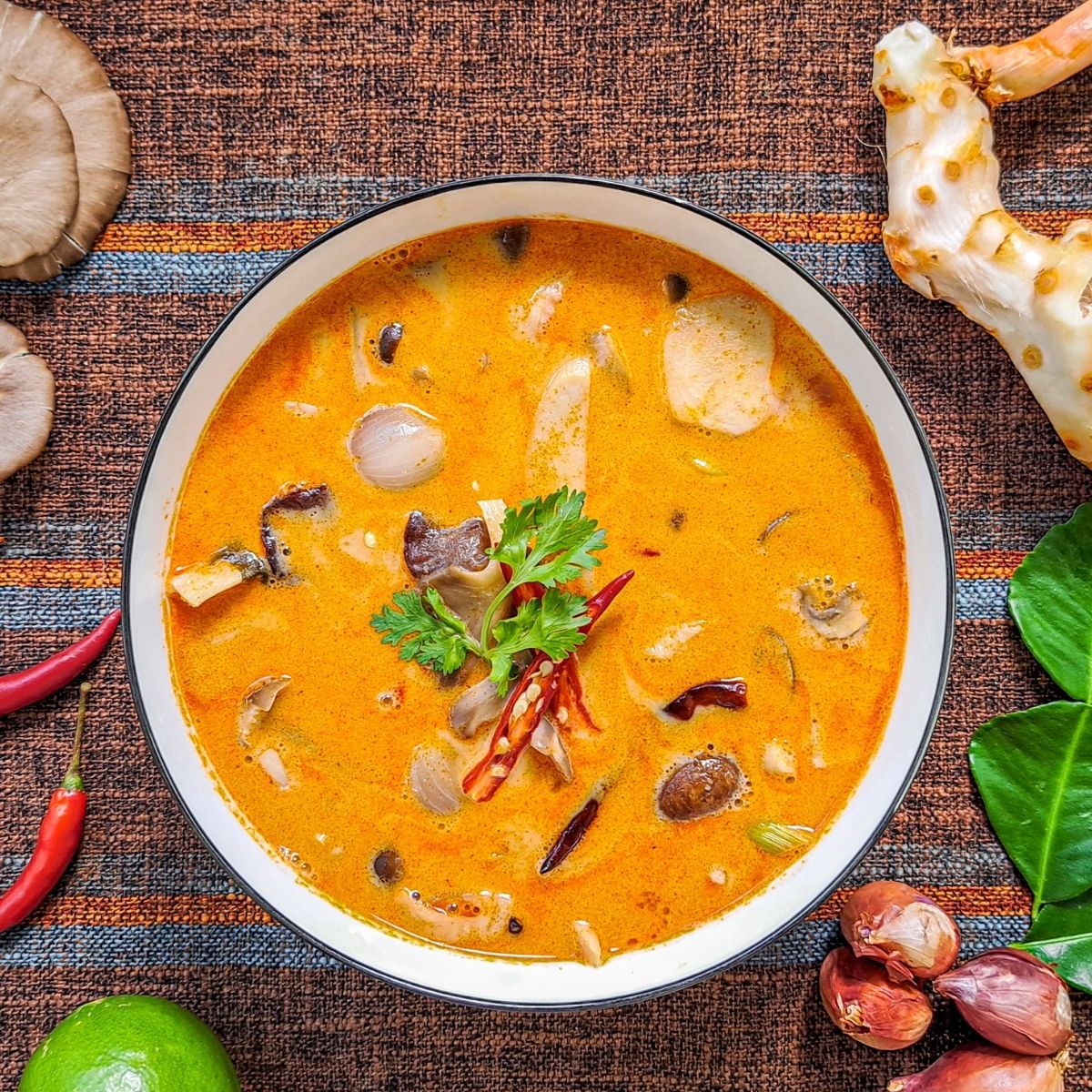
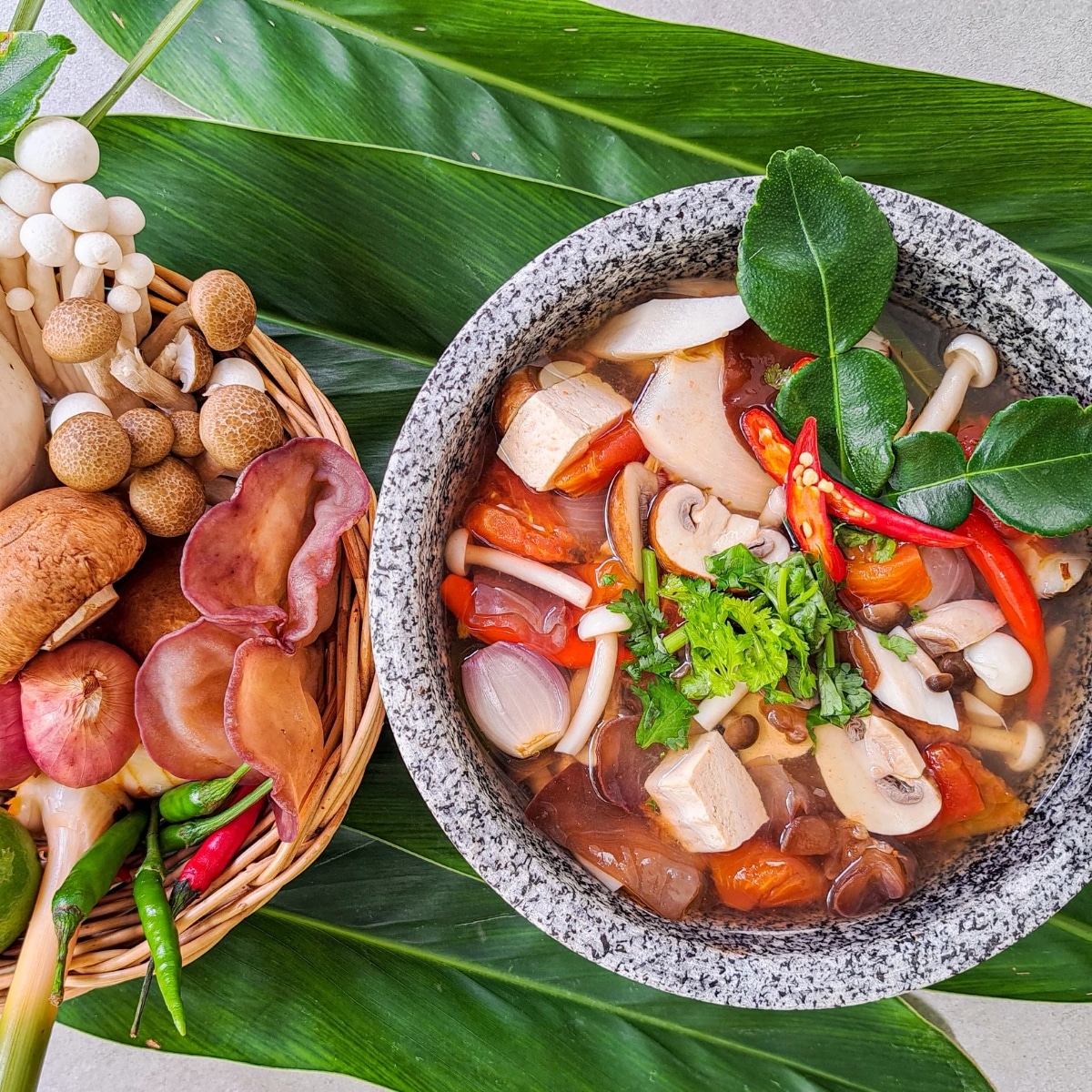
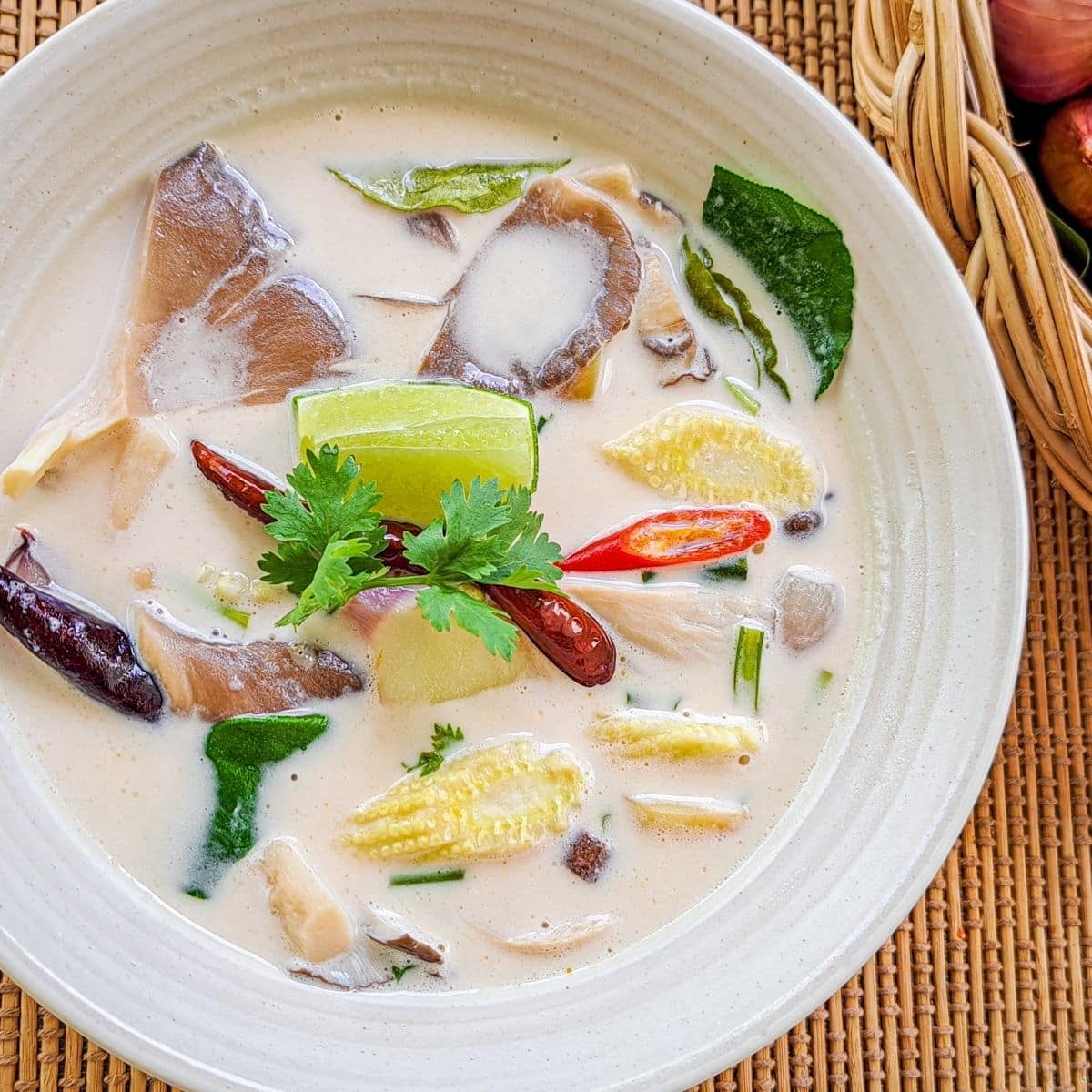
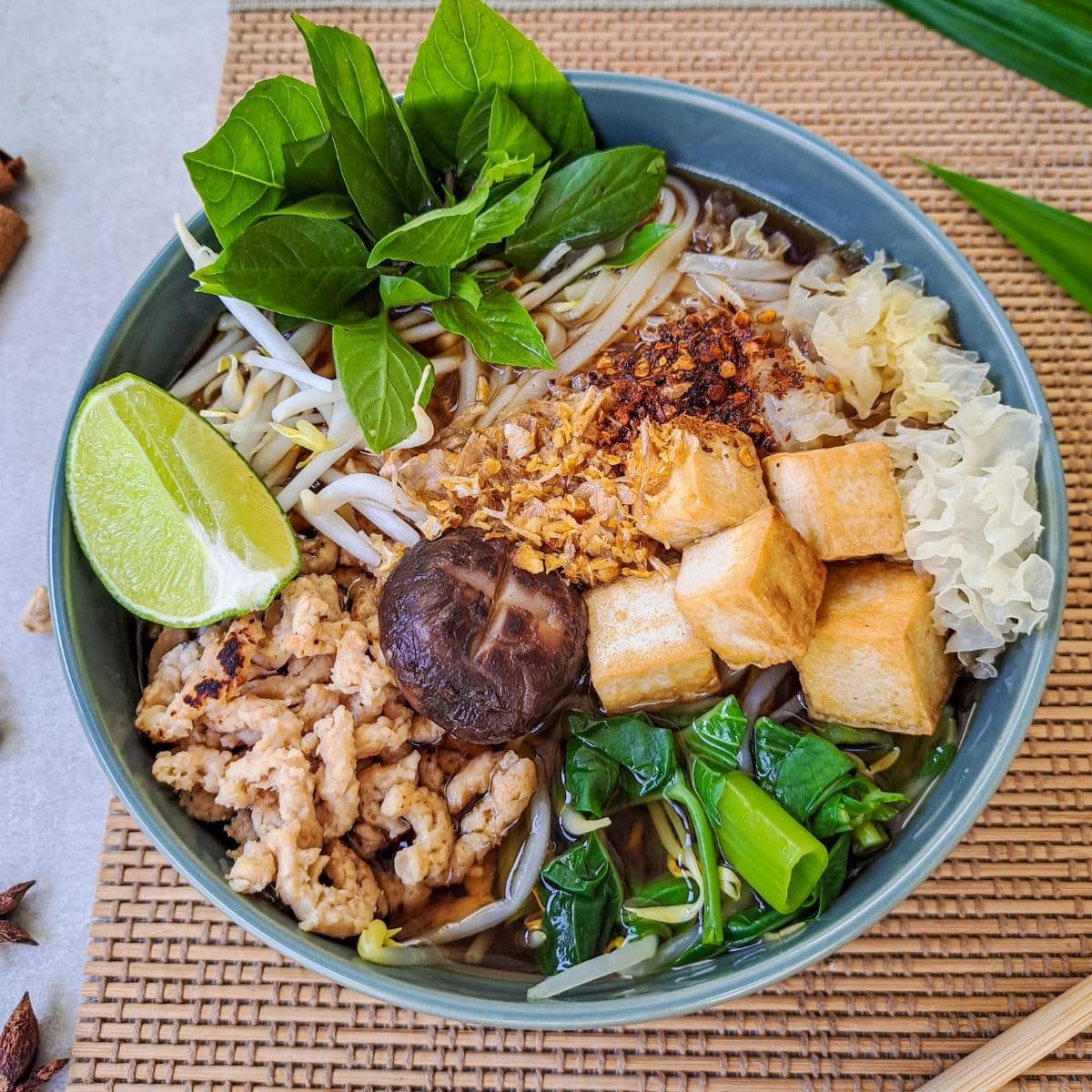
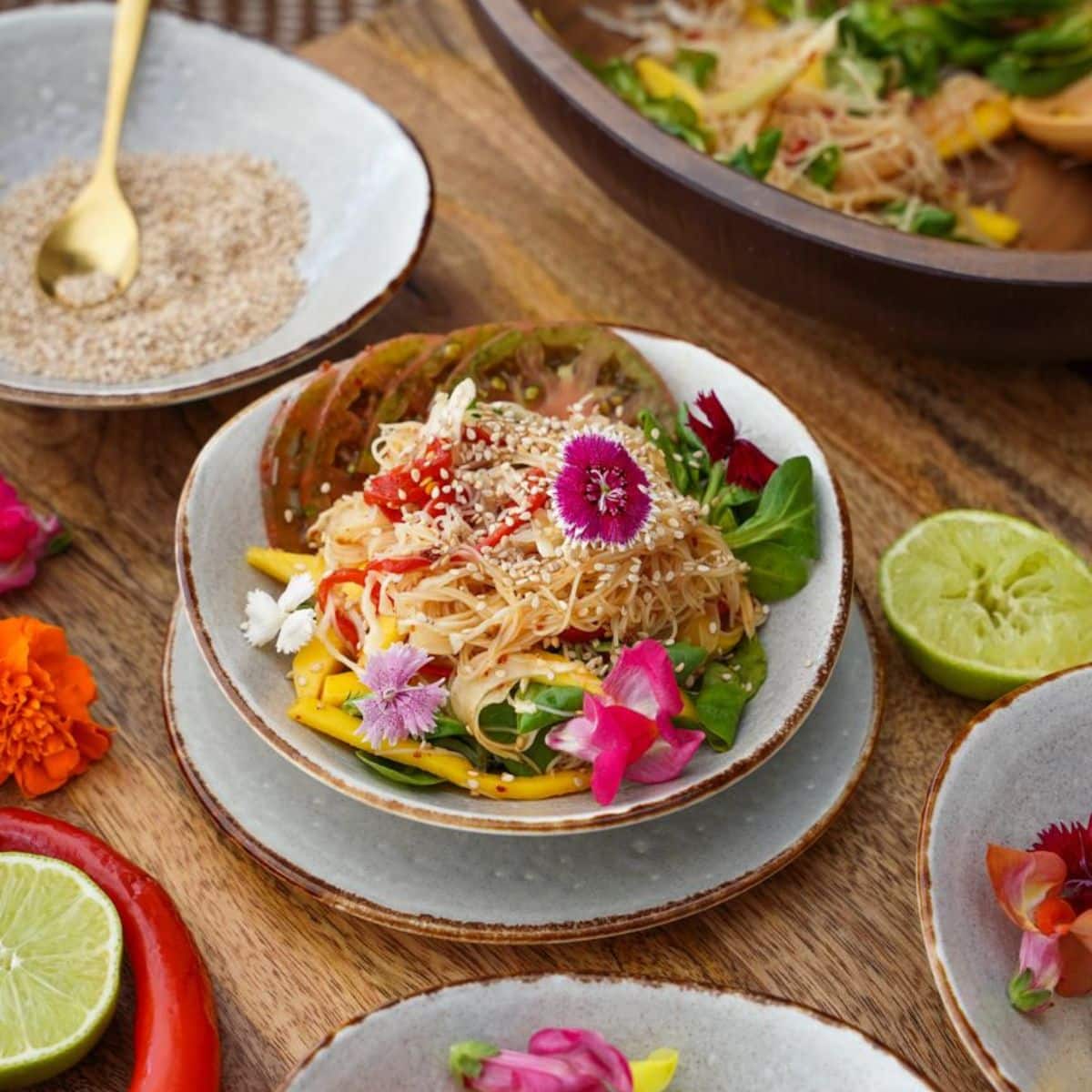
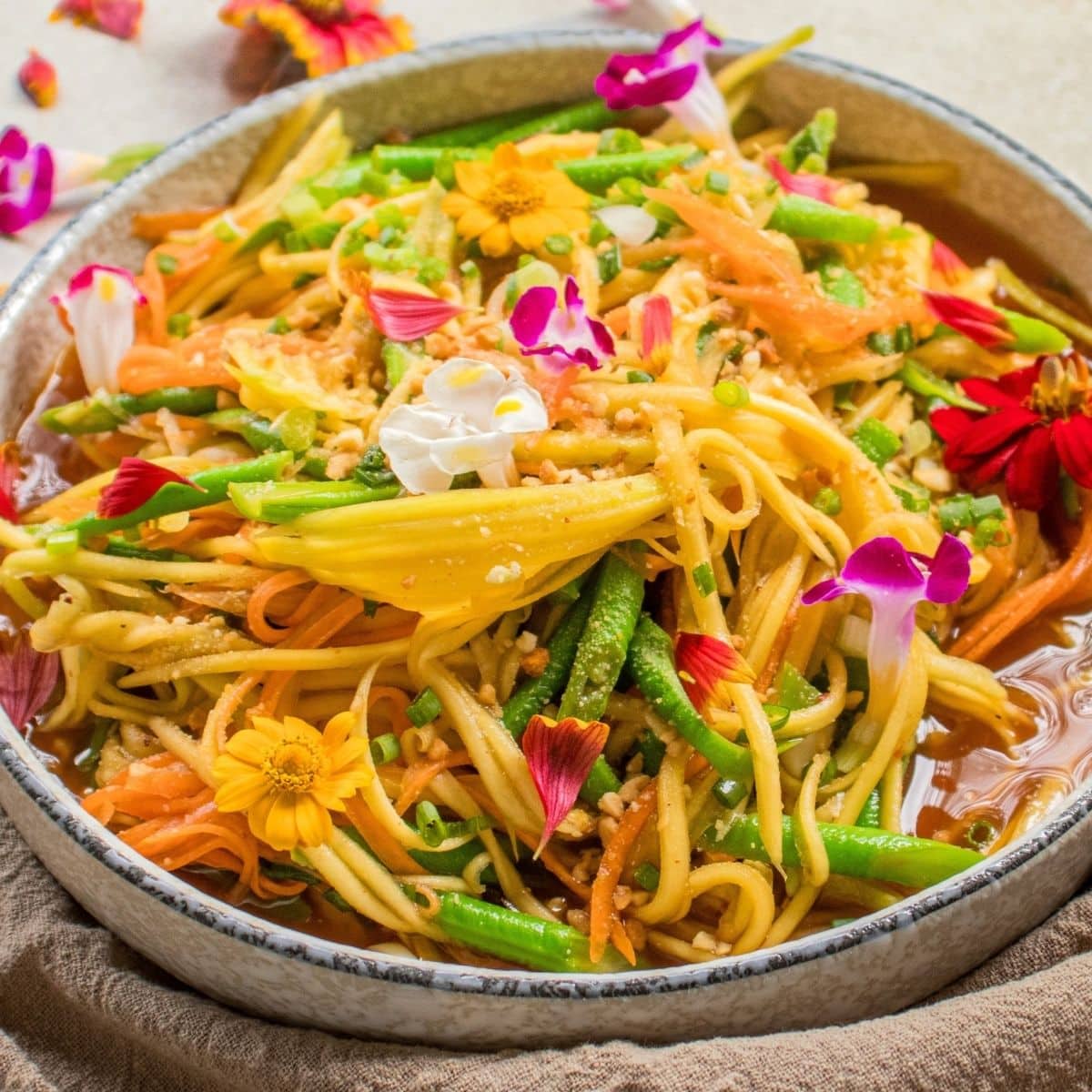
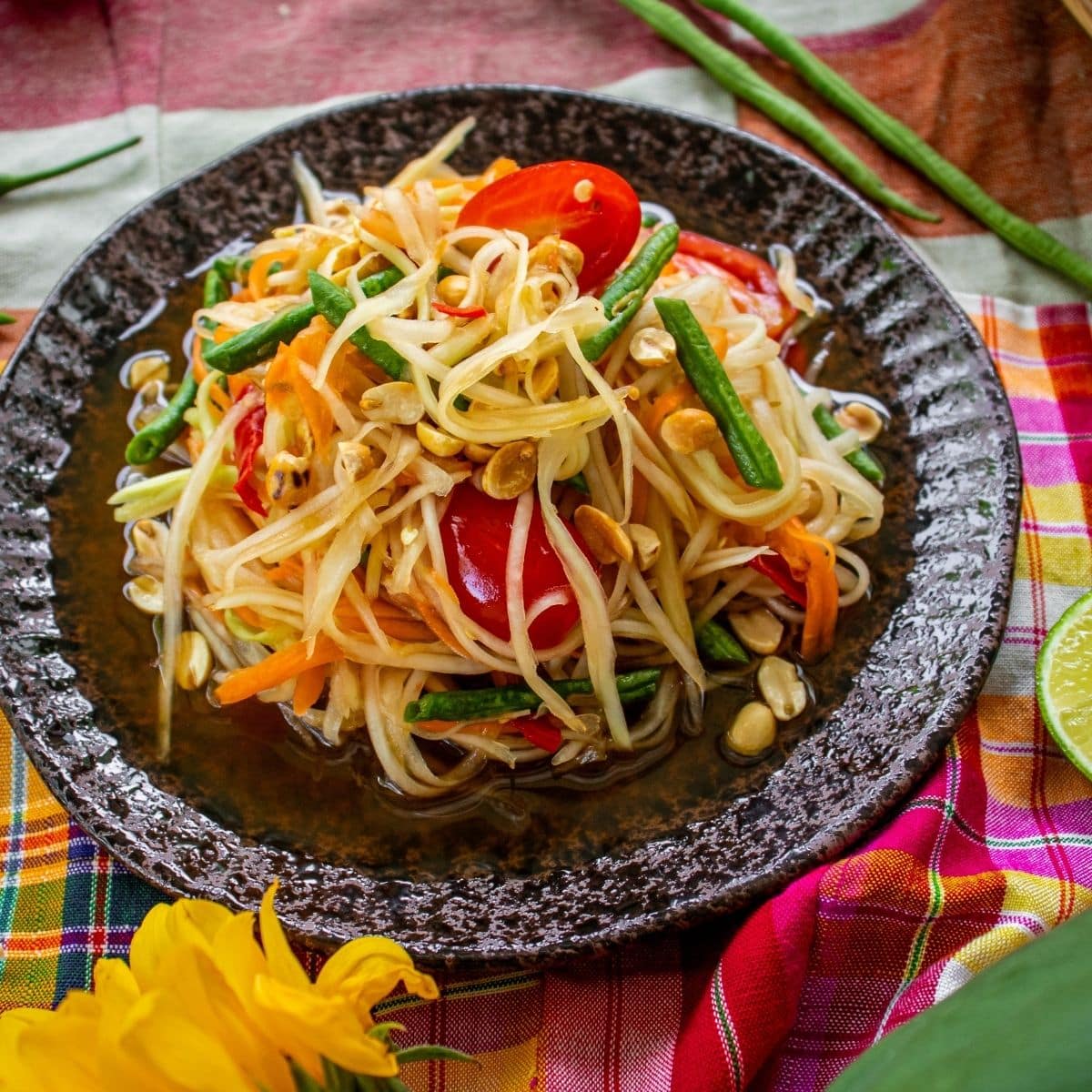
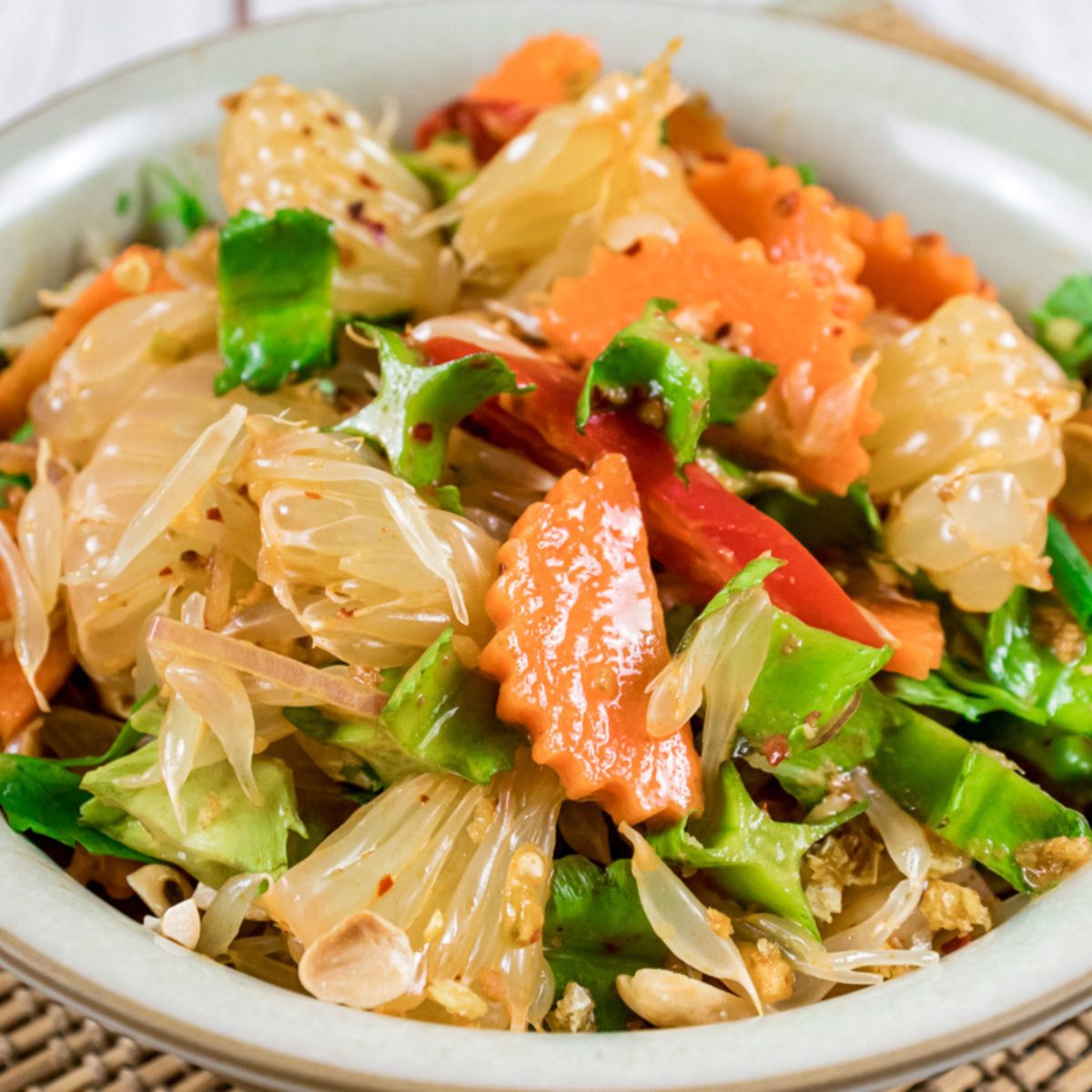
Below is our growing collection of Thai vegan recipes from Holistic Chef Academy.



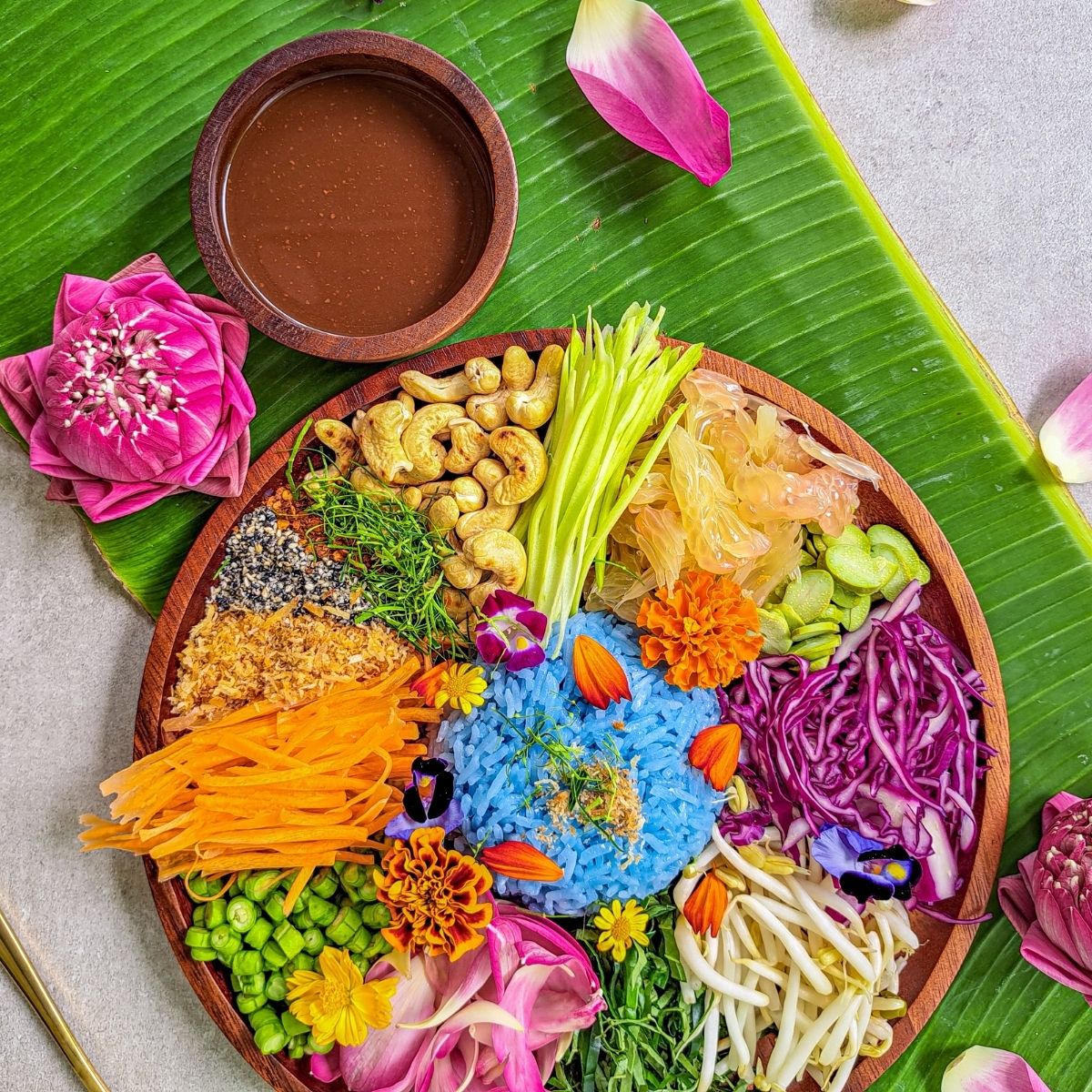
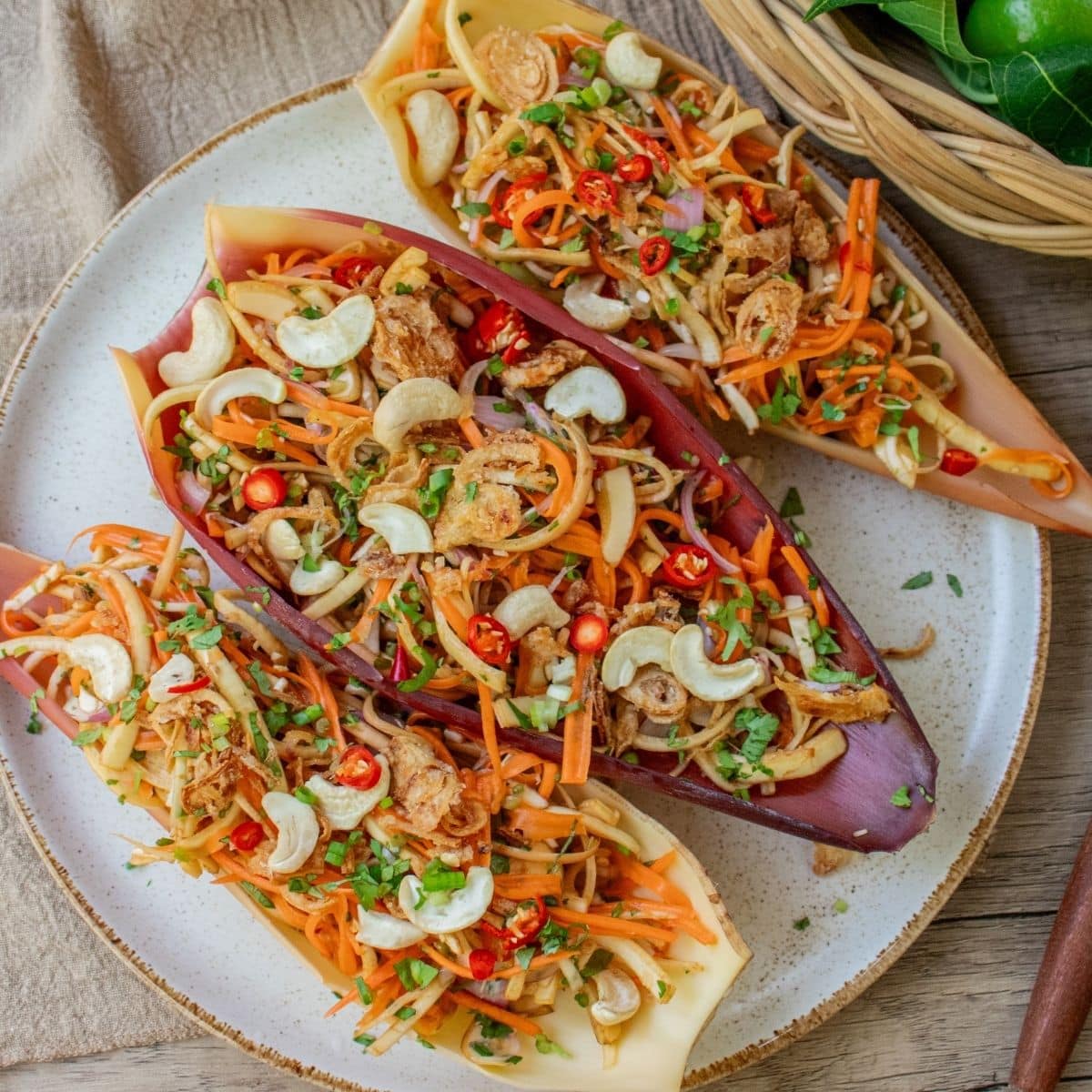


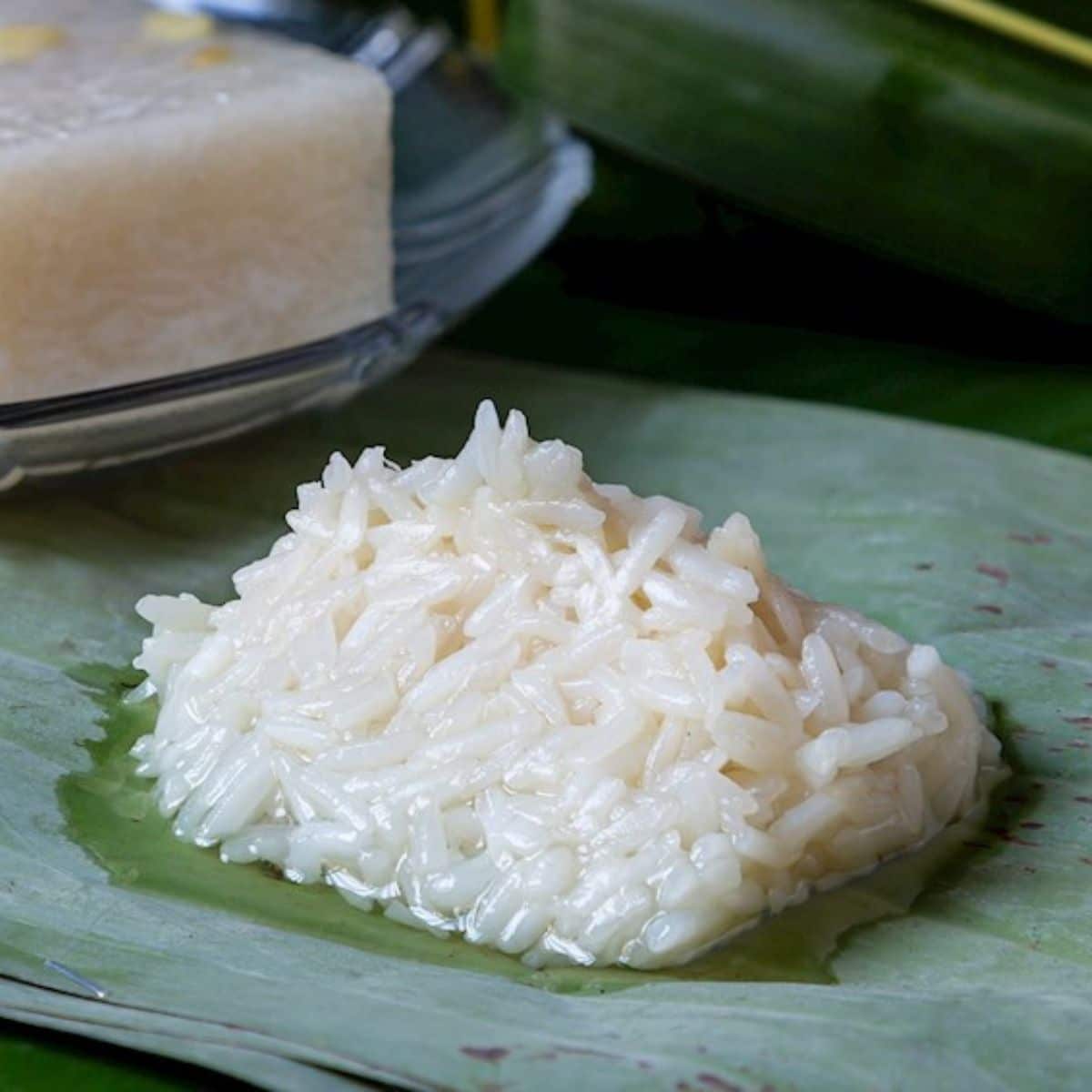
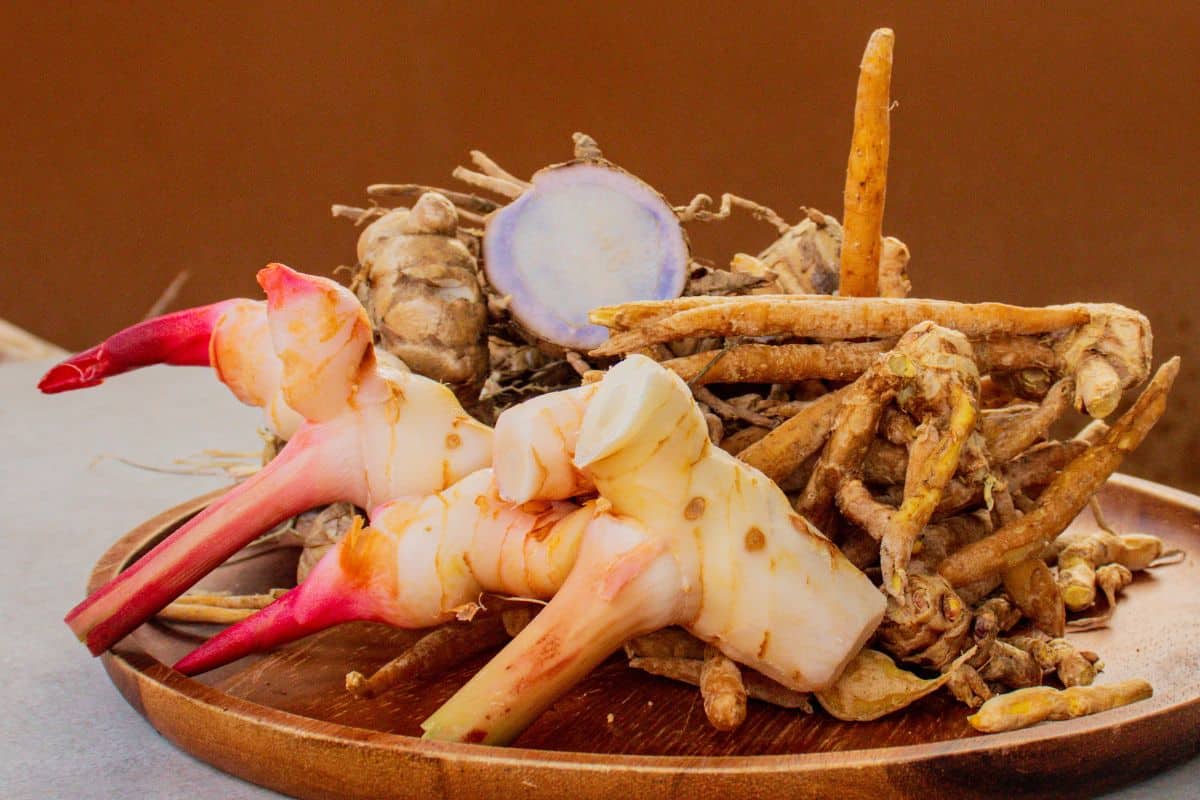
Thai Superfood Ingredients We Love
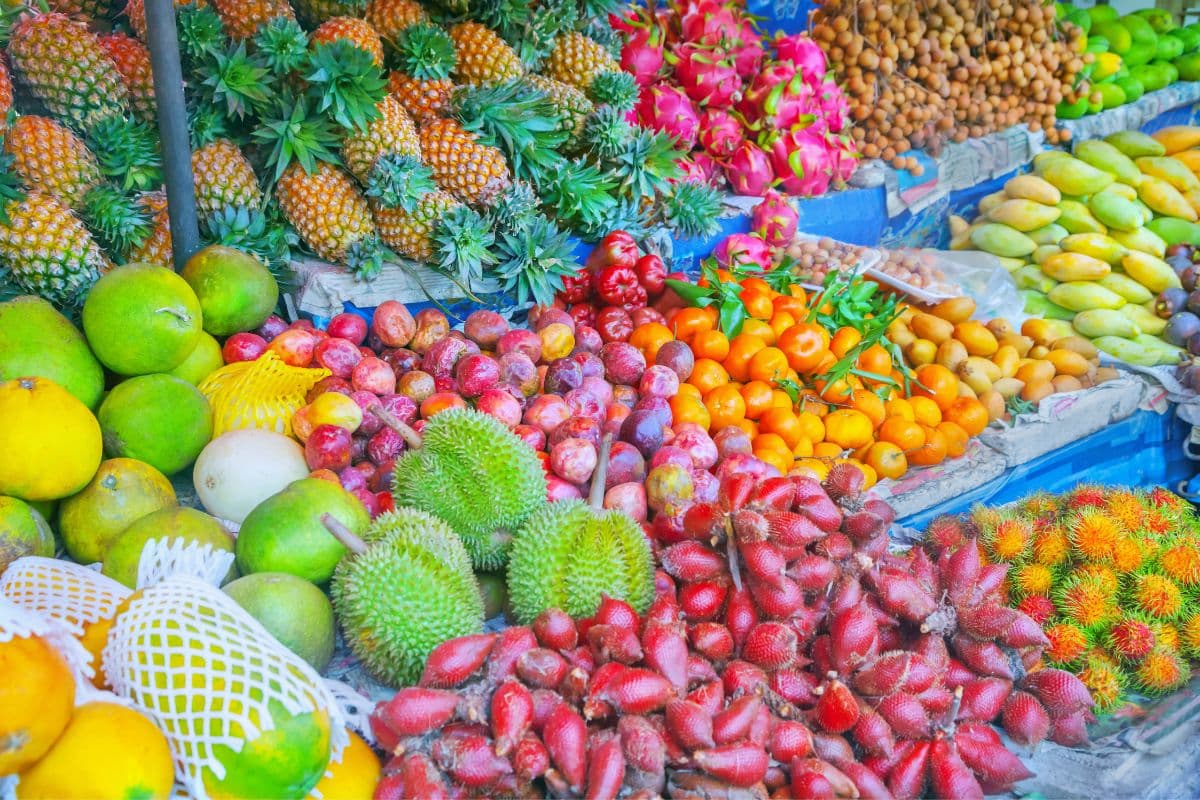
One of the best parts of cooking in Thailand is visiting local food markets. They are full of herbs, fruits, roots, seeds, mushrooms, leaves and flowers. Many of these ingredients are deeply connected to traditional Thai food and medicine.
Some of our favourite Thai ingredients include:
- Moringa
- Cha-om
- Black ginger
- Butterfly pea
- Jiagoulan
- Noni
- Split gill mushrooms
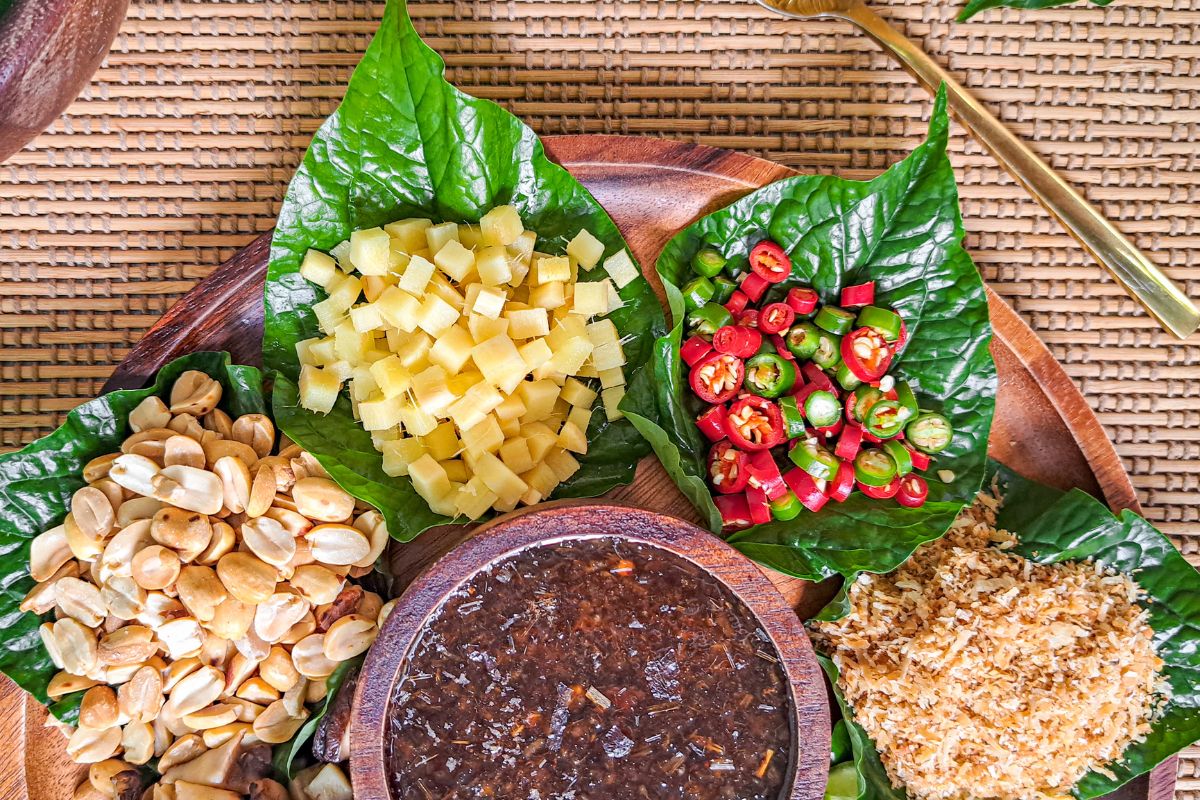
- Betal leaves
- Turmeric
- River tamarind
- Young coconuts
- Lemongrass
- Kaffir lime leaves
- Thai basil
- Galangal
- Green papaya
These ingredients are not just there for flavour. Many of them are used traditionally for digestion, circulation, immune support and general wellbeing.
That is one of the reasons Thai cuisine fits so naturally into holistic cooking.
What To Serve With Thai Vegan Recipes
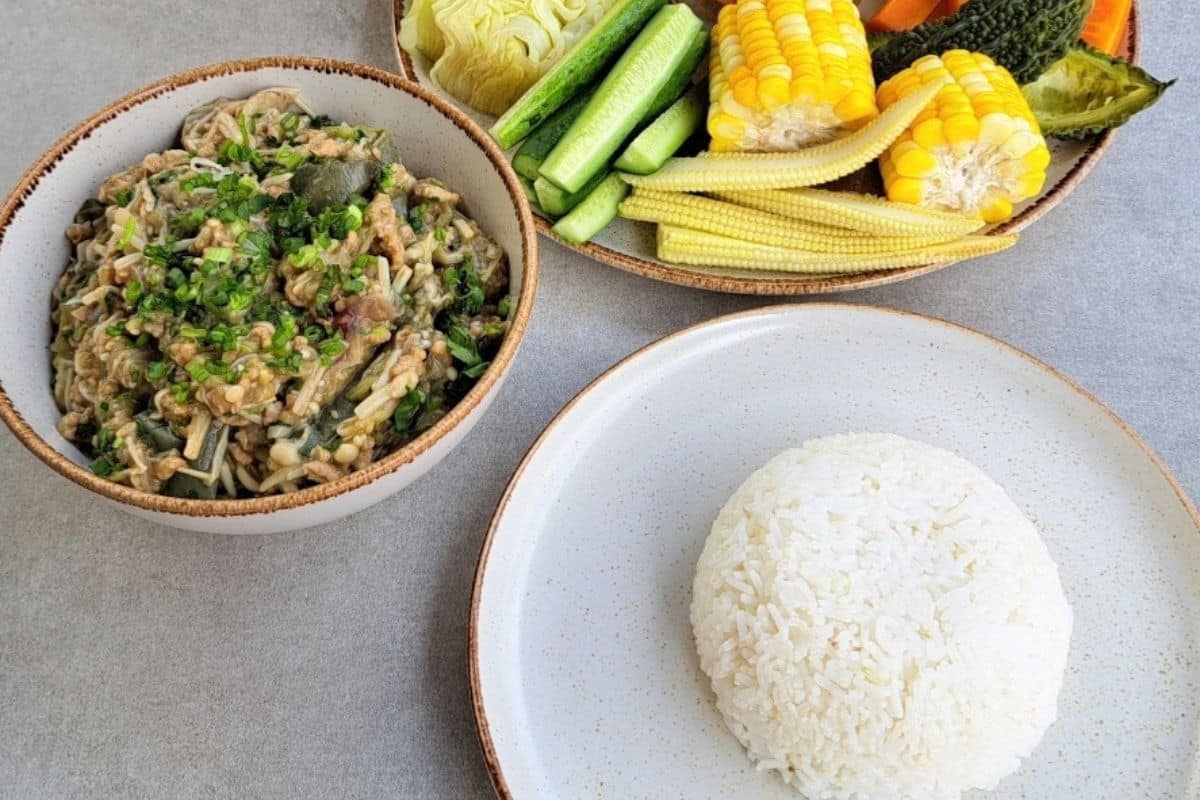
Thai vegan recipes are perfect for creating colourful sharing meals.
Serve Thai curries, soups, salads and noodles with:
- Steamed jasmine rice
- Brown rice
- Sticky rice
- Rice noodles
- Thai pickles
- Fresh herbs
- Cucumber salad
- Lime wedges
- Toasted cashews or peanuts
- Chilli oil
- Fresh coconut water
- Lemongrass iced tea
For a simple Thai-inspired dinner, serve one curry, one salad, one rice or noodle dish, and one fresh herb garnish. That is plenty. No need to create a 14-course banquet unless you are trying to impress your auntie, your yoga retreat guests, or yourself on a very ambitious Sunday.
Essential Tools For Thai Vegan Cooking
You do not need a professional kitchen to make good Thai vegan food, but a few tools help.
Useful tools include:
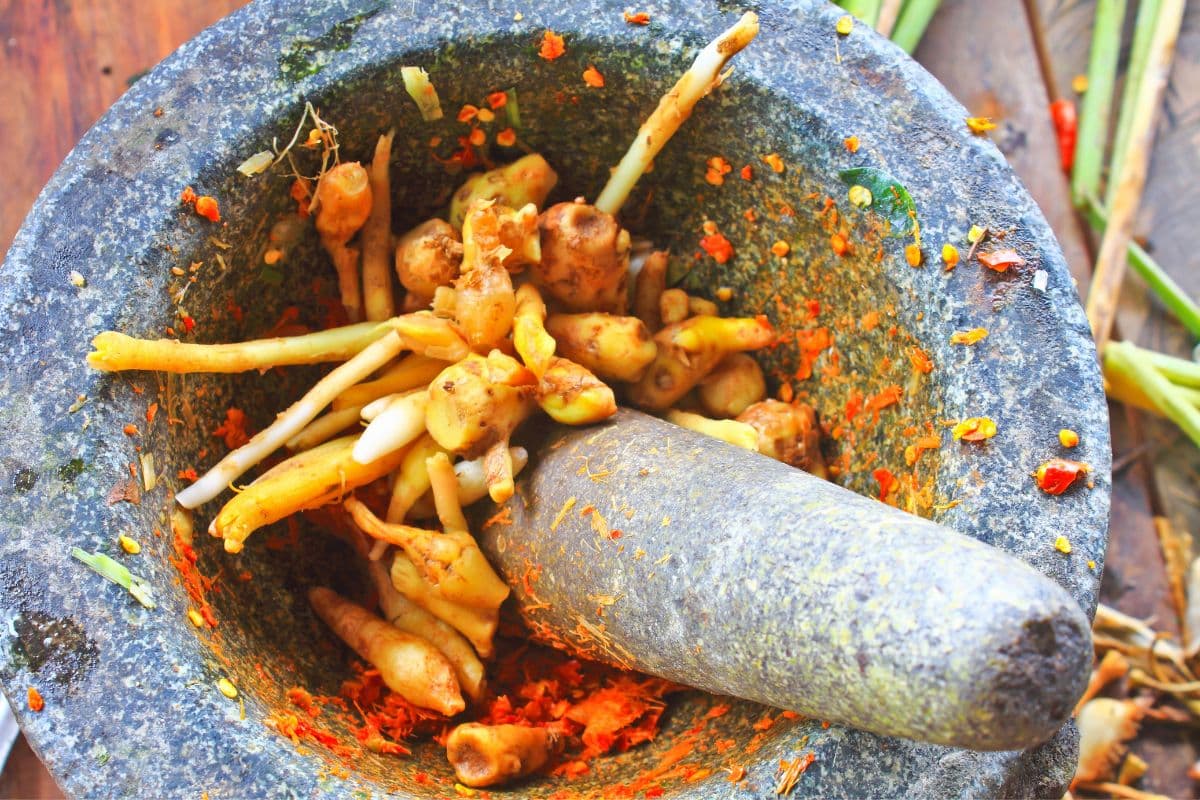
- Mortar and pestle
- Wok
- Rice cooker
- Sharp knife
- Chopping board
- Citrus juicer
- Blender
- Saucepan
- Thai peeler
- Bamboo steamer
- Sticky rice steamer
A mortar and pestle is especially useful for curry pastes, chilli dips and salads such as Som Tum. It helps release flavour in a way that a blender does not always achieve.

Tips For Making Thai Recipes Plant-Based
Build umami properly
Fish sauce and shrimp paste bring salty, fermented depth. To replace them, use a combination of tamari, miso, mushroom seasoning, seaweed, fermented soybean paste or homemade vegan fish sauce.
Taste and adjust
Thai food is all about balance. Before serving, ask:
- Does it need more lime?
- Does it need more saltiness?
- Does it need sweetness?
- Does it need more chilli?
- Does it need fresh herbs?
Your spoon is the boss. Taste as you go.
Use fresh herbs generously
Coriander, Thai basil, mint, spring onion, kaffir lime leaves and fresh chilli can transform a dish at the end.
Don't overboil coconut milk
Simmer coconut milk gently. If you boil it hard for too long, it can split or become heavy.
Use seasonal vegetables
Thai recipes are very adaptable. Use what is fresh, local and seasonal where you are.
More Plant-Based Recipe Collections
Looking for more wholefood recipe inspiration? Explore these collections from Holistic Chef Academy:
FAQ About Thai Vegan Recipes
Yes. Thai recipes are often easier to make vegan than many Western dishes because traditional Thai cooking rarely uses dairy. The main ingredients to replace are fish sauce, shrimp paste, oyster sauce, eggs, meat and seafood.
Use tamari, soy sauce, coconut aminos, miso, seaweed, mushroom seasoning or homemade vegan fish sauce. For best flavour, combine salty, fermented and umami-rich ingredients.
Not always. Many Thai curry pastes contain shrimp paste, and many Thai curries use fish sauce. Check the label carefully or make your own vegan curry paste.
Vegan Thai red curry, vegan Thai green curry and vegan Pad See Ew are great beginner recipes. They are flexible, flavourful and easy to adapt.
Many Thai vegan recipes are naturally gluten-free or easy to adapt. Use rice noodles, rice, tamari and gluten-free curry pastes or sauces where needed.
Yes. A wok is useful, especially for noodles and stir-fries, but you can still make many Thai recipes using a frying pan, saucepan or sauté pan.
Save & Share This Thai Vegan Recipe Collection
If you love Thai food, save this roundup and come back whenever you need dinner inspiration. We will continue adding more Thai vegan recipes to this collection as the Holistic Chef Academy recipe library grows.
For more plant-based cooking inspiration, explore our full recipe index and discover recipes designed to educate, inspire and empower.


Did you make this recipe? Let me know!