
Around 2017, I was invited to deliver a bespoke Tom Aikens fermentation training workshop at Imperial College London. The session focused on raw food and fermentation techniques for Michelin-starred chef Tom Aikens and his executive chef. It was an extraordinary opportunity and a defining moment in my journey as The Holistic Chef. After years working in fine dining, I had taken a different direction towards holistic cooking. Now, I was sharing my knowledge with one of Britain's most respected chefs, someone whose work had inspired me earlier in my career.

How the Opportunity Came About
At the time, I was teaching raw food and fermentation at Leiths Cookery School in London. These subjects were attracting growing interest, although many of the techniques were still relatively unfamiliar in mainstream professional kitchens.
Through publicity surrounding my teaching, Tom became aware of my work and contacted me directly about developing a personalised workshop. He was keen to explore fermentation, particularly homemade vinegars, kombucha and their applications in professional kitchens.

Preparing a Bespoke Fermentation Workshop
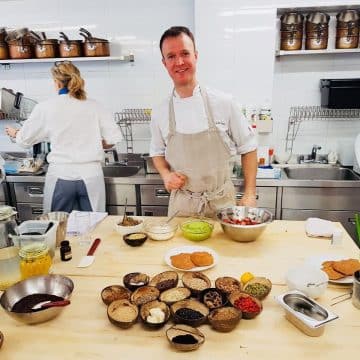
Unlike a conventional cooking class, fermentation requires considerable preparation. I spent three weeks preparing ingredients and finished products so I could demonstrate the complete processes, from initial preparation through to tasting.
The workshop covered a range of techniques:
- Fermented beverages: Kombucha, water kefir, milk kefir and pineapple tepache.
- Homemade vinegars: Stout, Guinness and cider vinegars.
- Vegetable fermentation: Sauerkraut and kimchi.
- Raw food preparation: Sprouted buckwheat granola, homemade pumpkin seed milk, dehydration techniques and raw salads.
Kombucha was still relatively niche at the time, long before it became widely available in supermarkets and cafés. I brought my kombucha SCOBY and prepared examples at different stages, allowing us to explore both the fermentation process and its culinary possibilities.
We also discussed how fermented ingredients could be incorporated into restaurant cooking, from kombucha vinegar and creative salad dressings to marinades and condiments.

Teaching a Michelin-Starred Chef
The workshop was highly interactive. Tom and his executive chef were closely involved, observing, tasting and asking questions as we worked through the techniques. I particularly remember demonstrating kombucha, water kefir and sprouted buckwheat granola. Seeing Tom discover techniques that were unfamiliar to him was incredibly rewarding.
I had admired his cooking for years and eaten in his restaurants as a younger chef. Now, I was introducing him to an entirely different area of culinary knowledge. We connected easily through our shared professional kitchen experience, and the session was received very positively. They were also surprised by the amount of advance preparation involved in demonstrating fermentation properly.

A Defining Moment in My Culinary Journey
What made this experience particularly meaningful was the journey that had brought me there. Earlier in my career, I had worked in Michelin-starred kitchens and held senior positions in luxury hospitality, including as an executive chef in a Relais & Châteaux property in The Cotswold's.
Eventually, I stepped away from that world to explore whole foods, plant-based nutrition and traditional fermentation techniques, spending time in Northern Thailand developing my knowledge and skills. It was an unconventional career move, and there were moments when I questioned whether I had made the right decision. Being invited to teach Tom Aikens helped put those doubts into perspective.
It confirmed that the knowledge I had been developing was valuable, even within the highest levels of professional gastronomy. Fermentation and holistic cooking weren't alternatives to fine dining; they were additional tools that could expand a chef's creativity, flavour repertoire and approach to ingredients. Looking back, it remains one of the proudest moments of that stage of my career.
Bringing That Experience to Holistic Chef Academy
This experience reflects the educational philosophy that continues to guide Holistic Chef Academy today. Whether teaching home cooks, culinary students or experienced restaurant chefs, the fundamental knowledge remains the same. What changes is how we communicate it and explore its practical applications.
A beginner might learn the foundations of making kombucha, while a professional chef might explore how to develop it into a vinegar, dressing or marinade for a restaurant menu. Our approach is to make specialist culinary knowledge accessible, practical and relevant, helping people develop confidence, creativity and a deeper understanding of food.
Bespoke Culinary Training and Consultancy
Holistic Chef Academy provides tailored culinary education, fermentation training, plant-based recipe development and wellness-focused consultancy for chefs, restaurants, hotels, resorts and retreat businesses. To explore bespoke training or culinary consultancy for your team, discover our Wellness Chef Consulting services.

Did you make this recipe? Let me know!