

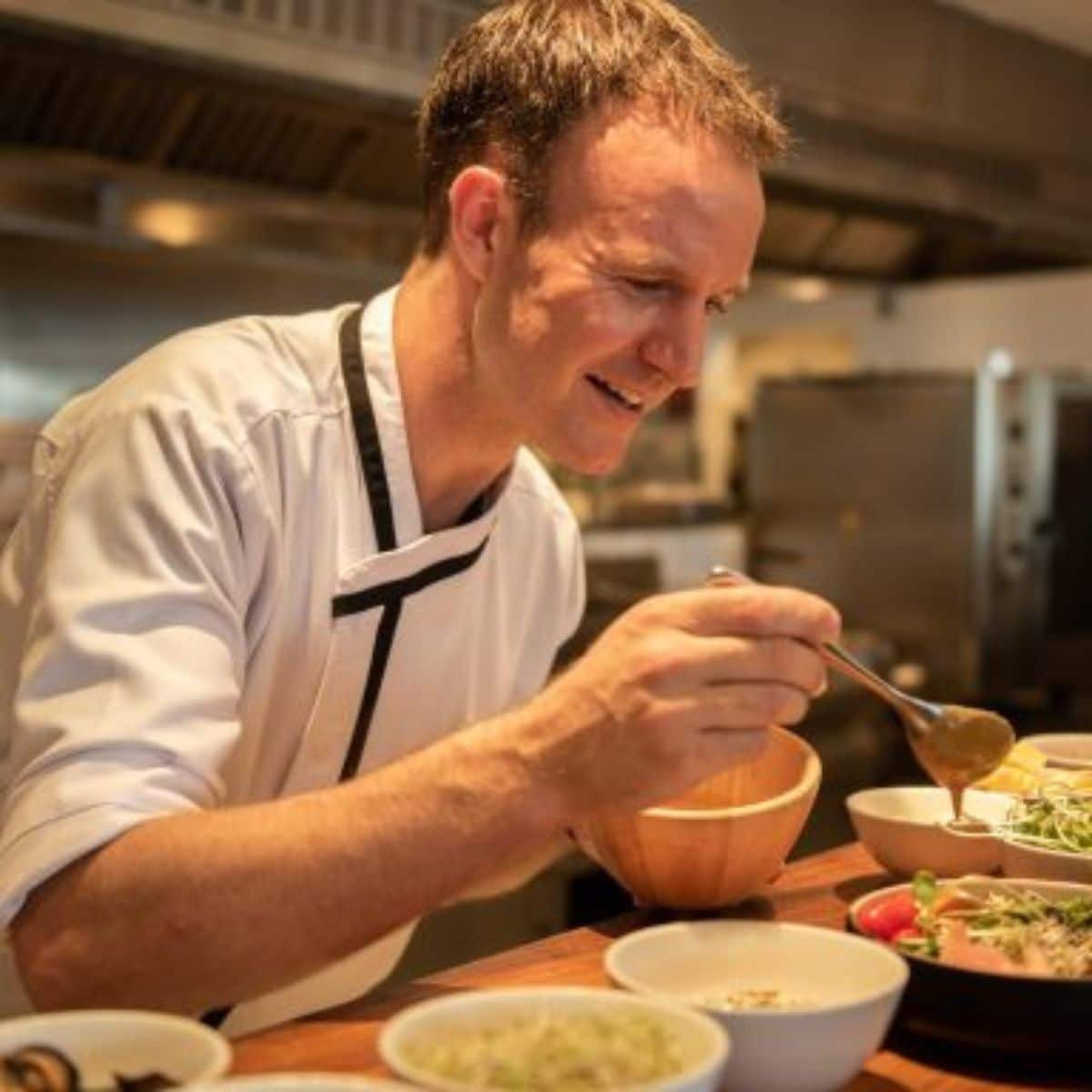
From 2018 to 2022, Holistic Chef Academy founder Jamie Raftery worked with Thanyapura Sports Resort in Phuket, Thailand, first as a wellness and vegan consultant chef and later as Director of Culinary Development. This case study explores how that role shaped his work in wellness menus, sports nutrition, plant-forward cooking, chef training, recipe SOPs, cost control, school catering and resort F&B systems.
Jump to:
- Project Overview
- About Thanyapura Sports Resort
- My Role as Director of Culinary Development
- The Challenge
- Building Wellness and Sports Nutrition Menus
- Sports Nutrition and Wellness Food
- Chef Training and Leadership
- Systems and Costing
- Education, Community and UWC Catering
- Cookery Classes and Guest Experience
- Navigating COVID and the Next Chapter
- Results, Impact and Legacy
- How This Experience Shaped Holistic Chef Academy
- Work With Holistic Chef Academy
Project Overview
Project: Thanyapura Sports Resort
Location: Phuket, Thailand
Time period: 2018-2022
Role: Wellness and vegan consultant chef, later Director of Culinary Development
Focus areas: Wellness food, sports nutrition, plant-forward menu development, chef training, recipe SOPs, kitchen systems, cost control, school catering, guest cookery classes and resort F&B operations.
Thanyapura Sports Resort was one of the most important chapters in my culinary career. It was the place where my work in wellness food, plant-forward cooking, sports nutrition, chef training and hospitality operations came together inside a large international resort environment.
I first joined Thanyapura Sports Resort in 2018 as a wellness and vegan consultant chef. My original role was to train the culinary team in healthier vegan cooking techniques, recipes and methods. Over time, that consultancy role developed into a full-time position as Director of Culinary Development.
This case study shares the story of that work, what I learned, and how the experience helped shape the future direction of Holistic Chef Academy.
About Thanyapura Sports Resort
Thanyapura is a sports and wellness resort in Phuket, Thailand. I often describe it as a sporting paradise in the middle of the jungle.
The resort has Olympic-sized swimming pools, a running track, tennis courts, a football pitch, volleyball court, yoga studio, gym facilities, medical clinic, physiotherapy, massage spa, world-class sports coaches, sports programmes and a strong international school community through the UWC school on campus.
It attracts a wide range of guests, including Olympic teams, international swim teams, triathletes, tennis players, long-stay wellness guests, resort guests, sports club members, families, teachers, students, corporate groups and retreat guests.
The food and beverage operation was large, varied and complex. It included:
- Divine Restaurant: the main international restaurant serving Thai, Western, wellness and resort-style menus
- Booster Café: a poolside sports café with juices, smoothies, poke bowls and lighter active-lifestyle food
- DiLite Vegan Restaurant: a dedicated vegan restaurant for weekday vegan buffets, group dining and special events
- Khun Khao Conference and Banqueting Centre: large events, weddings, banquets and group dining for up to 300-500 guests
- Sports Lounge: a casual outlet near the gym serving food such as tacos, pizzas and bar-style dishes
- UWC School Catering: daily catering for approximately 400-500 students and around 100 teachers
- Staff Canteen: a dedicated staff meal operation supporting hundreds of team members across breakfast, lunch and dinner shifts
This was not a small restaurant project. It was a full resort food ecosystem serving athletes, school students, teachers, hotel guests, event groups, staff and local members every day.
My Role as Director of Culinary Development
My role began with wellness and vegan menu development, but it quickly expanded into wider culinary leadership.
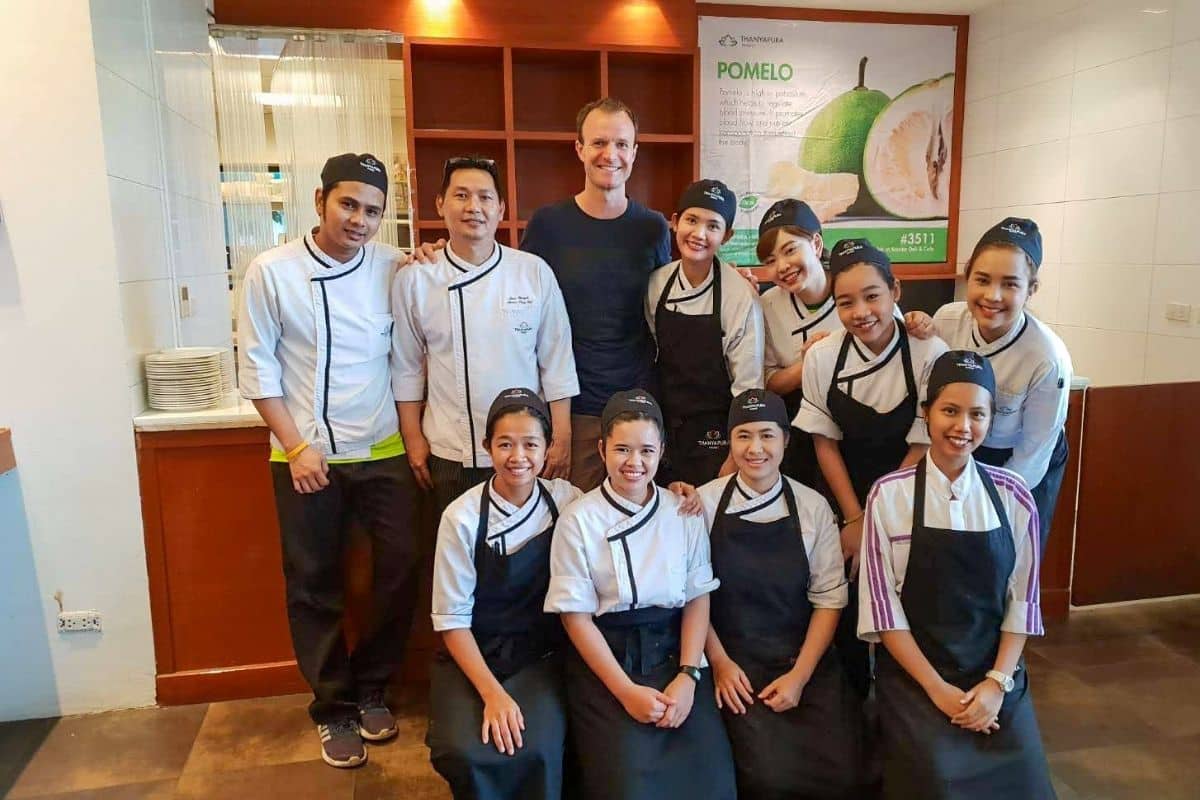
I was responsible for leading and supporting a large team across kitchen and front-of-house operations. At one stage, I had senior responsibility for more than 100 staff across different outlets, kitchen sections and service teams.
My work included:
- Wellness menu development
- Vegan and plant-forward recipe development
- Sports nutrition menu support
- Chef training and team development
- Recipe SOP creation
- Nutrition, calorie, macro and allergen information
- Recipe costing and food cost control
- F&B budget planning
- Supplier meetings and product sourcing
- UWC school catering development
- Cookery class curriculum development
- Guest and sports club member engagement
- Outlet coordination
- Kitchen systems and operational improvements
Before COVID, Thanyapura Sports Resort also had plans to expand its concept into China. Part of my role was to develop culinary IP, menus, recipes and SOPs that could support that future expansion, with space for local adaptation.
The planned China expansion was later disrupted by the pandemic, but the process of developing those systems was a valuable part of my work.
The Challenge
The original challenge was to improve Thanyapura's wellness, vegan and dietary-friendly food offering.
Improving Wellness, Vegan and Dietary-Friendly Food
The resort already had menus in place, but execution was inconsistent. Many recipes were not properly written, SOPs were missing or outdated, and there was a need for clearer training around vegan food, gluten-free food, dairy-free food, nut allergies, shellfish allergies and other dietary requirements.
In a Thai kitchen, ingredients such as fish sauce, oyster sauce, breadcrumbs, egg, meat stocks and other animal products are commonly used. That is part of the local food culture. But when serving international wellness guests, athletes and people with specific dietary needs, the team needed to clearly understand what could and could not go into certain dishes.
Training the Team on the "Why"
A major part of my role was not just teaching the team what to do, but explaining why it mattered.
If a guest has a serious allergy or dietary requirement, one wrong ingredient can have a real impact. The kitchen team and front-of-house team needed to understand the seriousness of that responsibility, while also feeling encouraged and supported rather than criticised.
Scaling the Challenge Across the Resort
As my role developed, the challenge became broader. It was about improving:
- Food quality
- Menu consistency
- Wellness positioning
- Vegan and plant-forward options
- Sports nutrition support
- Recipe SOPs
- Allergen communication
- Cost control
- Labour efficiency
- Kitchen systems
- Team training
- Guest experience
The food had to work for athletes, wellness guests, school students, teachers, parents, resort guests, local members and staff. That required variety, structure and daily operational discipline.
Building Wellness and Sports Nutrition Menus
Thanyapura Sports Resort gave me a powerful platform to develop plant-forward and wellness food in a live hospitality environment.
Developing My Plant-Forward Style
Before joining Thanyapura, I had started my holistic and plant-based journey in 2015. That was a major career shift for me. My earlier background included butchery, fishmongery and classical Michelin-starred kitchens where animal products were central.
By 2018, I was about three years into my plant-based and holistic cooking journey. Thanyapura gave me the opportunity to test, refine and scale those ideas with real guests, athletes and resort teams.
One of the most important lessons was that plant-forward food had to be delicious first. It could not feel like a compromise.
Making Plant-Forward Food Appealing
My approach was to take familiar formats and flavour structures, then rebuild them with healthier, plant-forward ingredients. With the Thai chefs, we developed vegan versions of Thai dishes while still respecting the balance of Thai food: sweet, salty, sour, spicy, aromatic and fresh.
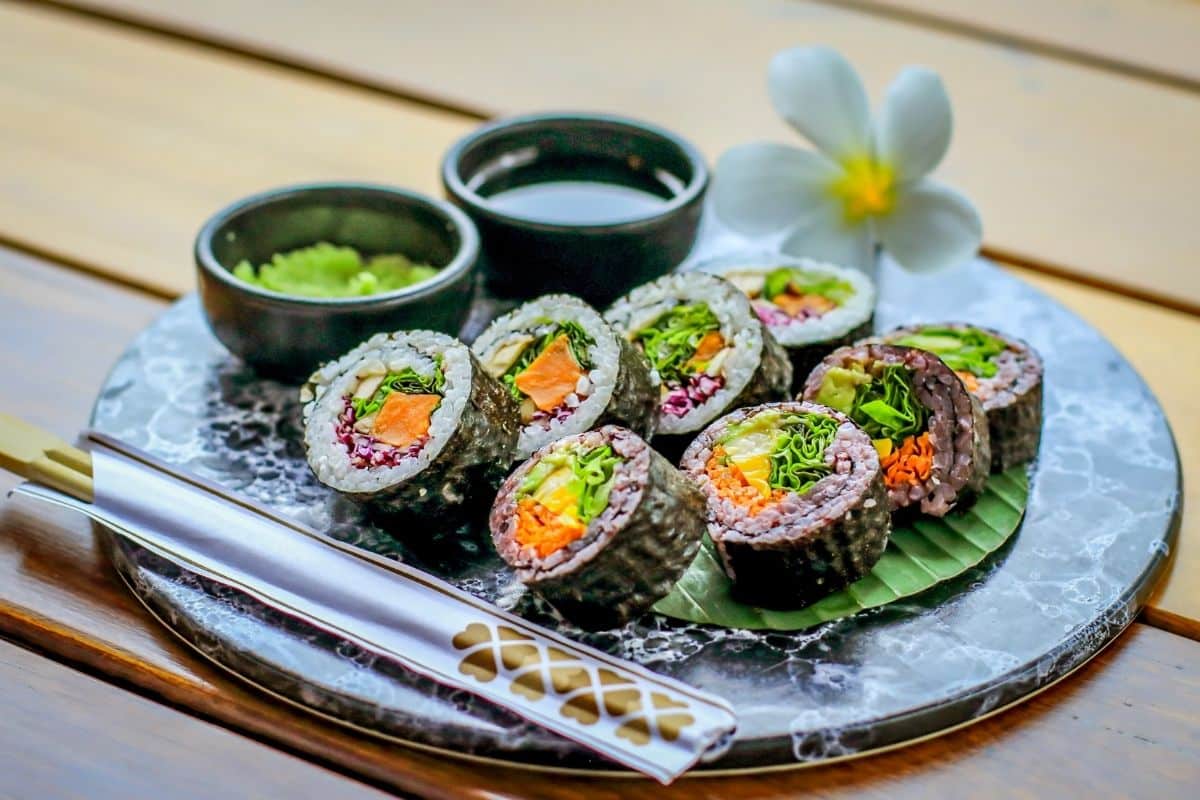
We used ingredients such as tofu, tempeh, seitan, chickpeas, beans, vegetables, herbs, spices, coconut, fresh dressings and whole grains to create dishes that appealed to both vegan and non-vegan guests.
DiLite Vegan Restaurant
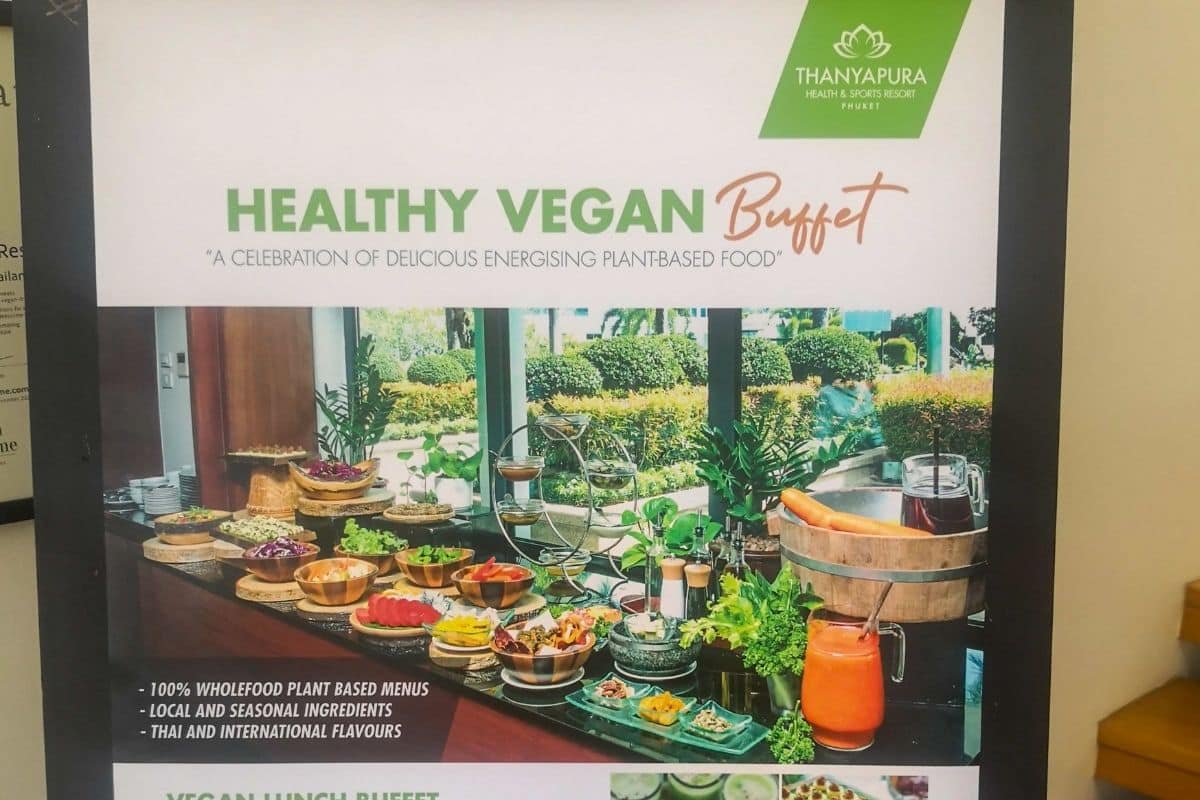
At DiLite Vegan Restaurant, we ran a weekday vegan buffet that attracted guests from around Phuket. It became an important testing ground for salads, vegan cheeses, juices, Thai vegan dishes, Western plant-based mains, raw desserts, healthy sweets and group dining menus.
Booster Café and the Poke Bowl Concept
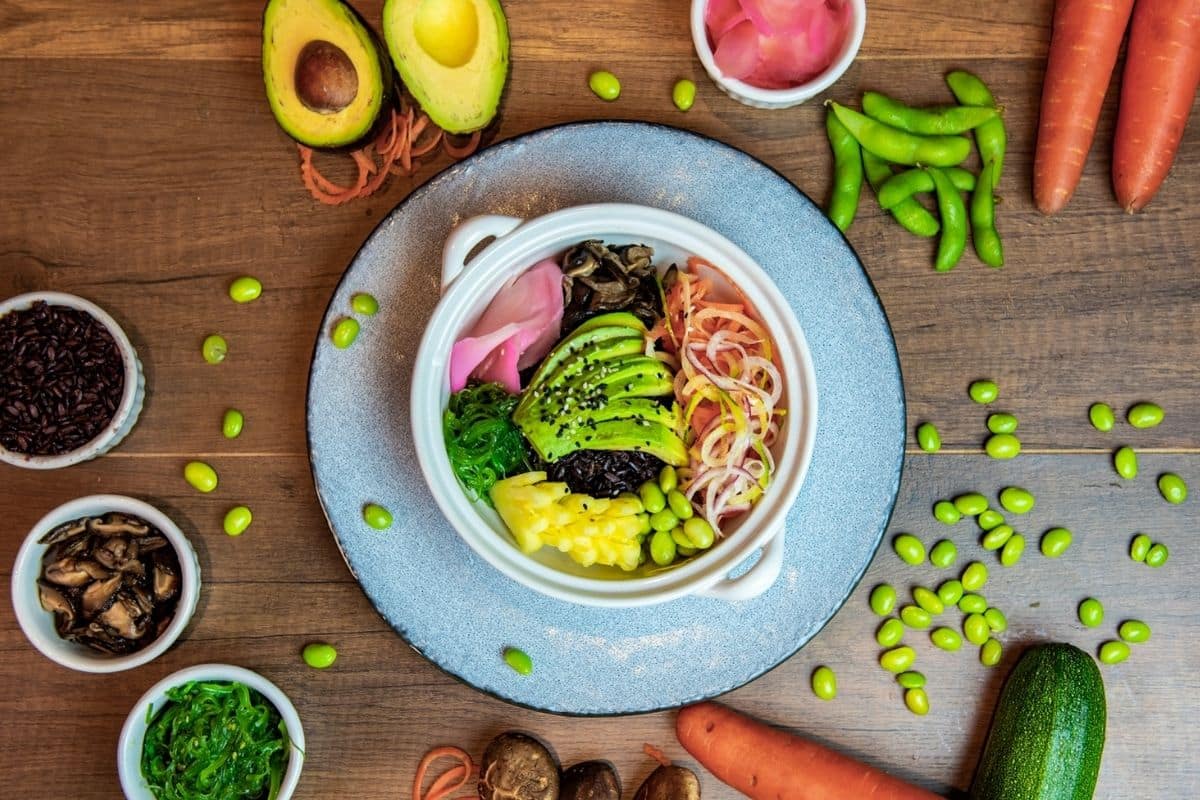
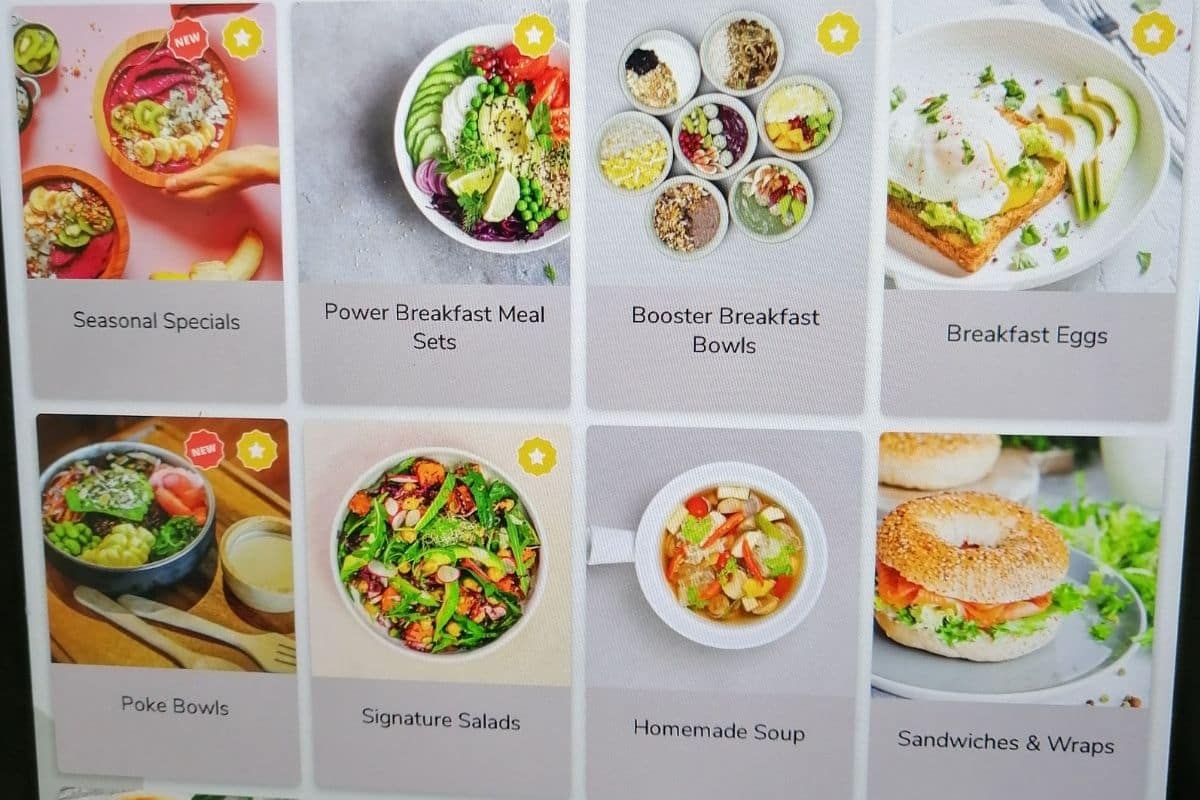
At Booster Café, one of the strongest concepts was the customizable poke bowl menu. Guests could build different combinations every day, making it ideal for long-stay guests, athletes and sports club members who wanted variety without getting bored.
The poke bowl concept became one of the strongest examples of plant-forward food working commercially. It was nutritious, flexible, colourful, popular with guests and strong from a margin point of view.
Sports Nutrition and Wellness Food
Thanyapura Sports Resort served a wide range of active guests and athletes.
Feeding Athletes and Active Guests
The resort welcomed Olympic swim teams, triathlon groups, tennis players, sports club members, FINA training camp athletes and long-stay wellness guests.
The menus needed to support energy, recovery, hydration, protein intake, nutrient density and guest enjoyment.
We offered a mix of Thai, Asian, Western, wellness and plant-forward dishes. Many guests wanted lighter food, clean wholefood ingredients, gluten-free options, dairy-free options, high-protein meals, smoothies, juices, breakfast bowls and recovery-focused dishes.
I worked closely with the in-house sports nutritionist and medical team. This collaboration helped connect culinary development with nutritional knowledge.
Nutrition Labelling and Recipe SOPs
A key part of the work was adding calories, macros, allergens and dietary information to recipes and menus. I used nutrition and recipe software, including Nutritics, to calculate nutritional information as part of the recipe SOP process.
For each recipe, the SOP could include:
- Ingredients
- Quantities
- Method
- Portion control
- Recipe costing
- Profit margin
- Calories
- Macros
- Allergen information
- Dietary labels
- Notes for variations or substitutions
This mattered because even small changes to a recipe - portion size, dressing quantity, oil content, protein choice or garnish - could change both the nutrition profile and allergen information.
The goal was to help guests make more informed choices while giving the kitchen and service teams clear information to work from.
Making Healthy Food Delicious
Healthy food should not be bland, boring or restrictive. At Thanyapura, the goal was always to make wellness food fresh, colourful, practical, nutritious and genuinely delicious.
Chef Training and Leadership
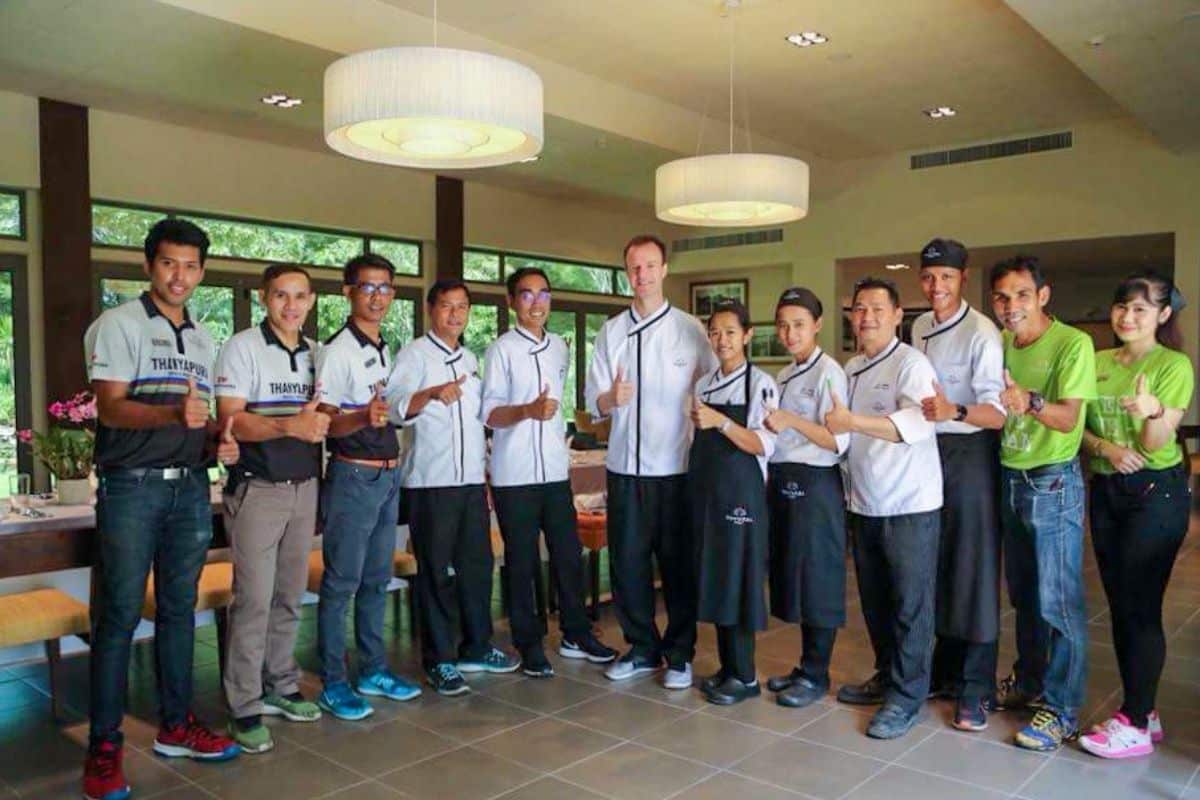
One of the biggest parts of my role was training and developing the culinary team.
Training Across Cultures
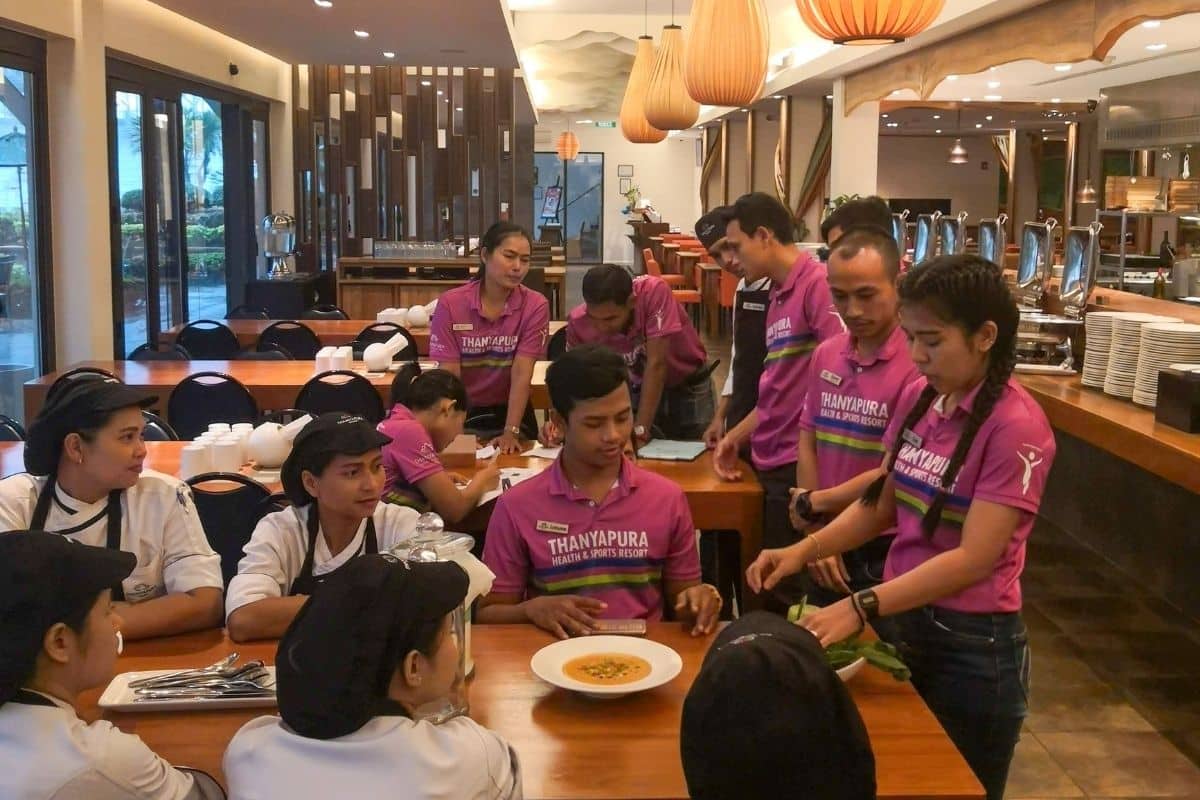
The Thai chefs had strong cooking skills and deep knowledge of local food culture. Many were excellent Thai cooks. But there was less experience with wellness food, vegan cooking, written SOPs, nutrition information, dietary requirements and the expectations of international wellness guests.
My approach had to be hands-on and culturally aware.
I could not arrive with a hard Western kitchen style and expect it to work. I had to build trust first. Thai kitchen culture is different. The team responded best to patience, respect, encouragement, humour and relationship-building.
Explain, Demonstrate, Imitate, Practice
My training method was simple:
Explain → Demonstrate → Imitate → Practice
I would explain a recipe, technique or method, demonstrate it, then guide the chefs as they practised. We tasted together, adjusted together and kept improving until the dish was right.
The goal was always aroi = delicious.
Building Trust and Confidence
A major part of training was explaining the "why" behind the work. Better food improves guest satisfaction. Happy guests return. Returning guests support a healthy restaurant. A healthy restaurant helps protect jobs. Secure jobs support families.
That connection mattered.
Training covered many areas, including plant-forward cooking, wellness food, allergens, recipe consistency, kitchen organisation, fridge setup, ordering systems, plating, bakery, pastry, cold kitchen, hot kitchen, fermentation and guest-facing cookery classes.
Knowledge Sharing With Thai Chefs
I also learned a huge amount from the Thai chefs. They taught me about local ingredients, regional Thai food, flavour balance, market produce and the deeper role food plays in Thai culture.
This was not one-way teaching. It was knowledge sharing.
One of the biggest leadership lessons I learned was that you cannot push a team forward from behind. You have to build enough trust and clarity that they want to move forward with you.
Systems and Costing
Wellness food cannot survive on good intentions alone. It needs flavour, systems, costing, training and commercial discipline.
Operational Systems Behind the Food
At Thanyapura, a major part of my role was improving the operational systems behind the food.
That included:
- Ordering systems
- Guest forecasting
- Stock control
- Recipe files
- Digital recipe access
- Interdepartmental transfers
- Purchasing communication
- Daily management meetings
- Production planning
- Mise en place systems
- Waste reduction
- Portion control
- Menu engineering
- Supplier negotiation
- Cost control
Forecasting, Stock Control and Waste Reduction
Forecasting was especially important. The F&B department needed clear information about guest numbers, school numbers, events, retreats and group bookings so the kitchens could order the right amount of food.
Stock control was a daily discipline. I would walk through kitchens and fridges regularly, checking what needed to be used before it spoiled. Overripe bananas could be frozen for smoothies. Ripe mangoes could become mango jam for breakfast bowls. Suitable buffet leftovers could be repurposed for staff meals where appropriate.
It was not glamorous work, but it was essential. In a large operation, small daily habits make a big difference.
Recipe Files and Digital Systems
Recipe files were another important part of the system. Every kitchen section needed clear recipes because recipes drive ordering, quantities, methods, costing, scaling and consistency.
We also digitalised recipe access so chefs could use tablets in kitchen sections and scale recipes according to the number of portions needed.
Costing, Purchasing and Finance
Costing was carried out across à la carte dishes, café items, banqueting menus, buffets, staff food, school catering and specials. Buffets were especially challenging because guest numbers and consumption levels could vary. We managed this through forecasting, waste tracking, production planning and post-service review.
Purchasing and finance were key partners. We worked with suppliers on pricing, quality, contract rates and ingredient sourcing. Finance reports helped us understand best-selling dishes, margins and menu performance.
This is still a major part of how I approach consulting today. A recipe is not just a recipe. In a professional hospitality setting, a recipe connects the kitchen, purchasing, finance, nutrition, marketing, service team and guest experience.
Organic Farm Collaboration and Local Sourcing
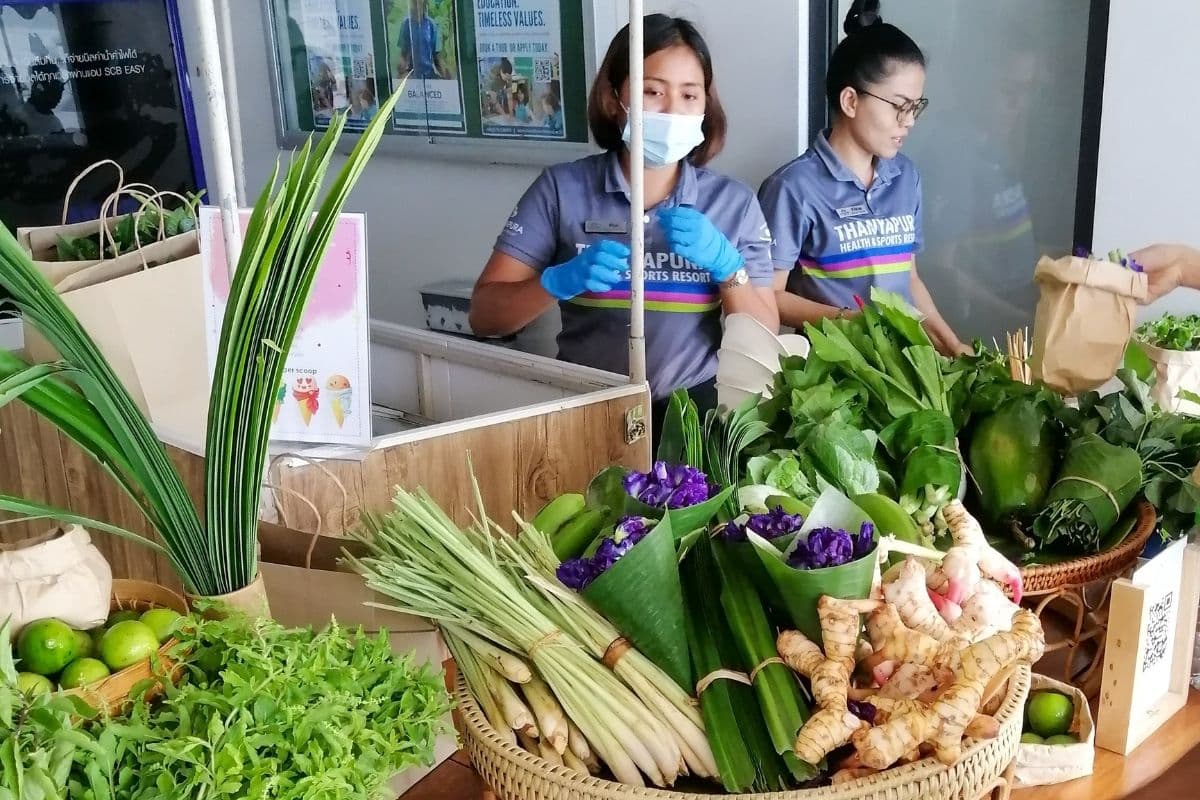
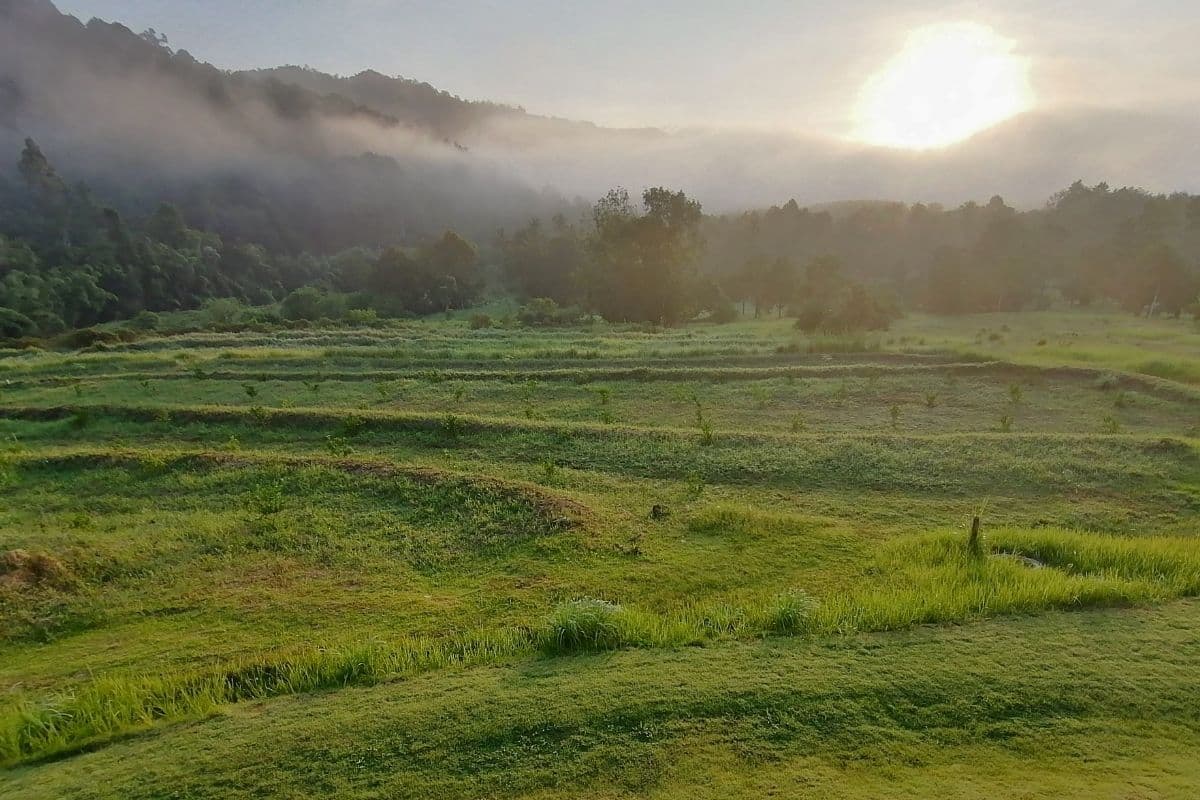
Thanyapura also had a valuable connection with an organic farm in Khao Sok, linked to the owner of the resort. We worked closely with the growers there, with a weekly delivery of fresh organic produce supplied to Thanyapura Sports Resort and the UWC school catering operation.
This added an important farm-to-table element to the project. It helped connect menu development with ingredient sourcing, organic growing, seasonality and the practical relationship between chefs and farmers.
We also created a small weekly farmers' market for UWC parents, giving them the opportunity to buy vegetables directly from the farm. Alongside this, we set up a healthy ice cream stall for the children every Friday, working with a local ice cream maker who used surplus local fruit to create healthier frozen treats.
This became a simple but meaningful community experience outside Booster Café: fresh organic vegetables, healthy fruit-based ice cream, school families, growers and the resort food team all connected in one place.
That experience strengthened my belief that wellness food should not begin in the kitchen alone. It starts with the soil, the growers, the sourcing choices and the systems that connect food from farm to plate.
Education, Community and UWC Catering
Another major part of the role was overseeing Thanyapura's catering contract for the UWC school on campus.
Managing the UWC School Catering Contract
This was a complex and highly involved responsibility. The school had around 400-500 students from approximately 80 nationalities, as well as teachers and staff. The food had to support younger children, older students, boarding students, teachers and a wide range of cultural preferences and dietary needs.
I regularly met with student, teacher and parent representatives to review feedback. That feedback could be positive, constructive, challenging or sometimes unrealistic. My role was to listen, filter the feedback, defend the team when needed, and then communicate useful improvements back to the catering kitchen.
Feeding an international school community is not simple.
Balancing Student, Parent and Teacher Expectations
Students often wanted familiar comfort food. Parents wanted highly nutritious meals. Teachers ate there daily and had their own expectations. The school wanted sustainability and health values reflected. The kitchen had to deliver all of this within a realistic budget.
There were also allergies, dietary requirements, younger children receiving food in classrooms, lunch buffets and boarding house dinner buffets.
Food Education and Sustainability
This experience strengthened my belief that food education needs to start young.
We introduced small educational elements around nutrition and balanced eating, and I also gave nutrition talks to students. One concept I worked on was a circular food education model: reducing buffet food waste, composting suitable waste, turning it back into soil, growing food with students, harvesting ingredients and bringing those ingredients back into cooking and eating.
That idea has stayed with me.
Children should grow up understanding the full cycle of food: soil, seed, growing, cooking, eating, sharing, composting and returning nutrients to the earth.
This experience now connects directly to the future vision for Holistic Chef Academy and Tanglewood Retreat in Ireland.
Cookery Classes and Guest Experience
One of my favourite parts of the role was developing guest cookery classes.
We created a range of cooking class concepts, including Thai cooking, Western cooking, healthy cooking, raw food, healthy desserts and wellness drinks.
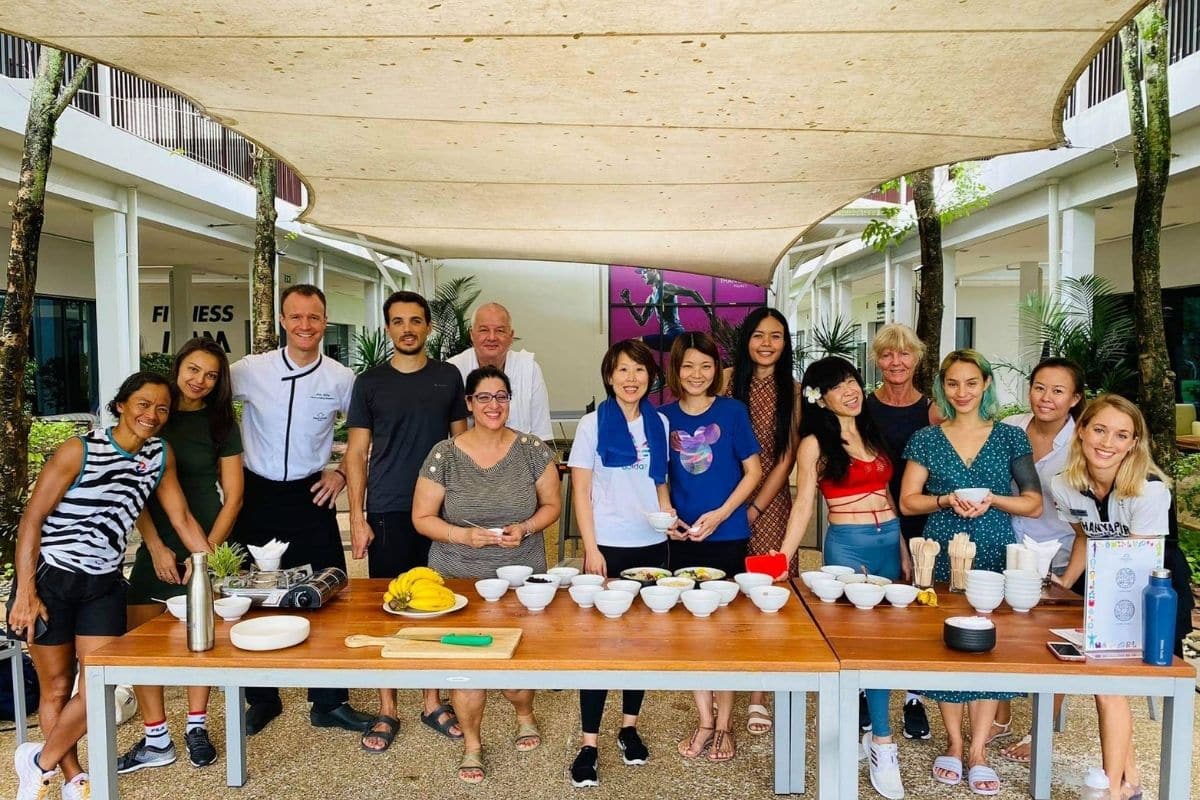
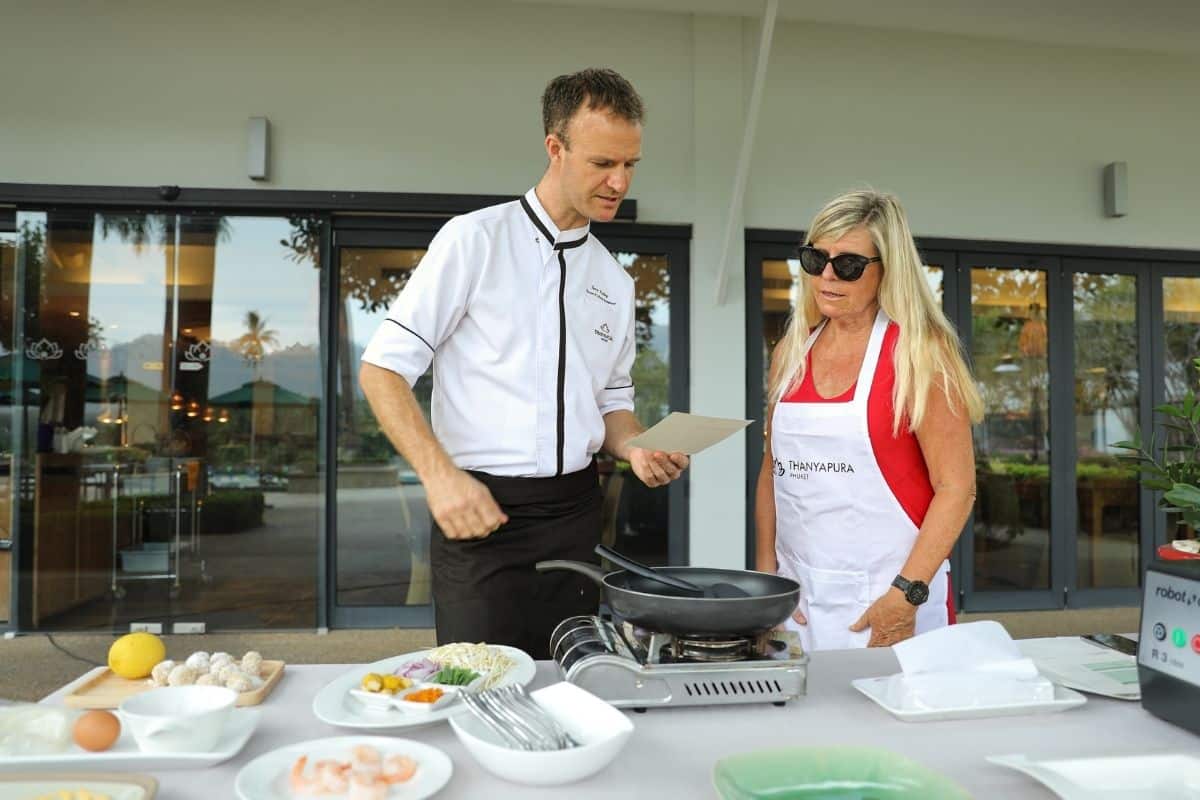
Classes were delivered for guests, families, members and retreat groups. We often set up cooking class stations outside near the pool area, creating a relaxed and memorable experience for guests.
These classes were also a training opportunity for the Thai chefs. I would bring local chefs into the classes so they could build confidence teaching international guests, explaining Thai ingredients and sharing recipes.
At the end of classes, guests received recipe packs and certificates. The classes created joy, connection and cultural exchange - not just cooking instruction.
This was another early foundation for the educational direction of Holistic Chef Academy.
Navigating COVID and the Next Chapter
Before COVID, Thanyapura Sports Resort was in one of its strongest positions. The business was busy, occupancy was strong, the team was developing well, and there was momentum around international expansion.
Then the pandemic changed everything.
From Growth to Crisis Management
As an international resort, Thanyapura depended heavily on guests travelling from overseas. When lockdowns and travel restrictions began, the impact was immediate. Occupancy dropped, international travel stopped, the China expansion was disrupted, and the business moved from growth into crisis management.
Leading Through Uncertainty
My leadership focus changed quickly.
The priority became:
- Protecting the business
- Supporting the team
- Reducing costs
- Adapting menus
- Reducing waste
- Communicating clearly
- Keeping morale stable
- Managing uncertainty
Menus became smaller and more efficient. Waste had to be controlled carefully. Costs had to be reduced. Staff were under pressure, both personally and financially. Salary reductions and redundancies became part of the painful reality of leading through that period.
COVID taught me that leadership is tested most when the plan falls apart.
It showed me the importance of communication, flexibility, cost control, emotional steadiness and looking after people during uncertainty.
Eventually, new ownership came into Thanyapura, the direction changed, and I decided it was time for a new chapter.
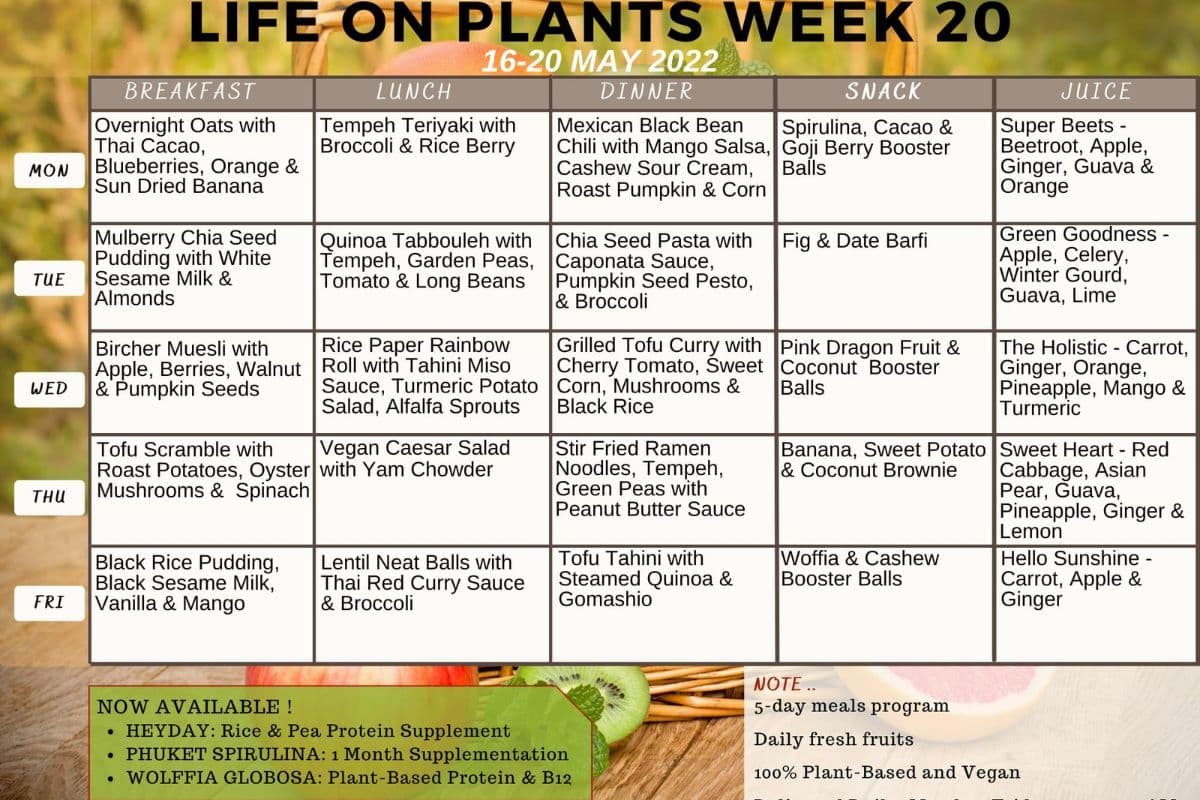
Life on Plants Phuket
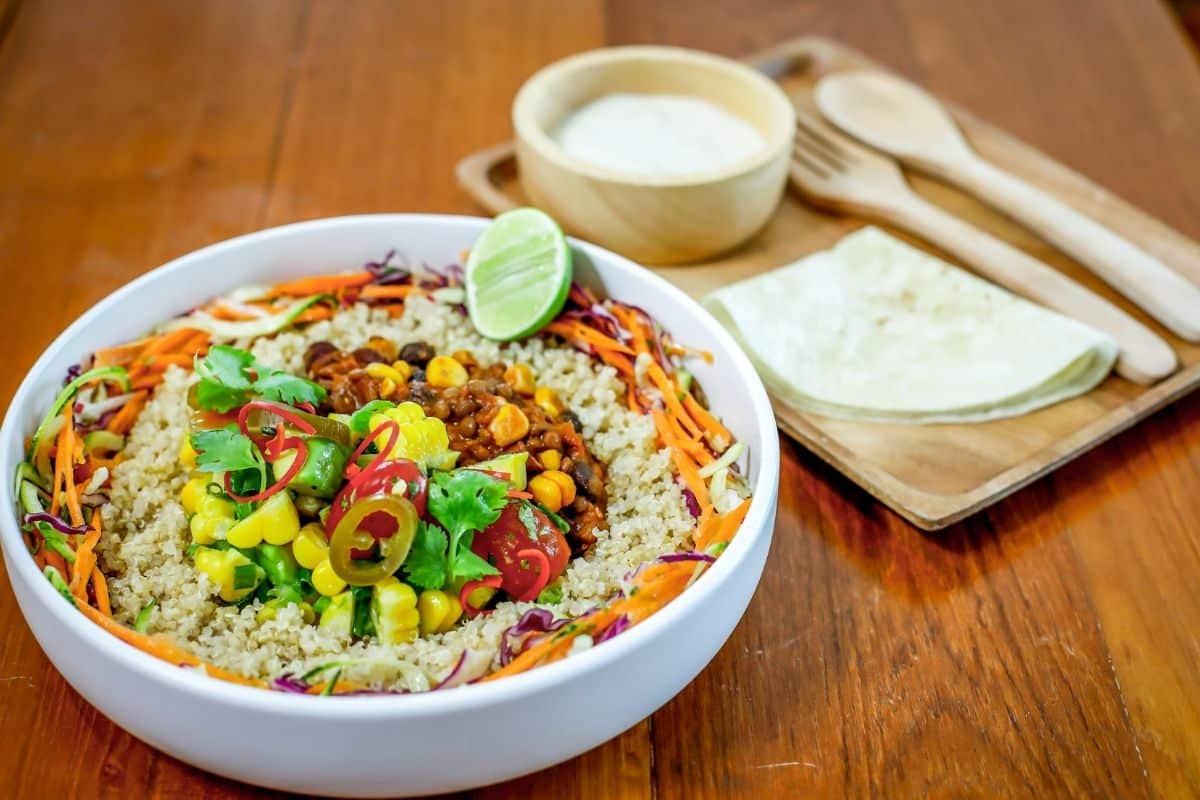
That next chapter became Life on Plants Phuket, a plant-based meal delivery business my partner and I launched from a production kitchen in the jungle.
That project deserves its own case study, but it grew directly from the systems, recipes, resilience and plant-forward thinking developed during my time at Thanyapura.
Results, Impact and Legacy
Looking back, the main things I helped develop and improve at Thanyapura Sports Resort included:
- Wellness menus
- Vegan and plant-forward food
- Sports nutrition menu support
- Recipe SOP templates
- Nutrition labelling
- Calories and macros on menus
- Allergen information
- Team training
- Menu consistency
- Kitchen systems
- Guest experience
- Recipe costing
- Cost control
- Cookery class concepts
- School catering communication
Some of the strongest examples of impact were the food concepts that continued to influence the menus years later.
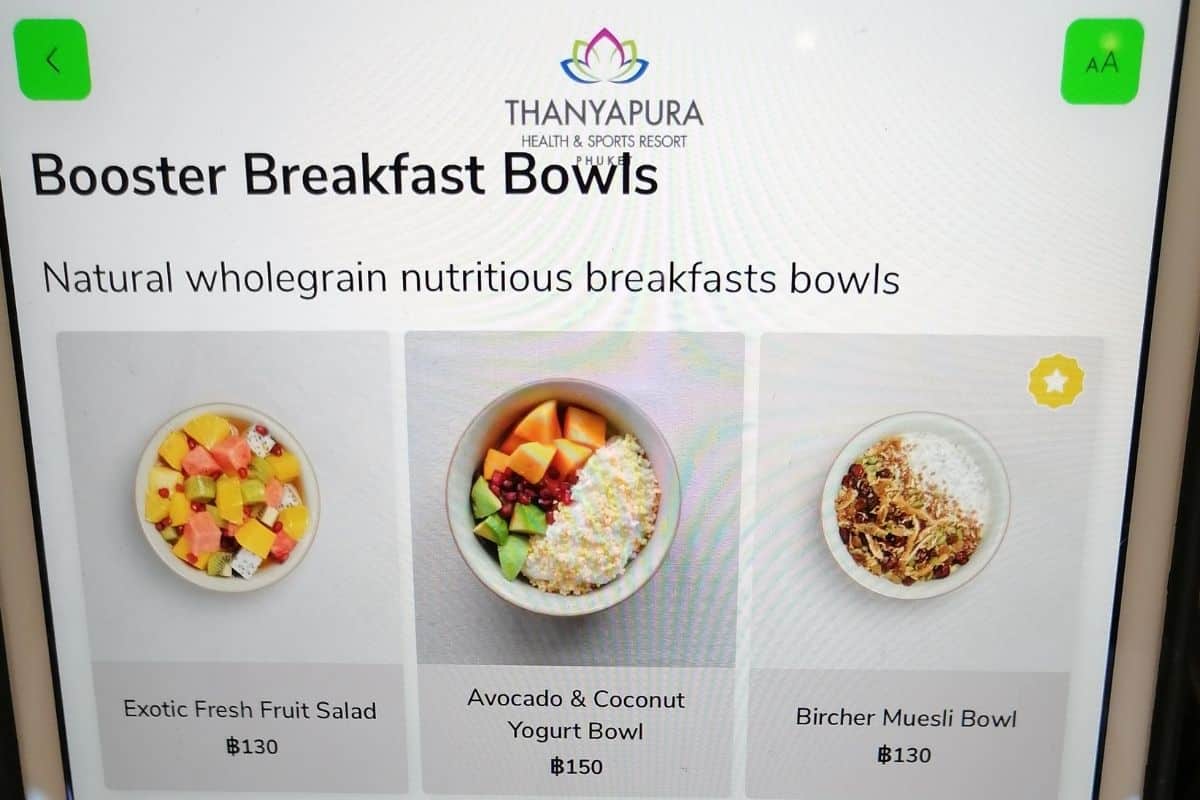
The poke bowl concept became a bestseller and remained a strong part of the food offering. Healthy bakery items, snacks, breakfast bowls, grab-and-go food and wellness drinks also became part of the wider healthy food identity.
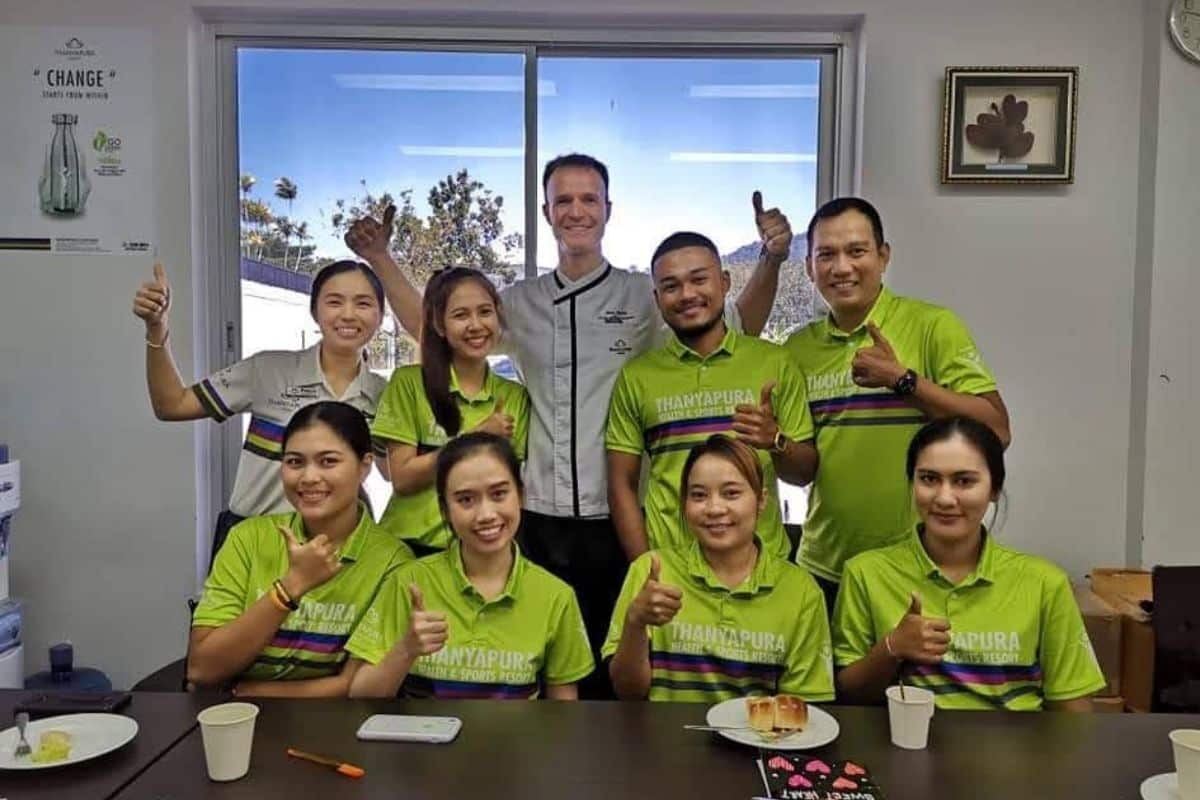
The team impact was just as important. Many team members grew in confidence, took more ownership and developed a stronger understanding of wellness food, consistency and guest expectations.
To this day, when I visit Thanyapura, I still have a positive relationship with many of the team. Being welcomed back with smiles and respect means a lot. It shows that the work was not only about menus and systems, but about relationships, trust and shared growth.
Professionally, Thanyapura proved something important to me: Wellness food can be delicious, commercially viable, scalable and operationally realistic.
It also helped me step up from smaller luxury hotel environments into large-scale international resort leadership. That experience became one of the foundations for Holistic Chef Academy.
How This Experience Shaped Holistic Chef Academy
Thanyapura helped shape the way Holistic Chef Academy works today.
From Menu Development to Full Implementation
It strengthened my belief that wellness food needs both creativity and structure. A beautiful menu is not enough. The real work is helping a team understand it, cost it, cook it, communicate it and deliver it consistently.
Lasting Influence on Holistic Chef Academy
That experience now informs our work in:
- Wellness chef education
- Resort and hotel consultancy
- Retreat chef training
- Performance nutrition menu development
- Recipe development
- Plant-forward menu systems
- SOP creation
- Food cost awareness
- Team training
- Cookery school curriculum development
- Regenerative food education
It also shaped the future vision for Tanglewood Retreat and the Holistic Chef Academy cookery school in Ireland.
The lessons from Thanyapura are still present in the way I think about food education: practical, grounded, seasonal, flavour-led, operationally realistic and connected to people.
The Bigger Lesson
Because in the end, wellness food is not just about what is on the plate.
It is about the system behind the plate, the people cooking it, the guests eating it, the land it comes from, and the knowledge that gets passed on.
Work With Holistic Chef Academy
Holistic Chef Academy works with hotels, resorts, retreat centres, wellness brands, private clients and culinary teams to develop food concepts that are healthy, practical, flavour-led and commercially realistic.
We support projects with:
- Wellness menu development
- Plant-forward recipe development
- Sports nutrition menu support
- Chef training
- Recipe SOPs
- Nutrition and allergen information
- Kitchen systems
- Food cost awareness
- Retreat menu development
- Cookery class concepts
- Hospitality consultancy
If you are developing a wellness food concept, retreat menu, chef training programme or plant-forward hospitality project, our Wellness Food Consultancy Service can help turn the idea into something your team can deliver with confidence.
Get in touch to discuss a consulting project, training programme or future collaboration.


Did you make this recipe? Let me know!