

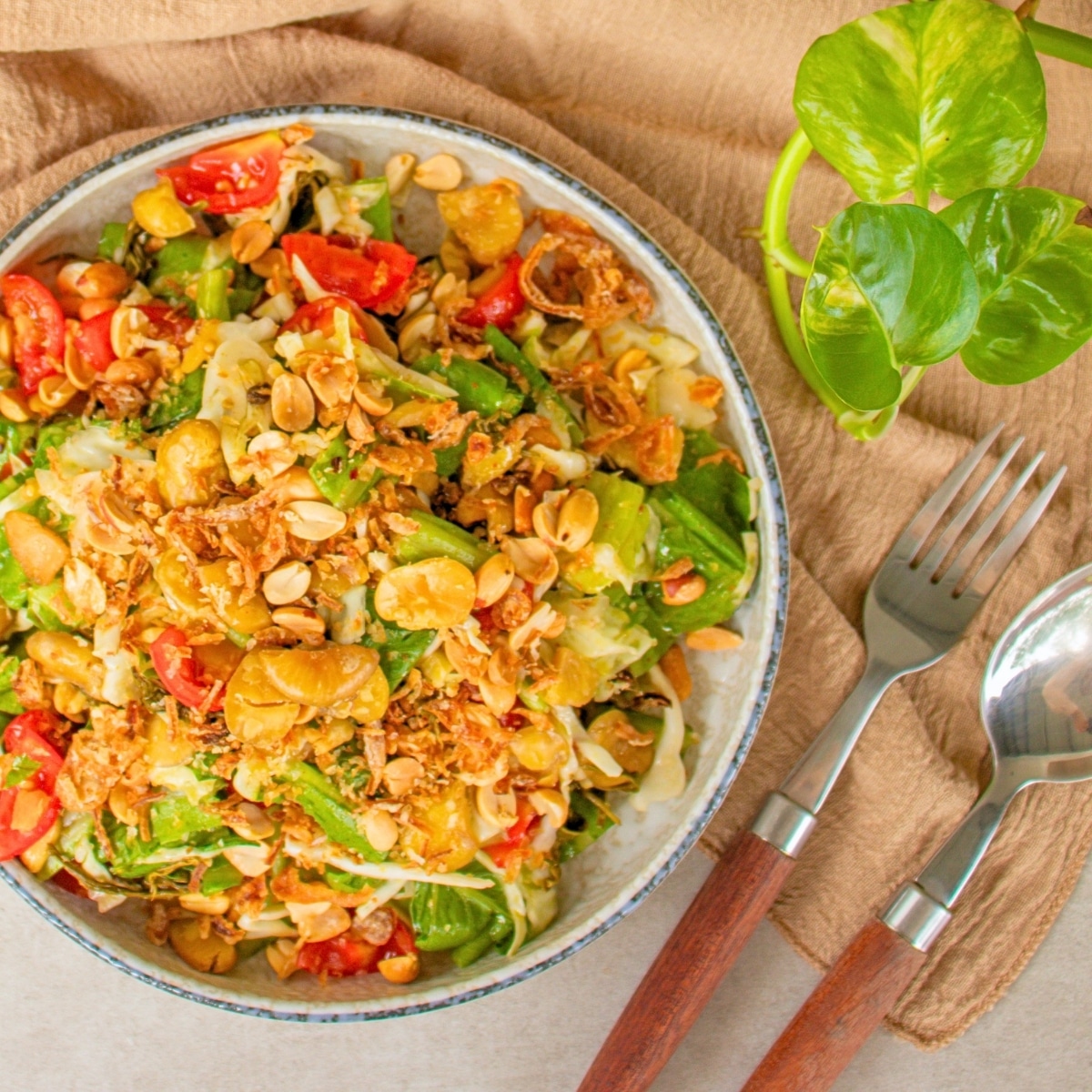
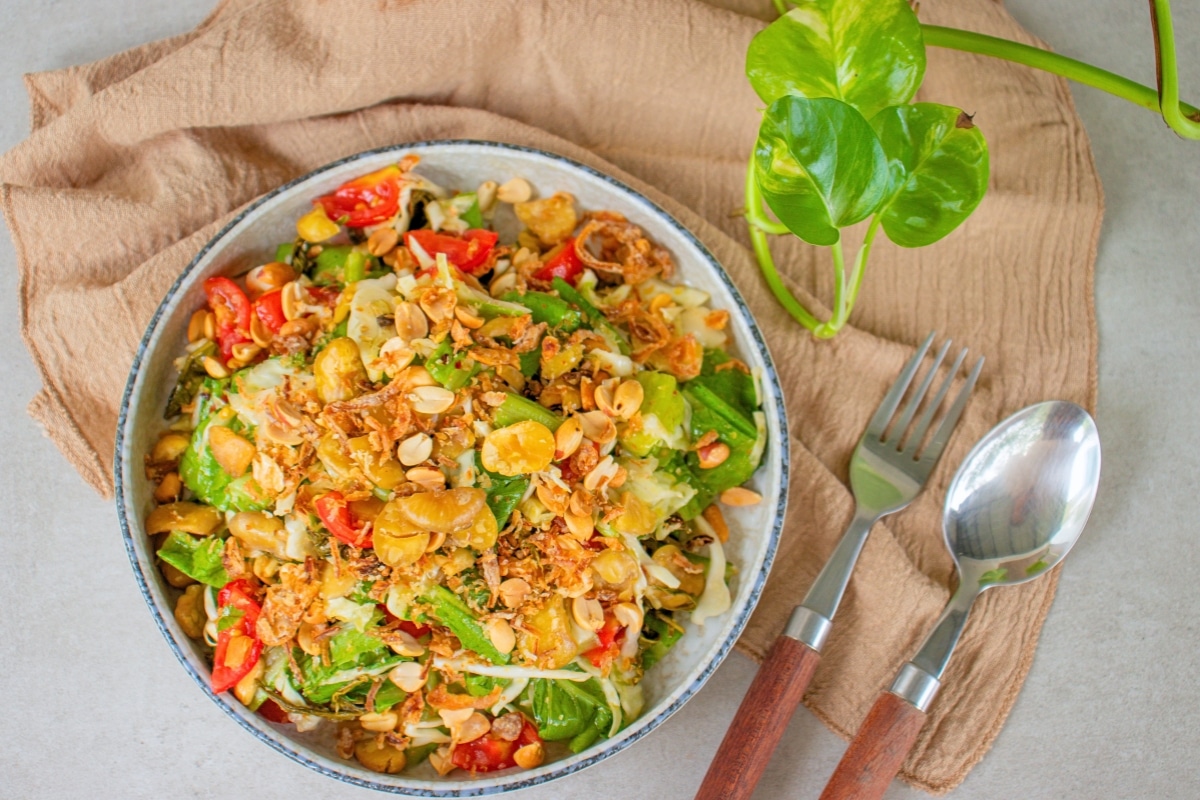
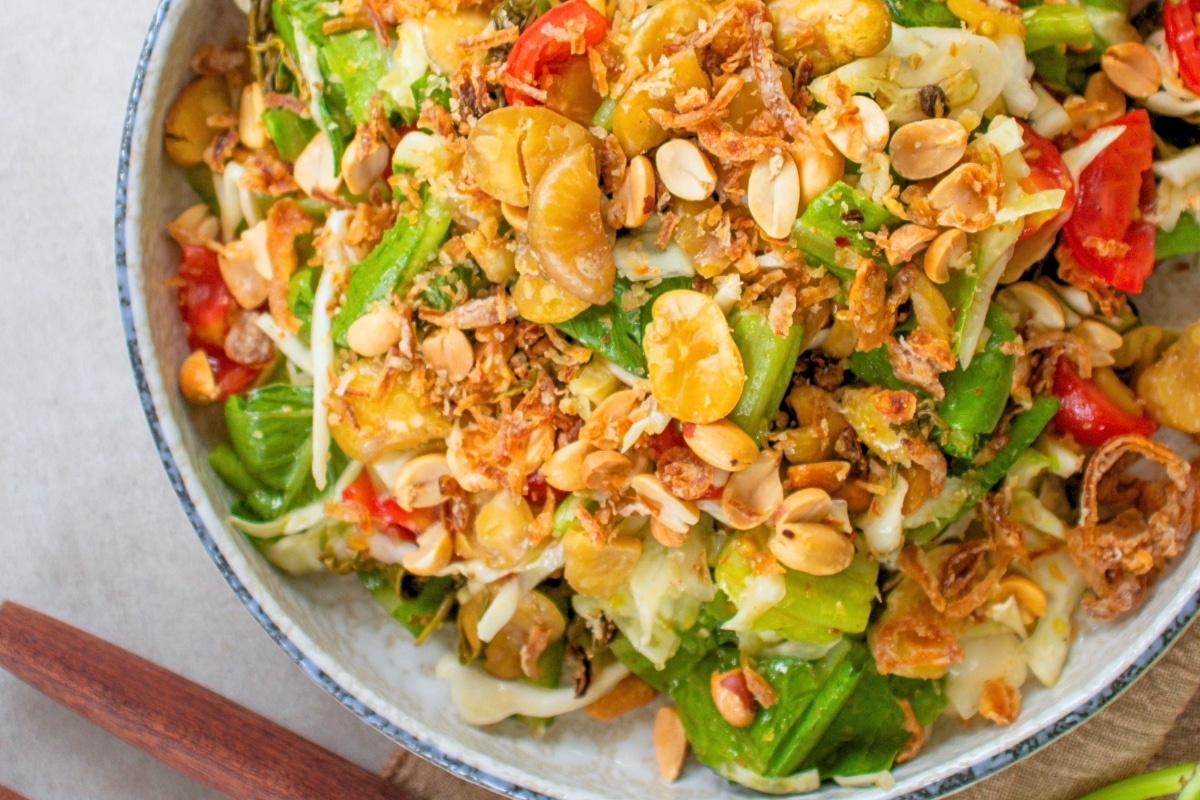
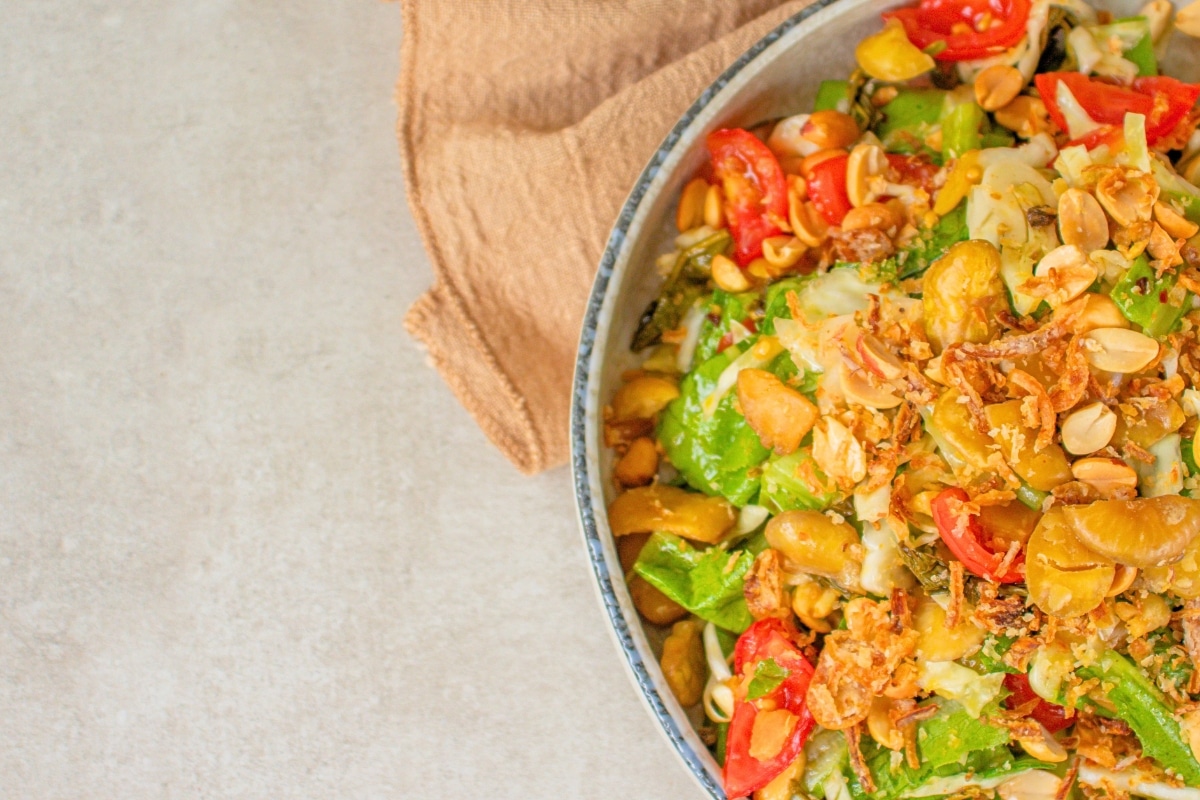
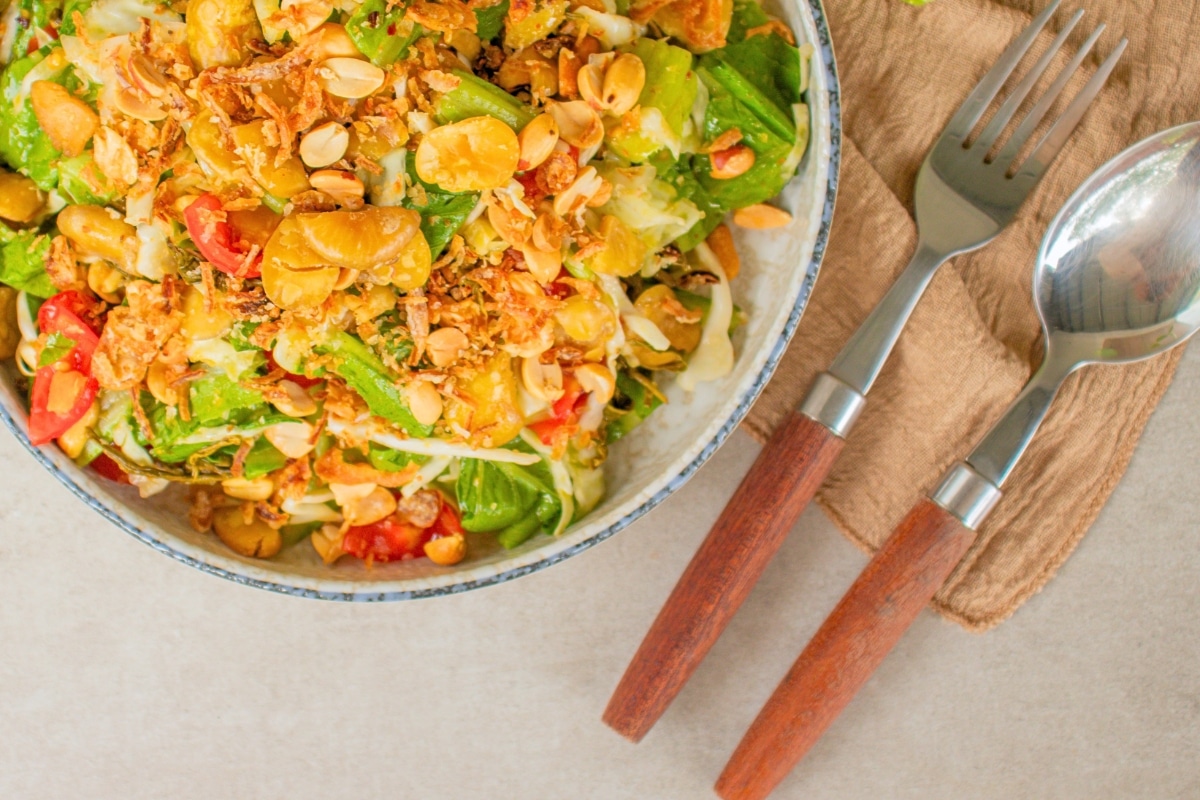
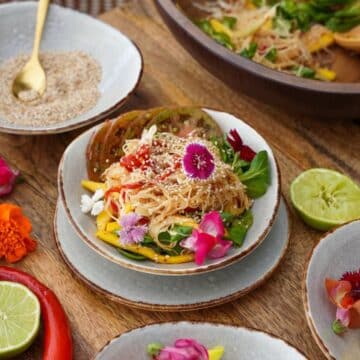
Burmese Tea Leaf Salad, known as Lahpet Thoke, is one of Myanmar's most distinctive dishes. Fermented tea leaves are combined with crisp cabbage, cos lettuce, cherry tomatoes, toasted peanuts, crispy fava beans, garlic, chilli and fresh lime to create a salad that is savoury, tangy, slightly bitter and full of texture.
Recipe Index
Jump to:
- How I Discovered Lahpet Thoke
- What Is Burmese Tea Leaf Salad (Lahpet Thoke)?
- What Does Lahpet Thoke Taste Like?
- History and Cultural Significance
- What Are Fermented Tea Leaves?
- Nutrition Highlights
- Does fermented tea contain caffeine?
- Ingredients You Will Need
- Equipment You Will Need
- How to Make Burmese Tea Leaf Salad
- Chef's Tips for the Best Lahpet Thoke
- What to Serve With Burmese Tea Leaf Salad
- How to Store Burmese Tea Leaf Salad
- FAQ
- More Asian Recipes
- Burmese Tea Leaf Salad Recipe
- 📋 Recipe
How I Discovered Lahpet Thoke
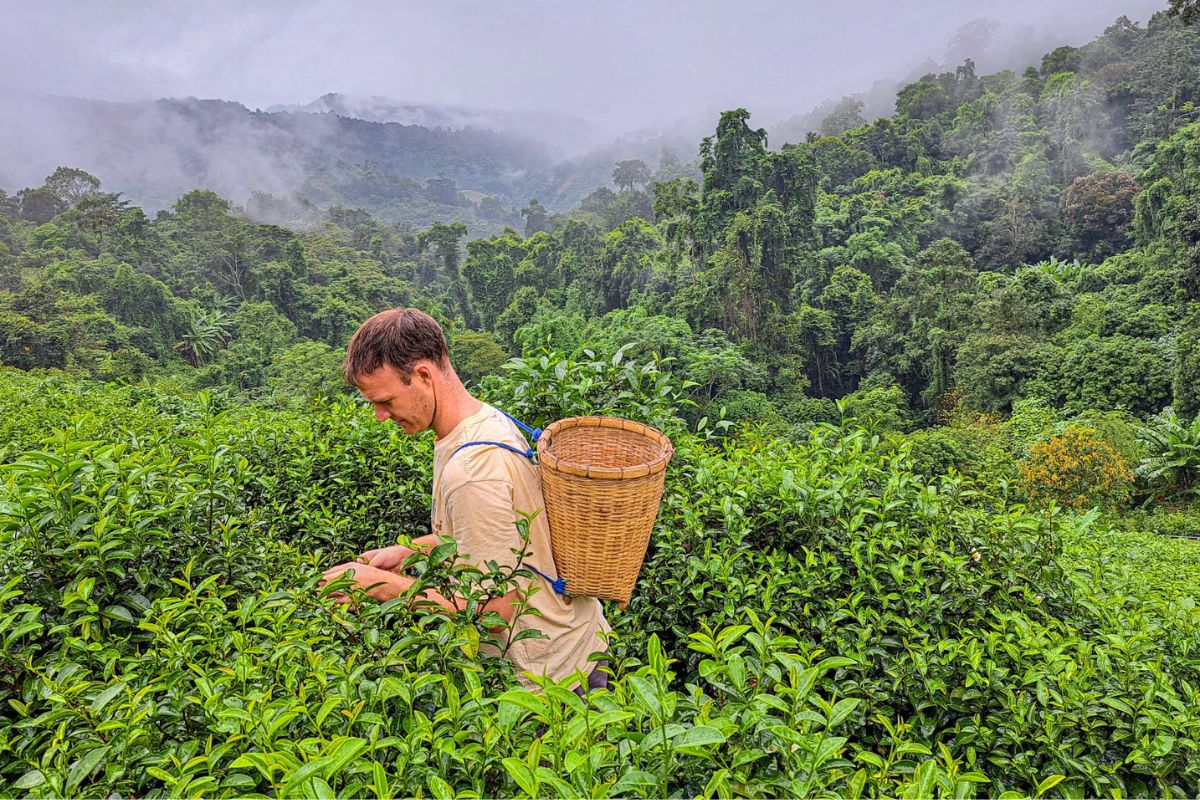
I first discovered Burmese Tea Leaf Salad while travelling through northern Thailand, where Burmese food and flavours are more commonly found. Since then, I've also come across Lahpet Thoke in a handful of restaurants in southern Thailand, where we now live.
Our culinary assistant in the studio is from Myanmar, and she makes this salad for us regularly, so it has become a familiar dish in our kitchen. I love the balance of fermented tea leaves, fresh vegetables, peanuts, crispy beans and lime - it is simple, vibrant and completely different from the style of salads most people are used to.
What Is Burmese Tea Leaf Salad (Lahpet Thoke)?
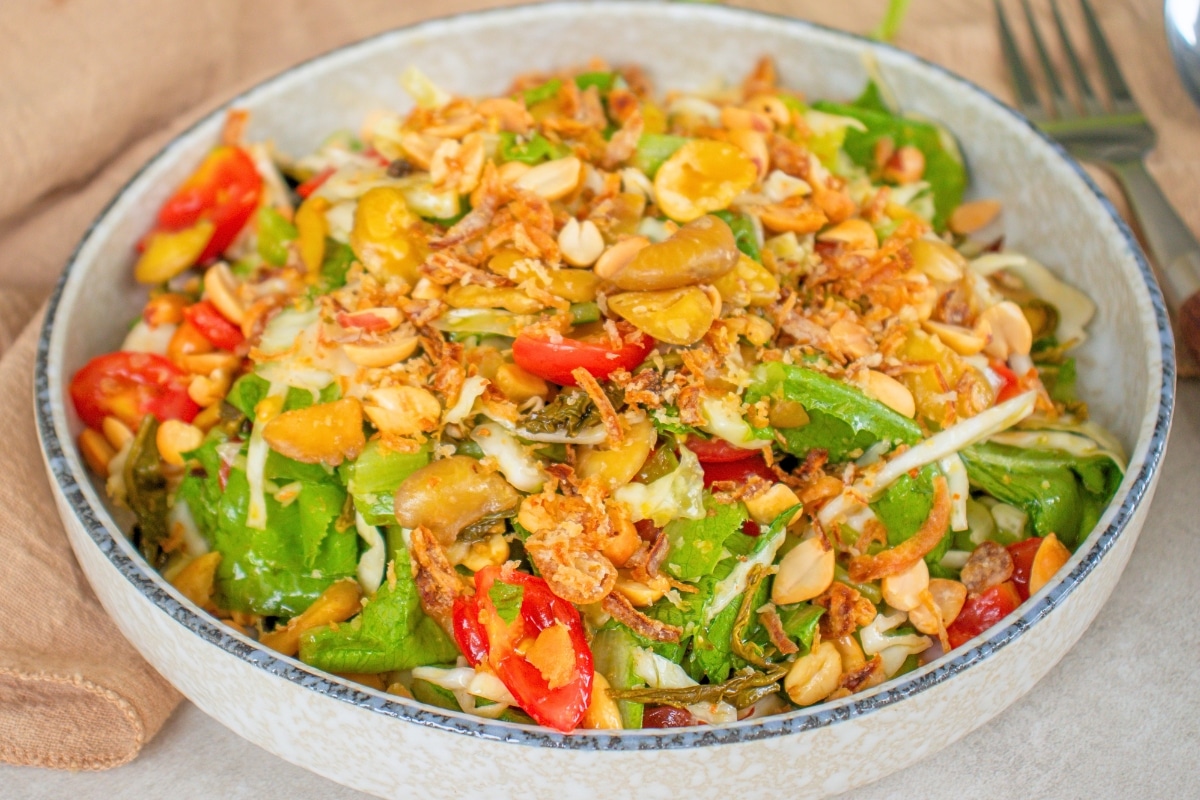
Lahpet Thoke is a traditional Myanmar salad centered around fermented tea leaves. Unlike tea leaves that are brewed and discarded, the fermented leaves in Lahpet Thoke are eaten as part of the dish. They give the salad its distinctive savory, earthy and slightly bitter flavour.
The tea leaves are combined with fresh vegetables and crunchy ingredients, which can vary depending on the cook, region and household. Common additions include cabbage, tomatoes, peanuts, beans, garlic, chilli and crispy shallots.
That variation is part of what makes Lahpet Thoke so interesting. There is no need to treat every version as identical. Instead, the defining feature is the combination of fermented tea leaves with contrasting fresh, sour, savoury and crunchy elements.
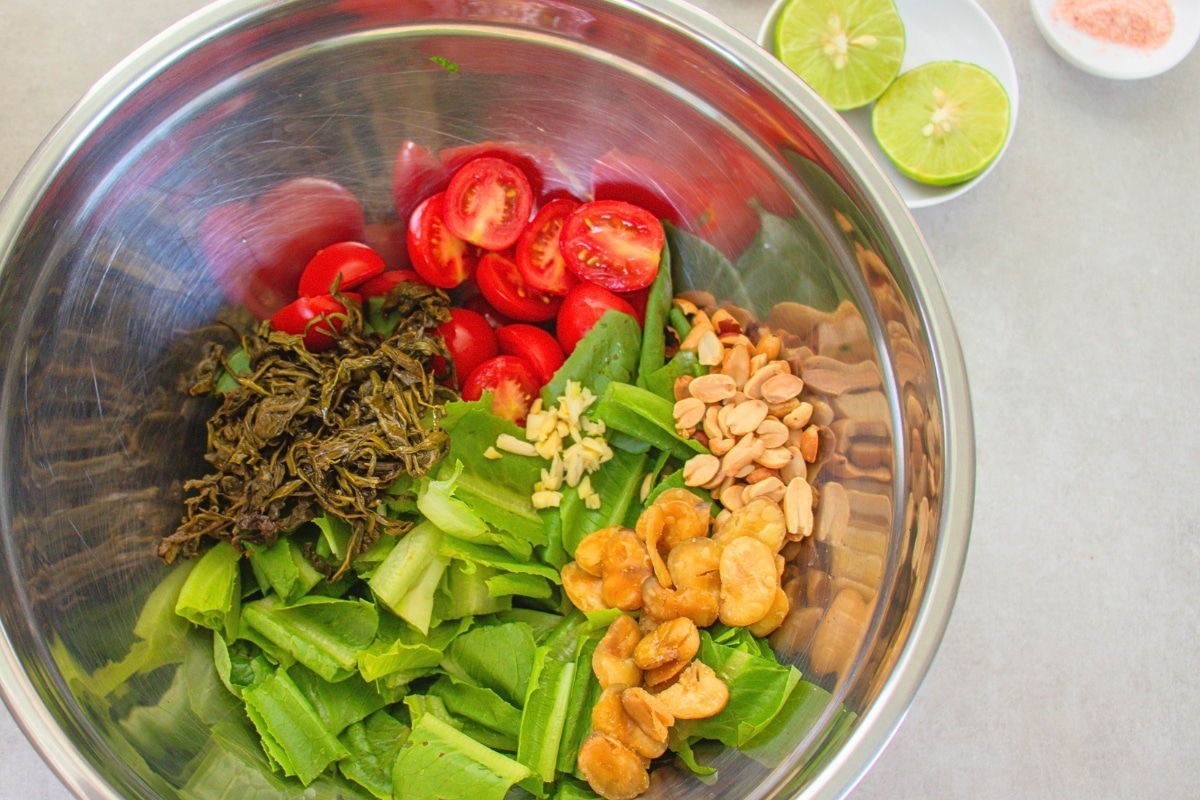
Our version combines fermented tea leaves with Chinese cabbage, cos lettuce, cherry tomatoes, peanuts, crispy fava beans, garlic, lime and crispy shallots.
Read all about the fascinating history of eating and drinking fermented tea in Burma.
What Does Lahpet Thoke Taste Like?
Lahpet Thoke has a complex flavour profile. The fermented tea leaves taste savory, earthy, tangy and slightly bitter. Meanwhile, fresh lime adds acidity, garlic adds sharpness and chili brings gentle heat. The peanuts add richness, while the crispy fava beans and shallots provide crunch. Fresh cabbage, lettuce and tomatoes balance those stronger flavours and make the finished salad feel bright and refreshing.
As a result, each mouthful has a different combination of textures and flavours. It is savoury, tangy, nutty, spicy, slightly bitter and crunchy all at once.
History and Cultural Significance
Tea has an important place in Myanmar food culture, and Lahpet is one of its most unusual expressions. While most of us associate tea leaves with brewing a drink, in Myanmar fermented tea leaves are also eaten as food.
Lahpet Thoke has long been associated with sharing, hospitality and communal eating. Different families and regions prepare it in slightly different ways, which means there are many variations rather than one fixed recipe.
For anyone interested in Southeast Asian food, it is a fascinating example of how fermentation can transform a familiar ingredient into something completely different.
What Are Fermented Tea Leaves?
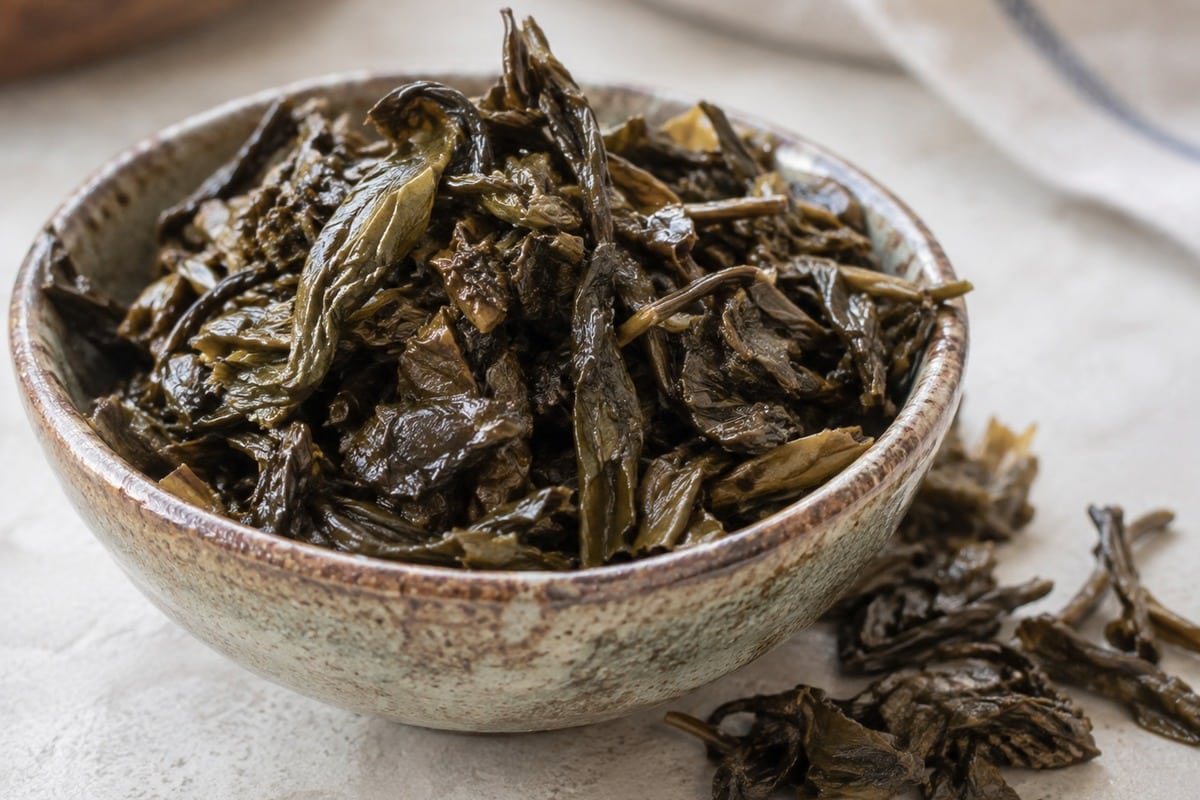
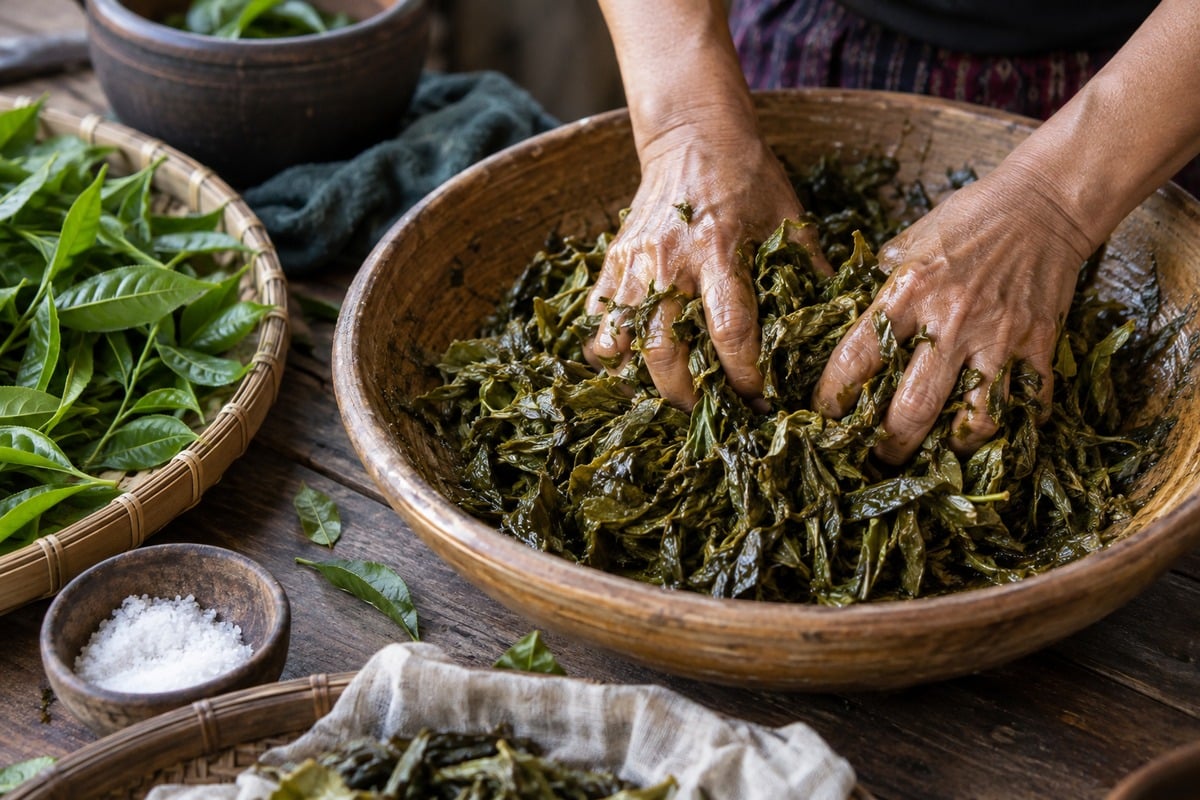
Fermented tea leaves, known as lahpet, are young tea leaves that are processed and fermented before being eaten. Fermentation changes both their flavour and texture, making the leaves softer while developing a savoury, tangy and earthy character with a distinctive underlying bitterness.
That slight bitterness is important because it gives Lahpet Thoke a depth that you do not normally find in a fresh salad. Research on Myanmar laphet has also identified fermented tea leaves as a source of tea polyphenols and dietary fibre. FAO AGRIS
Prepared fermented tea leaves are available from some Asian grocery stores and specialist online suppliers. However, brands can vary considerably in flavour, saltiness and seasoning. For that reason, I always recommend tasting your fermented tea leaves before seasoning the salad. If they are already salty or heavily seasoned, simply reduce the additional salt.
If you would like to experiment with making them yourself, this homemade fermented tea leaf recipe provides a simplified home version inspired by traditional lahpet preparation
Nutrition Highlights
Burmese Tea Leaf Salad brings together a good range of whole plant ingredients including cabbage, lettuce, tomatoes, peanuts, beans and tea leaves.
Our recipe provides approximately:
- 179 kcal per serving
- 8 g protein
- 4 g fibre
The vegetables contribute fibre and a range of naturally occurring vitamins and minerals, while peanuts and fava beans add plant protein, texture and richness. Fermented tea leaves also contain naturally occurring tea compounds, including polyphenols.
However, I would not describe every fermented tea leaf product as a probiotic food. Fermentation methods and commercial processing vary, so the presence and amount of live microorganisms cannot be assumed.
Does fermented tea contain caffeine?
Yes. Because lahpet is made from tea leaves, it naturally contains some caffeine. However, the amount can vary depending on the tea leaves, processing method and quantity used.
For that reason, there is little value in giving a generic caffeine figure for this recipe. If you are particularly sensitive to caffeine, you may prefer to enjoy a smaller portion or eat the salad earlier in the day.
Ingredients You Will Need
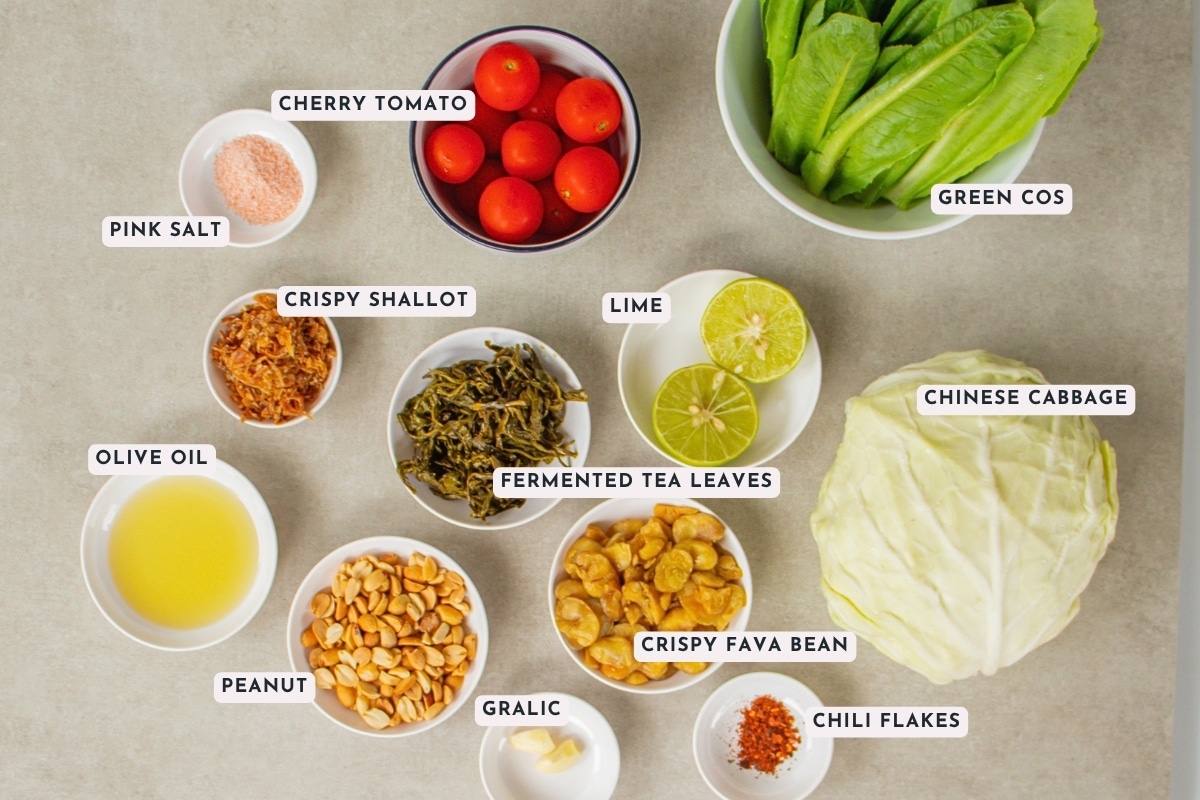
- Fermented tea leaves: This is the ingredient that defines Lahpet Thoke. Fermented tea leaves provide the salad with its deep savoury, earthy and slightly bitter flavour. Look for prepared lahpet or fermented tea leaves in Asian food shops or from specialist online suppliers.
- Chinese cabbage: Chinese cabbage adds plenty of crisp texture and freshness without overpowering the stronger flavours in the salad. Slice it finely so it mixes evenly with the fermented tea leaves and seasoning.
- Cos lettuce: Cos lettuce brings freshness and a lighter leafy texture to the salad. You may also see it sold as romaine lettuce.
- Cherry tomatoes: Cherry tomatoes add sweetness, acidity and juiciness, which help balance the savoury and slightly bitter notes of the fermented tea leaves.
- Garlic: Fresh garlic gives the salad a sharp savoury kick. Chop it finely so the flavour is distributed evenly throughout the dish.
- Toasted peanuts: Toasted peanuts add richness, nuttiness and crunch. Reserve a small amount for garnishing so the finished salad keeps plenty of texture.
- Crispy fava beans: Crispy fava beans bring another layer of crunch and contrast with the softer fermented tea leaves and fresh vegetables.
- Crispy shallots: Crispy shallots are added at the end for extra texture, sweetness and aroma. Keep them separate until serving so they stay crisp.
- Fresh lime: Fresh lime juice brightens the salad and balances the deeper savoury and slightly bitter flavour of the fermented tea leaves.
- Chili flakes: Chili flakes provide gentle heat and help lift the other flavours. You can easily adjust the amount depending on how spicy you like the salad.
- Pink salt: A small amount of salt helps bring the flavours together. Taste the fermented tea leaves first, as some prepared lahpet products are already quite well seasoned.
- Olive oil: Olive oil helps distribute the fermented tea leaves, lime juice and seasoning evenly throughout the salad while adding a little richness.
Equipment You Will Need
You do not need any specialist equipment for this recipe. You will need:
- Weighing scales
- Chopping board
- Chef's knife
- Large mixing bowl
- Serving bowl or plate
How to Make Burmese Tea Leaf Salad
This recipe comes together quickly once all your ingredients are prepared.
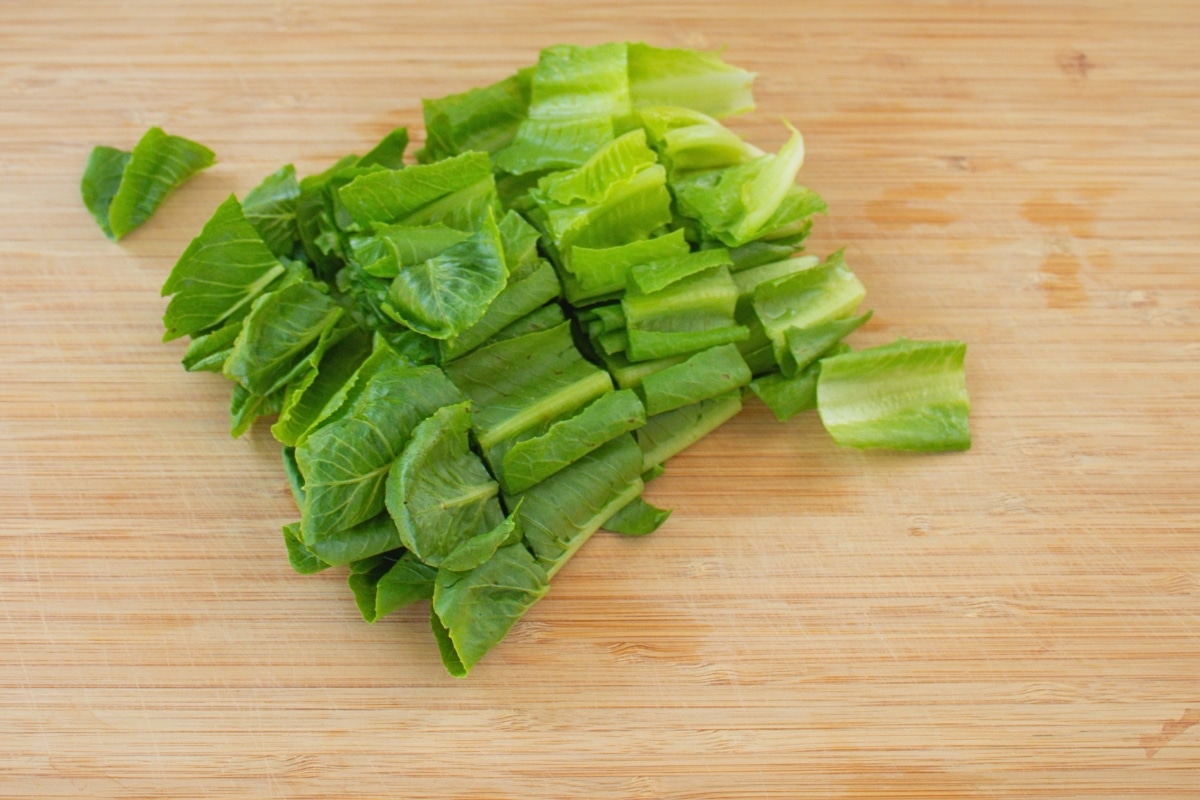
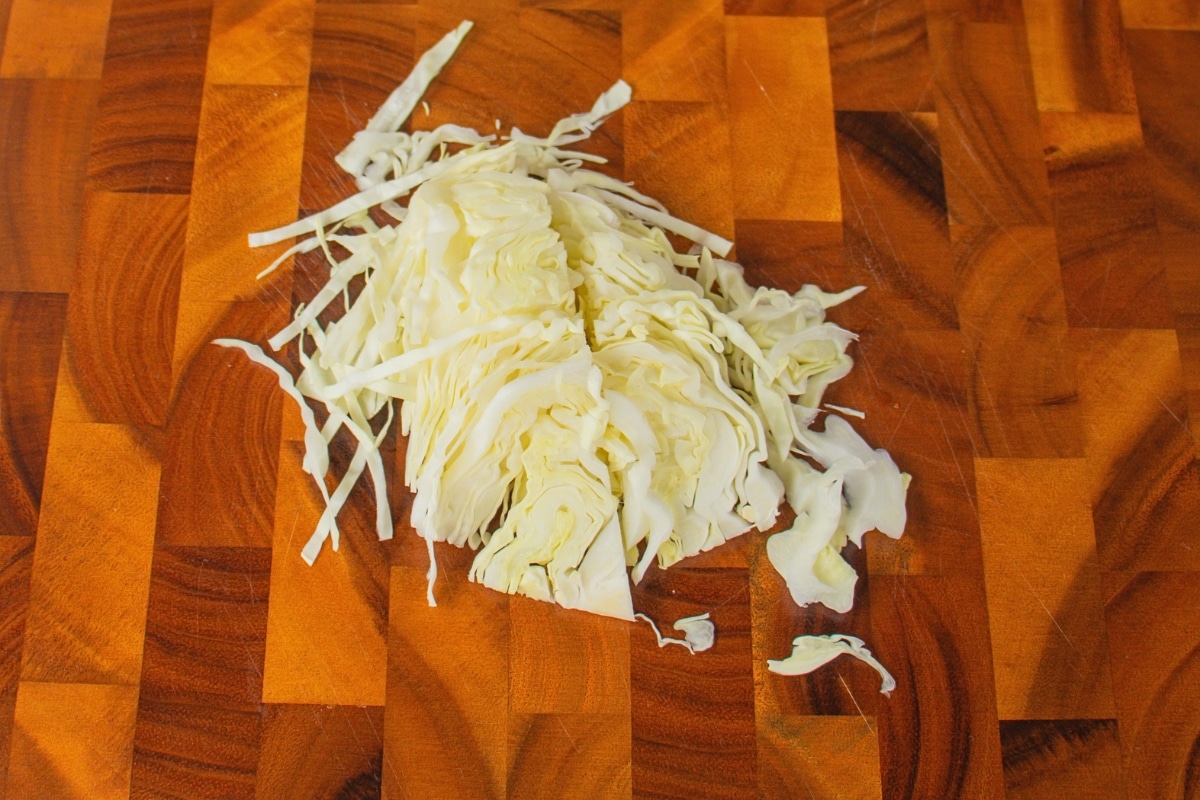
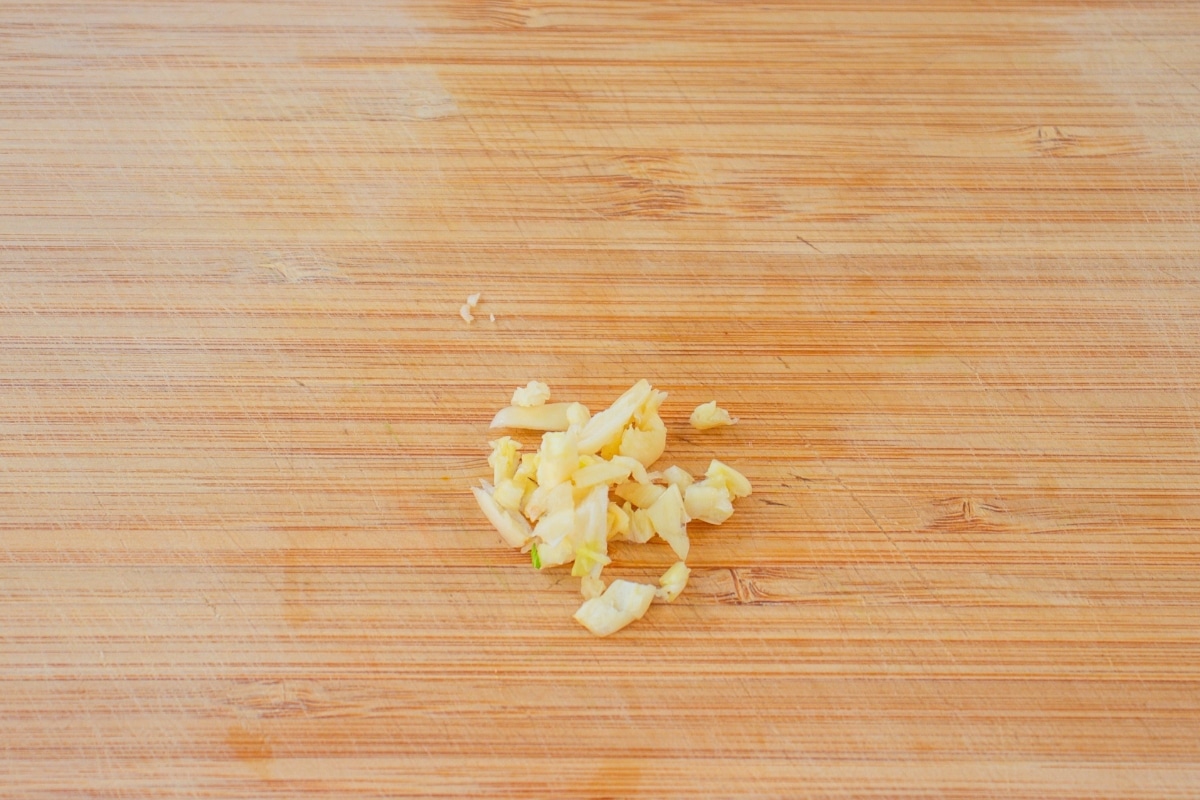
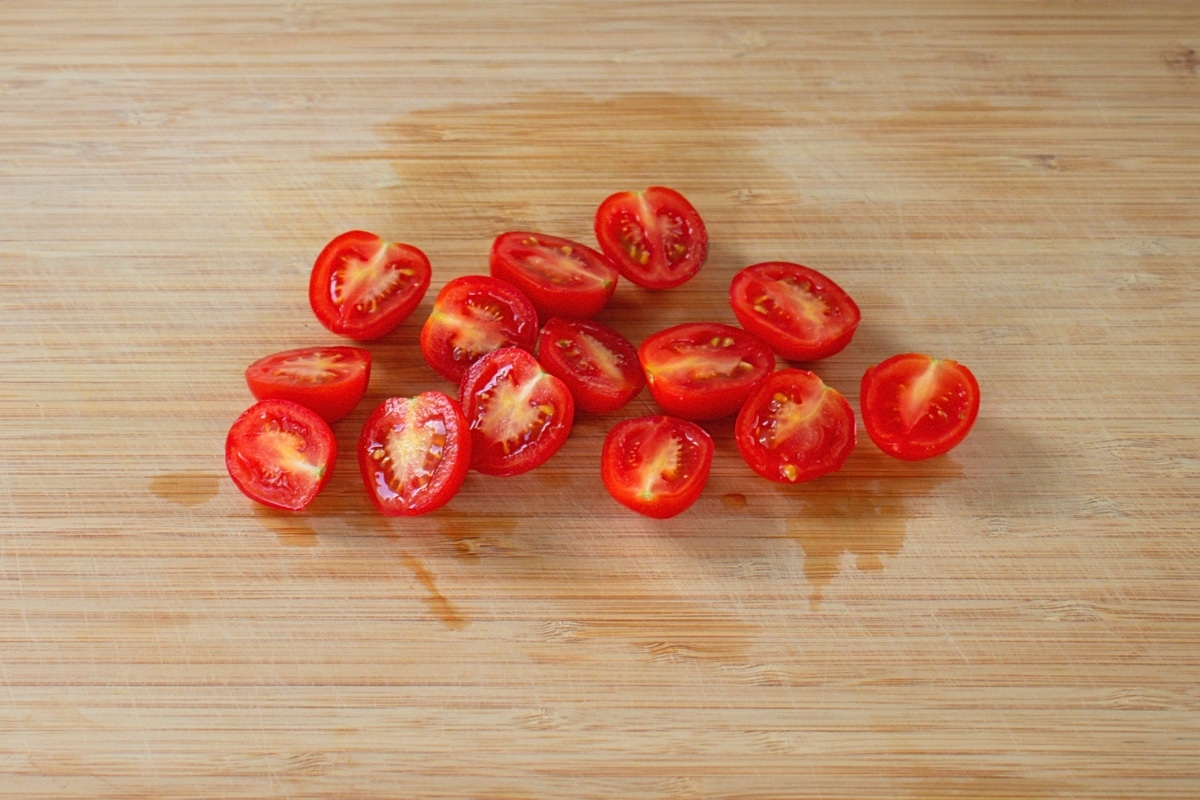
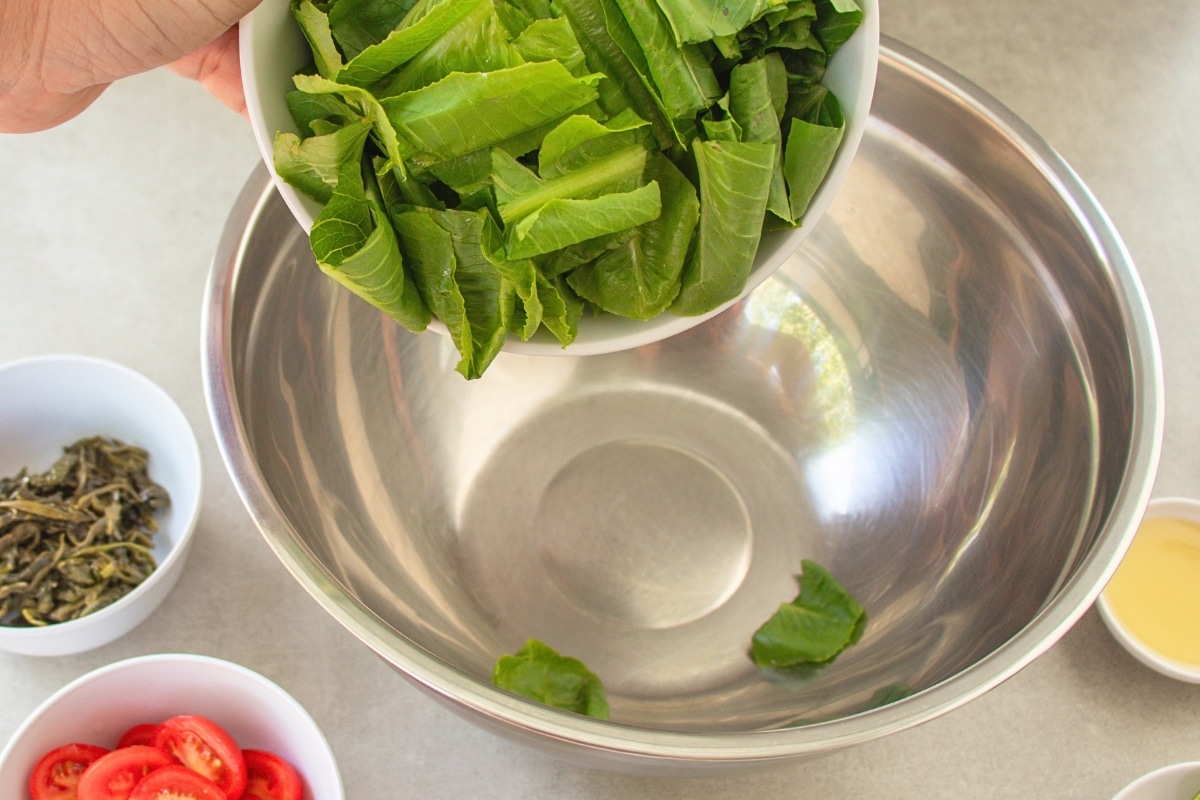
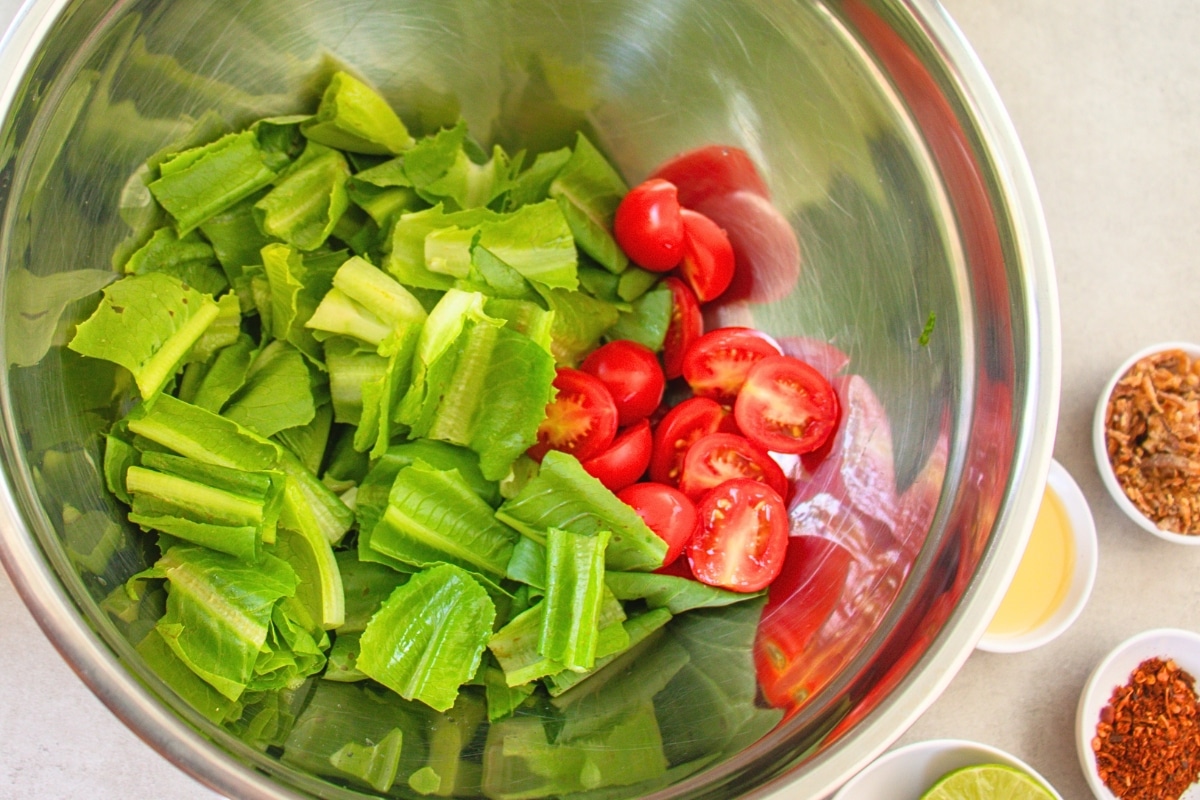
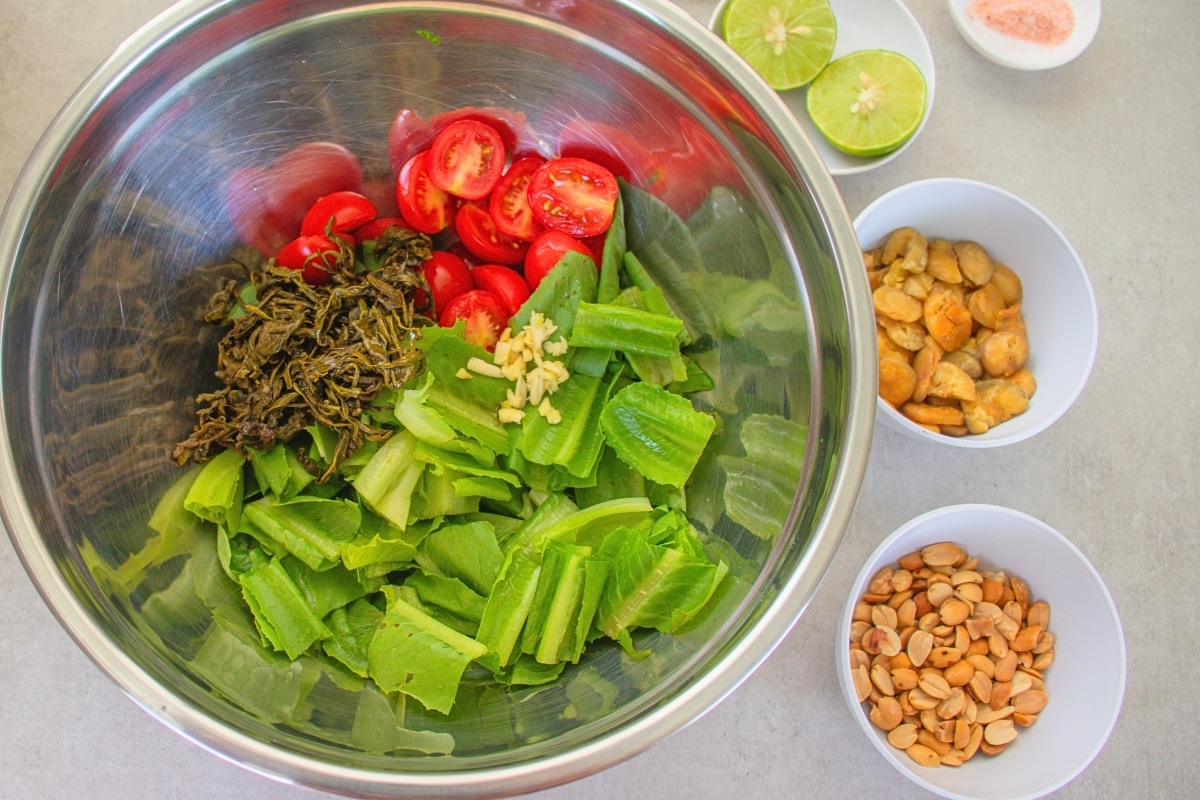
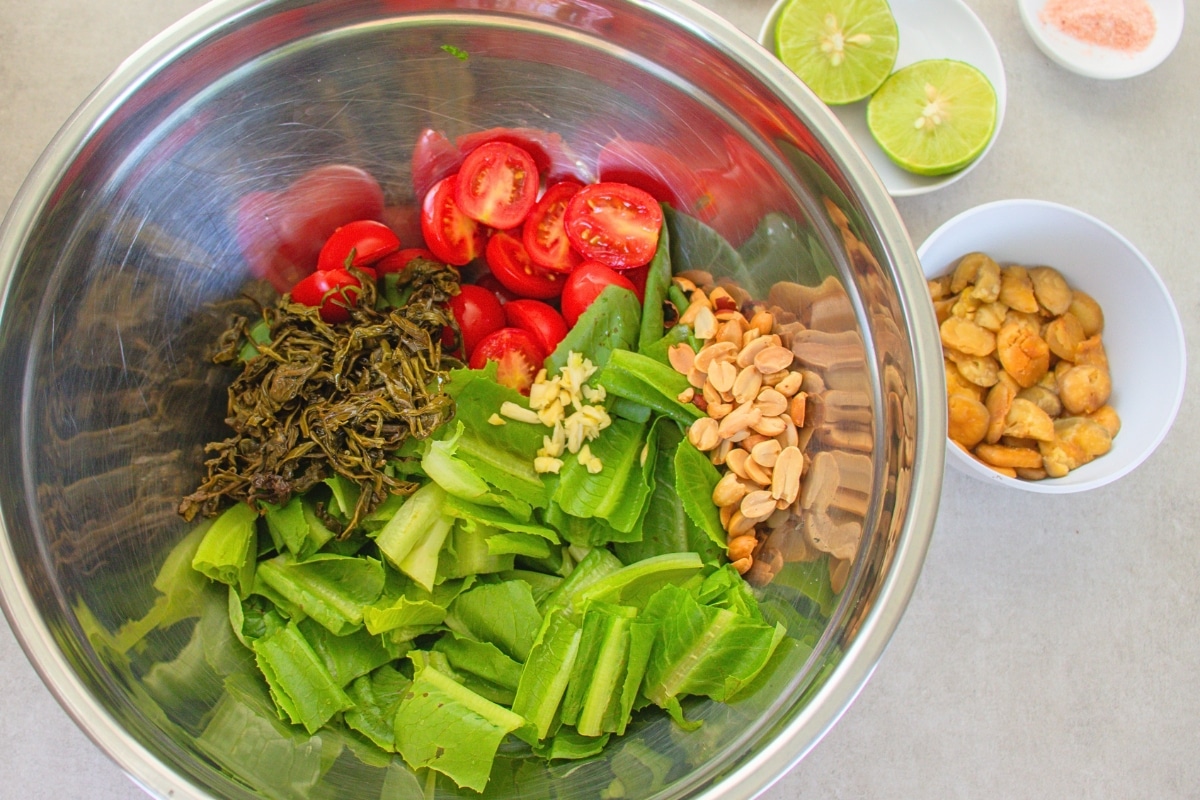

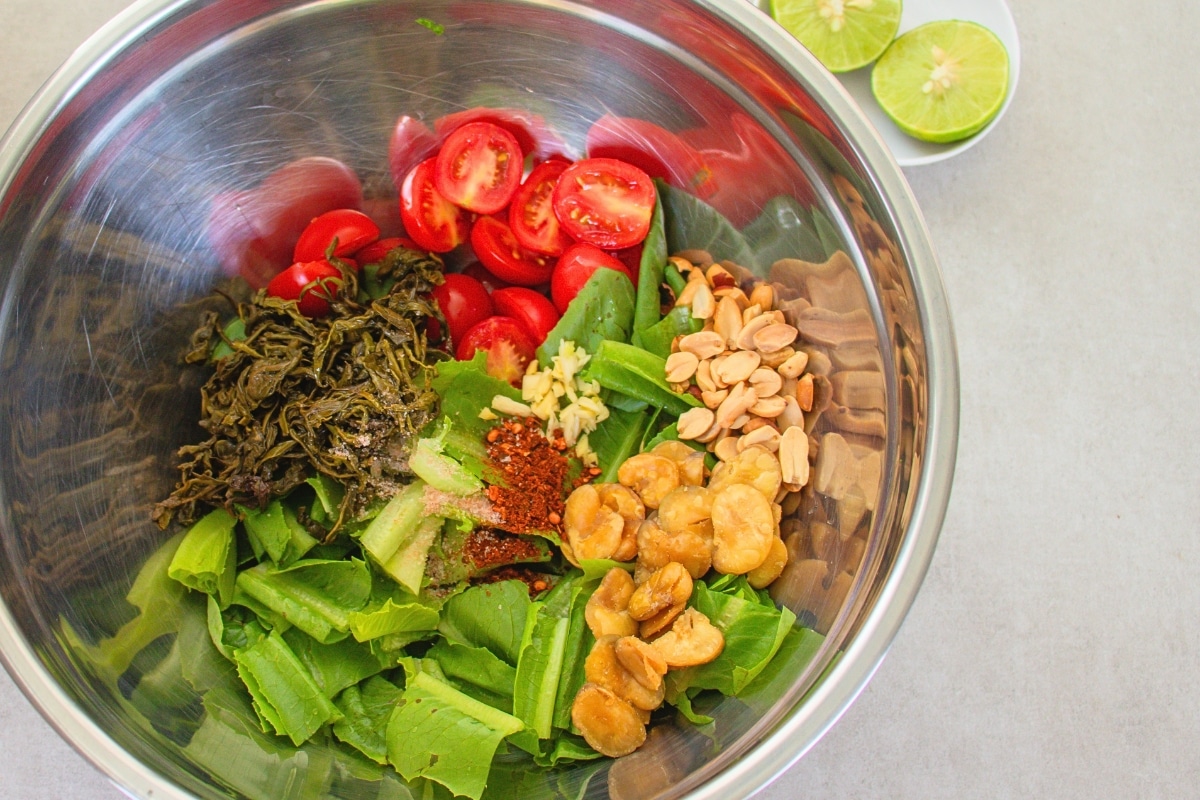
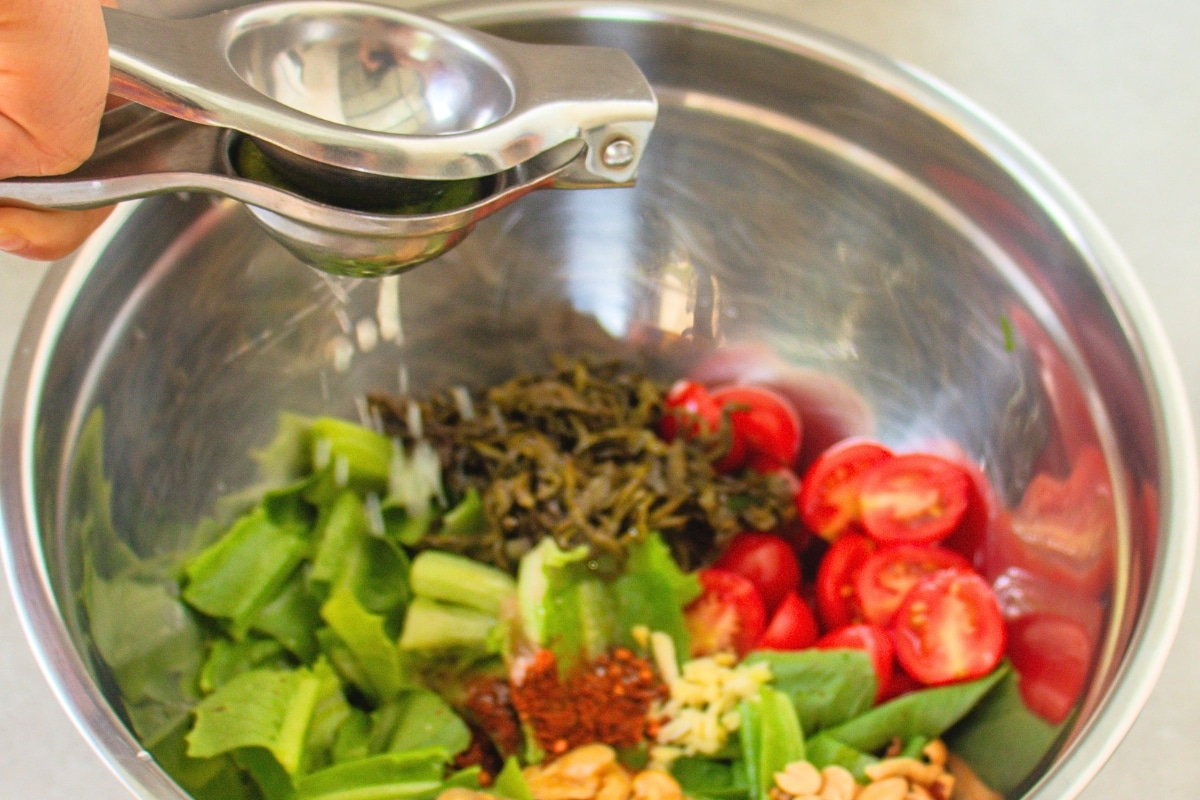

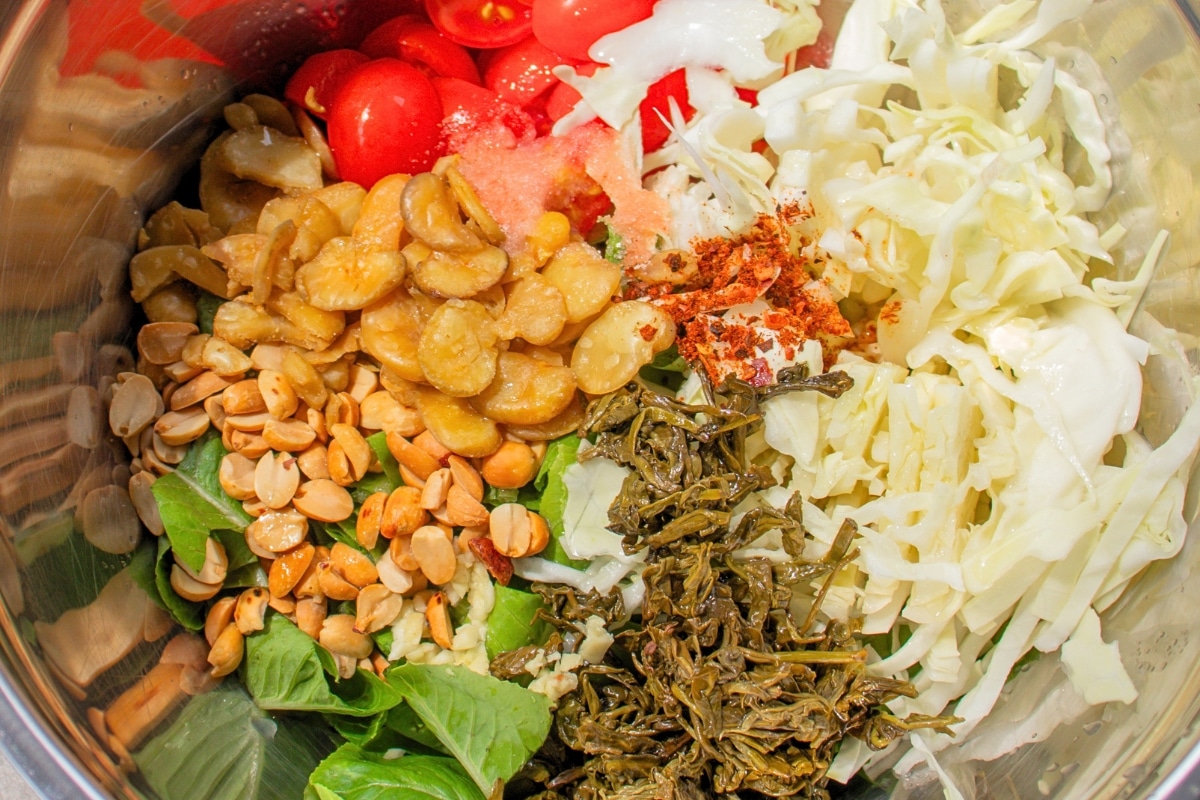
Serve: Taste and adjust the seasoning if necessary. Transfer the salad to a serving plate, then finish with the reserved peanuts, crispy fava beans and crispy shallots. Serve immediately.
Chef's Tips for the Best Lahpet Thoke
- Taste your fermented tea leaves first: Not all prepared lahpet tastes the same. Some brands are salty, oily or heavily seasoned, while others are much milder. Taste the tea leaves before adding additional salt.
- Keep some crunch for the garnish: Reserve a few peanuts, crispy fava beans and crispy shallots. Adding them at the end ensures that the finished salad still has plenty of texture.
- Do not overmix: Gently toss the ingredients until everything is evenly coated. If you mix too aggressively, the lettuce and tomatoes will begin to soften.
- Adjust the lime to taste: The lime should brighten the salad rather than dominate it. Start with the quantity in the recipe, then add a little more if your fermented tea leaves need extra acidity.
- Serve immediately: Texture is one of the most important parts of Lahpet Thoke. Once mixed, the vegetables gradually soften and the crunchy ingredients begin to absorb moisture. Therefore, serve the salad soon after assembling it.
What to Serve With Burmese Tea Leaf Salad
Lahpet Thoke works beautifully as a light lunch, starter or part of a larger Southeast Asian meal. Because it already has plenty of bold flavour and texture, I like to serve it alongside relatively simple dishes. Try it with Burmese Chickpea Tofu, Mushroom Larb Salad, Thai Green Mango Salad or Khao Yum.
It also works well alongside steamed rice, grilled vegetables, tofu or a simple vegetable soup. If you are serving several dishes for a shared meal, Lahpet Thoke brings freshness, acidity and crunch to the table.
How to Store Burmese Tea Leaf Salad
Burmese Tea Leaf Salad is best eaten freshly mixed. Once you add the fermented tea leaves, lime juice and olive oil, the vegetables gradually begin to soften. The peanuts, crispy fava beans and shallots will also lose some of their crunch.
If you want to prepare the recipe ahead, store the components separately:
- Keep the prepared vegetables refrigerated.
- Store the fermented tea leaves separately.
- Keep peanuts, crispy beans and shallots in an airtight container.
- Add the lime juice, oil and seasoning immediately before serving.
Any leftover mixed salad can be refrigerated in an airtight container. However, the texture will not be as good the following day. For the best Lahpet Thoke, make it fresh and eat it straight away.
FAQ
Lahpet Thoke is a traditional Myanmar salad made with fermented tea leaves and a mixture of fresh vegetables, nuts, legumes and crunchy toppings. Different versions exist throughout Myanmar, but fermented tea leaves remain the defining ingredient.
Fermented tea leaves have a savoury, earthy and tangy flavour with a distinctive slight bitterness. Their taste can also vary depending on how they have been fermented and seasoned.
Look for lahpet or fermented tea leaves in Burmese and Asian grocery shops. You can also find them through specialist Asian food suppliers online.
Yes. While tea leaves are more commonly brewed as a drink in many countries, fermented tea leaves are traditionally eaten as food in Myanmar. Lahpet Thoke is one of the best-known examples.
Yes. Fermented tea leaves naturally contain caffeine because they come from the same tea plant used to make brewed tea. However, the amount varies depending on the leaves, processing and quantity used.
This Holistic Chef Academy version of Lahpet Thoke is completely plant-based. However, if you buy a prepared fermented tea leaf mixture, always check the ingredient label because recipes and seasonings can vary between manufacturers.
The main ingredients in this recipe are naturally gluten-free. However, packaged fermented tea leaves, crispy beans and crispy shallots can contain additional ingredients or may be processed in facilities that also handle gluten. If you are cooking for someone with coeliac disease, check the labels carefully.
You can prepare all the individual ingredients ahead of time. However, keep the vegetables, fermented tea leaves and crunchy toppings separate. Mix everything immediately before serving for the freshest flavour and best texture.
More Asian Recipes
If you enjoy the bold flavours and textures in this Burmese Tea Leaf Salad, explore some more recipes from the Holistic Chef Academy kitchen:
- Burmese Chickpea Tofu
- Khao Yum Rainbow Salad
- Thai Green Mango Salad
- Thai Rice Noodle Salad
- Carrot Pineapple Salad
- Mushroom Larb Salad
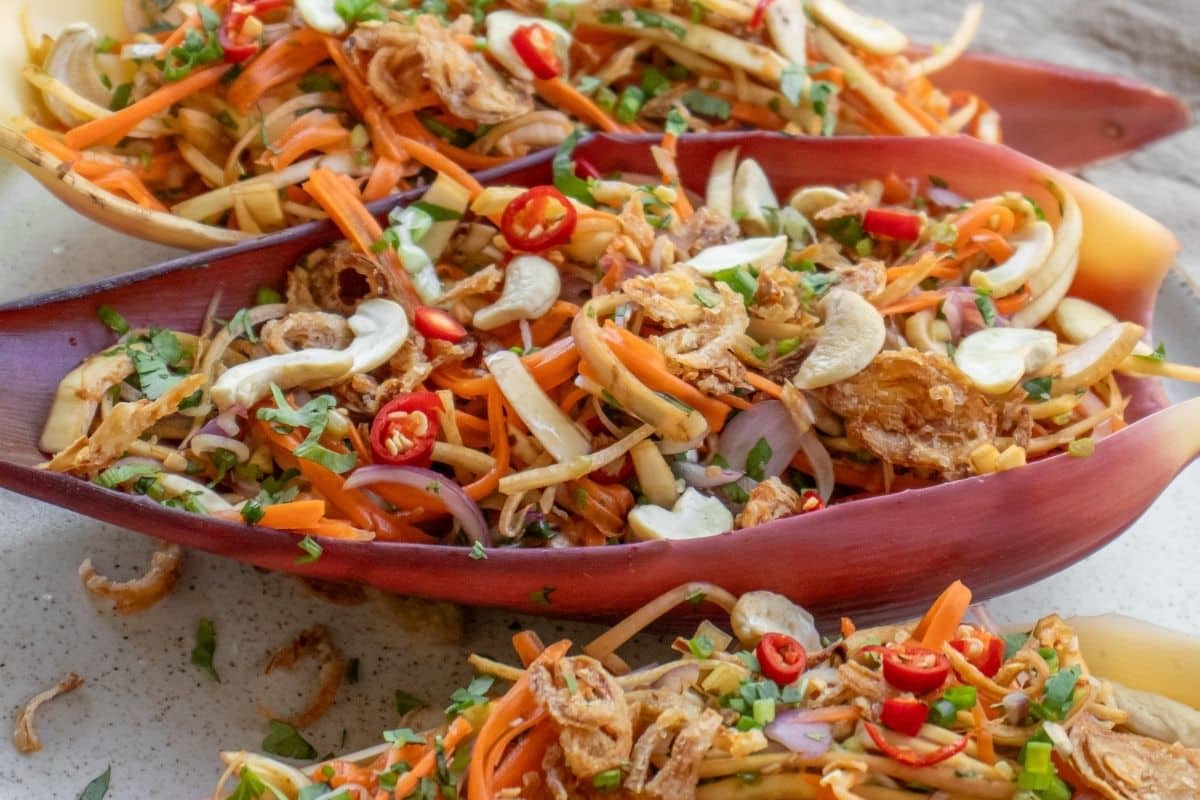
- Banana Blossom Salad
- Hibiscus (Rosella) Tea
Burmese Tea Leaf Salad Recipe
Burmese Tea Leaf Salad is a culinary masterpiece that embodies the essence of Myanmar's food culture. Its history, meticulous preparation, and health benefits all contribute to the rising popularity of this authentic salad.
We hope you enjoy this delicious recipe. If you give it a try, let us know in the comments below - we love hearing your feedback and seeing your recreations.
📋 Recipe


Jimmy says
Great recipe, lovely combination